
Why Nonprofits Need Better Event Registration Tools
Nonprofit event registration is often the backbone of successful fundraising efforts, but managing it manually drains time and resources that could be better spent advancing your mission. If you’re looking for the right software, here’s what you need to know:
Key Features to Look For:
- Customizable registration forms with tiered pricing options
- Integrated donation processing at checkout
- Mobile-friendly experience with QR code check-in
- Automated confirmations and tax-compliant receipts
- CRM integration for centralized supporter data
- Nonprofit-friendly pricing with discounts or free tiers
The challenge is real. Many nonprofits operate with limited staff and tight budgets, relying on spreadsheets and manual processes to manage event registrations. This approach consumes valuable hours and often leads to missed opportunities for engagement and revenue.
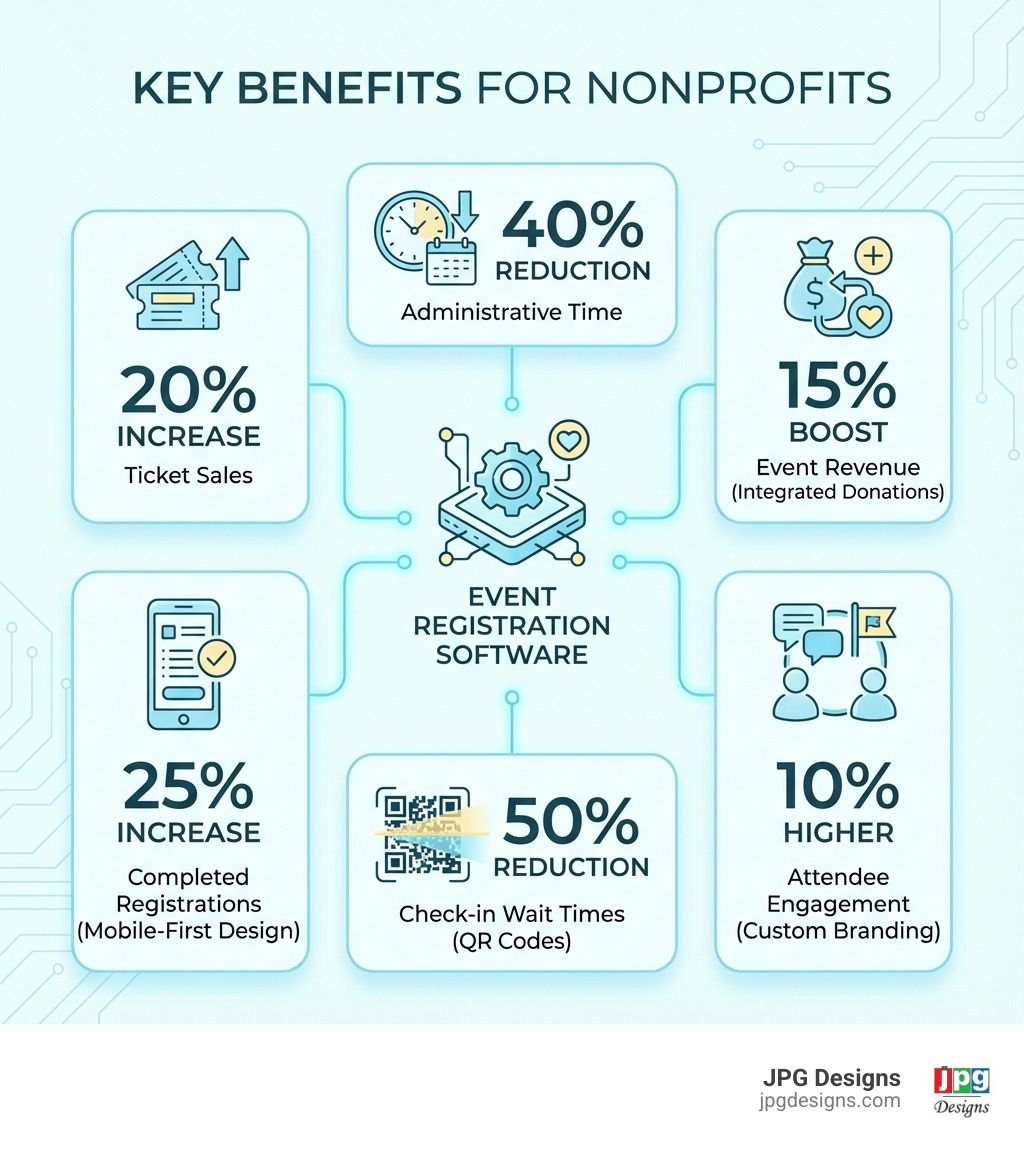
But there’s a better way. Research shows that nonprofits using event software report an average 20% increase in ticket sales. These platforms can reduce administrative time by up to 40%, while integrating donation options at checkout can boost overall event revenue by 15%.
As one nonprofit leader put it: “Jotform has been a great tool for our fundraising and marketing department. As a nonprofit leader, I am always looking for tools that are easy to use, are priced well and are able to do more than one function or ‘thing’.”
I’m Jeff Pratt, owner of JPG Designs, and I’ve spent more than a decade and a half helping nonprofits build digital systems that support their missions and growth. Throughout my work with community organizations and associations, I’ve seen how the right nonprofit event registration platform transforms fundraising events from administrative headaches into revenue-generating opportunities.
Why Dedicated Event Software is a Game-Changer for Nonprofits
We understand the struggles many nonprofits in places like Providence, Cranston, and Warwick, RI, face when organizing events. The passion is there, the mission is clear, but the administrative burden of event management can feel overwhelming. Manually tracking RSVPs, processing payments, sending confirmations, and managing guest lists drains precious time and resources that could be better spent on your core mission. It’s a classic pain point: valuable staff hours are diverted from impact-driven work to mundane, repetitive tasks.
The solution? Embracing dedicated nonprofit event registration software. This isn’t just about digitizing a process; it’s about changing your event strategy into a powerhouse for fundraising and community engagement. Automation, when applied correctly, doesn’t just save time—it boosts efficiency and revenue significantly.
Imagine reducing administrative time for your events by up to 40%. That’s time your team can reinvest in outreach, program development, or simply taking a well-deserved break! Beyond saving time, these platforms are designed to increase ticket sales by an average of 20%, ensuring more people participate in your crucial events. And for those who register, the opportunity to integrate donation options right at checkout can boost overall event revenue by an average of 15%. This means more funds directly supporting your cause, without extra effort.
We believe that marketing should be viewed as a growth opportunity, not just an expense, and event software perfectly embodies this philosophy. By streamlining the registration process, we’re not just making it easier for your staff; we’re significantly improving the attendee experience. A smooth, professional registration process reflects positively on your organization, encouraging more people to sign up and engage.
Furthermore, dedicated software provides centralized data management. No more scattered spreadsheets or lost contact information. All attendee data, payment details, and preferences are stored securely in one place, making it easier to track engagement, analyze trends, and plan for future events. This holistic view of your supporters is invaluable for long-term relationship building and strategic planning.
Essential Features of Top-Tier Nonprofit Event Registration Platforms
When we talk about top-tier nonprofit event registration platforms, we’re looking for more than just a place to collect names. We’re seeking comprehensive tools that empower your organization from pre-event planning through post-event follow-up. Think of it as your event co-pilot, handling all the complex logistics so you can focus on making your event a success.

Here’s a feature checklist of what we consider essential:
Core Functionalities:
- Customizable registration forms
- Tiered ticket pricing
- Support for both free and paid events
- Automated confirmation emails
Fundraising Tools:
- Integrated donation upsells
- Sponsorship management
- Tax-compliant receipt generation
- Fair market value calculations
- Merchandise and add-on sales
Event Day Management:
- Mobile check-in with QR codes
- On-site badge printing
- Real-time attendance tracking
Attendee Engagement:
- Mobile-friendly experience
- Event marketing website builder
- Communication tools (email, SMS)
Seamless Registration and Ticketing
The first impression of your event often begins with the registration form. A clunky, confusing form can deter potential attendees, but a seamless one invites them in. Top platforms offer highly customizable forms that allow you to collect exactly the information you need, from dietary restrictions for a gala in Newport, RI, to team names for a charity run in Coventry, RI. This flexibility ensures that whether you’re hosting a small workshop or a major fundraiser, your registration process is custom to your unique needs.
We know that nonprofits often host a mix of events – some free to raise awareness, others paid to generate revenue. The good news is that most robust platforms effortlessly handle both free and paid events. And yes, for those wondering, nonprofits can legally charge for events as long as 100% of the funds generated go towards its mission. This opens up significant fundraising opportunities.
Custom registration fields are invaluable. Need to know t-shirt sizes for a fun run? Or perhaps specific interests for a speaker series? These fields allow you to gather crucial data, ensuring a personalized and well-organized event. Once someone registers, automated confirmations are a lifesaver. No more manual emails! These confirmations can include event details, QR codes for check-in, and even links to a mobile event app, all while increasing leads with a modern website.
Integrated Fundraising and Sponsorship Tools
For nonprofits, every event is a fundraising opportunity. Dedicated software takes this to heart by integrating powerful fundraising tools directly into the registration process. One of the most impactful features is the ability to include donation upsells at checkout. This means when an attendee purchases a ticket, they’re gently prompted to add a small donation. This simple addition can increase overall event revenue by an average of 15%, turning ticket buyers into even more generous supporters.
Managing sponsorships is another area where software shines. From offering tiered sponsorship packages to tracking commitments and managing exhibitor information, these platforms simplify what can often be a complex, spreadsheet-heavy task. This allows your team to focus on nurturing those valuable relationships.
Tax compliance is critical for nonprofits. Imagine software that automatically calculates tax-deductible amounts and fair market values for tickets, then generates tax-compliant receipts for your attendees. This hands-off receipting saves countless hours for your finance team and ensures your donors receive accurate documentation. Some platforms even allow you to integrate merchandise sales directly into the registration flow, adding another revenue stream without extra administrative hassle.
Here’s a list of integrated fundraising features we recommend looking for:
- Seamless donation prompts during ticket purchase.
- Customizable sponsorship tiers and package management.
- Automated generation of tax-compliant receipts with fair market value details.
- Ability to sell event-related merchandise or add-ons.
- Easy tracking of exhibitor booth sales and information.
- Integrated payment processing for all transactions.
Mobile-First Experience for Effective Nonprofit Event Registration
In today’s world, convenience is king. This is especially true for event registration. A mobile-first experience isn’t just a nice-to-have; it’s essential. Research shows that mobile-first event registration experiences lead to a 25% increase in completed registrations. Why? Because people are constantly on their phones, and being able to register quickly and easily, whether they’re waiting for coffee in Pawtucket or commuting in Cumberland, makes all the difference.
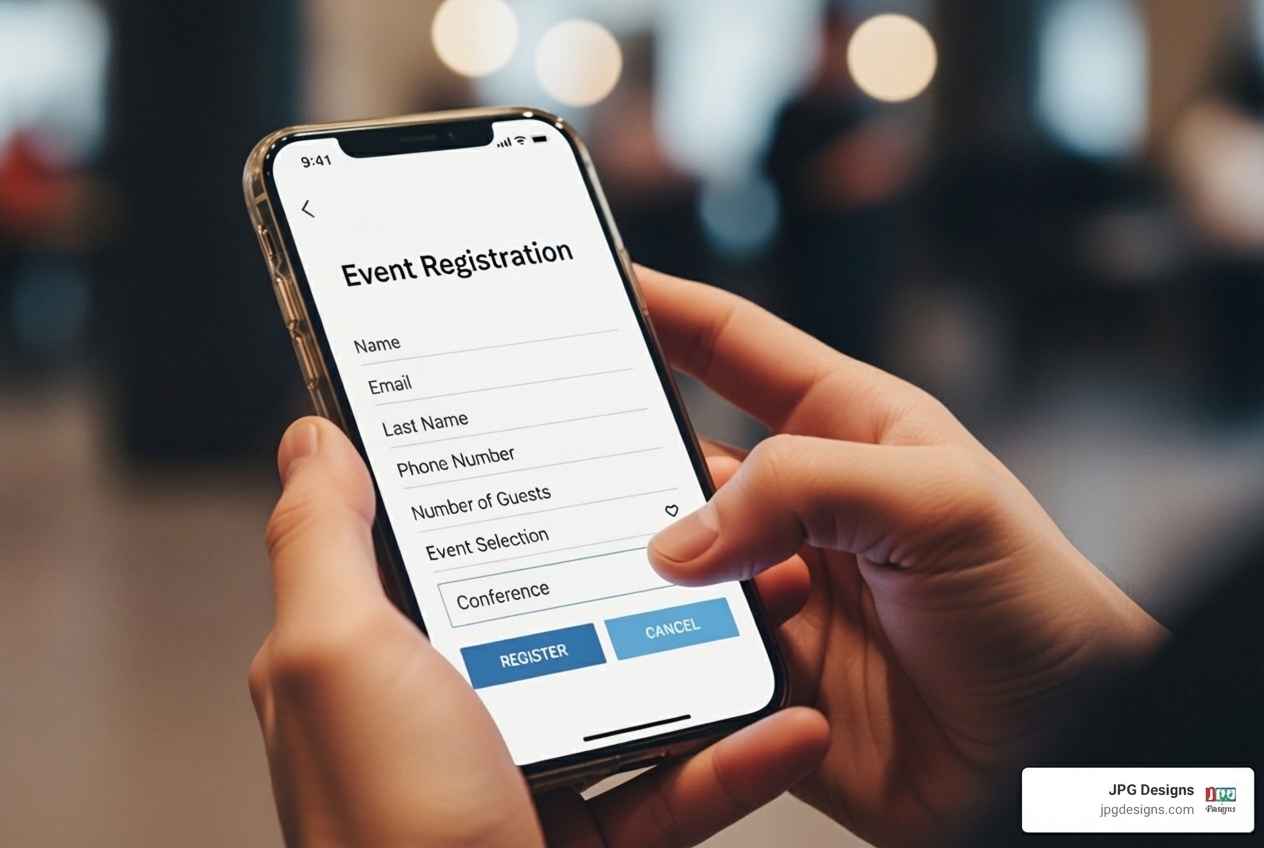
This mobile focus extends to the day of your event. Features like QR code check-in revolutionize the arrival experience. Attendees simply present their mobile ticket, which is scanned instantly, reducing event day wait times by up to 50%. This creates a smooth, professional entry process that leaves a positive impression. You can learn more about self-check-in and attendance verification and how it transforms event logistics.
Beyond check-in, some platforms offer on-site badge printing, allowing you to print customized badges as attendees arrive. This eliminates pre-printing hassles and ensures every attendee has an accurate, professional badge. All these mobile-friendly features contribute to significantly improved attendee convenience, making your event more enjoyable from start to finish.
Choosing the Right Platform for Your Nonprofit Event Registration
Selecting the ideal nonprofit event registration platform can feel like navigating a maze, but with a clear decision-making framework, we can simplify the process. It’s about evaluating options against your specific needs, budget, and long-term goals. Just as we help businesses in East Greenwich, RI, choose the right digital marketing strategy, we can guide you in picking event software that truly serves your mission.
Consider your organization’s size, the typical scale of your events, and the technical comfort level of your staff. Do you host weekly small workshops or annual large-scale galas? Will your team need extensive training, or are they tech-savvy? These questions will help narrow down the field.
Budget considerations are always paramount for nonprofits. We’ll explore how to find powerful tools that won’t break the bank. Also, think about your existing tech stack: do you need the event platform to integrate seamlessly with your current CRM or email marketing system?
Finally, consider scalability. As your nonprofit grows and your events become more ambitious, will your chosen platform be able to keep up? Investing in a scalable solution means you won’t outgrow it in a year or two, saving you time and money in the long run.
Evaluating Pricing, Affordability, and Nonprofit Discounts
For nonprofits, every dollar counts, so understanding the pricing models of event registration software is crucial. There are generally a few ways platforms charge:
- Per-ticket fees: A fixed amount or percentage charged for each ticket sold.
- Subscription fees: A monthly or annual fee for platform access, sometimes with transaction fees on top.
- Percentage of revenue: A cut of the total ticket sales or donations.
It’s important to differentiate between platform fees and payment processing fees. Platform fees go to the software provider, while payment processing fees (like those charged by Stripe or PayPal) go to the financial institutions that handle the transactions. Many platforms offer discounted credit card processing fees for registered nonprofits, like Stripe’s 2.2% + 30¢ for registered nonprofits compared to the standard 2.9% + 30¢.
The good news is that many companies understand the unique financial constraints of nonprofits. Many offer free tiers for basic functionality or significant nonprofit discounts on their paid plans. For example, RSVPify offers a 20% discount on annual plans for approved nonprofit organizations. In fact, platforms offering flexible pricing, such as free tiers or nonprofit discounts, are used by 70% of small to medium-sized nonprofits.
A popular feature that helps nonprofits keep more of their funds is the option to pass fees to donors. This allows attendees to cover the platform and processing fees, meaning your organization receives 100% of the intended ticket price or donation. This is a win-win: donors often appreciate knowing their entire contribution goes to the cause, and your budget remains intact. When evaluating options, always align the pricing structure with your budget and calculate the potential return on investment, not just the upfront cost.
The Power of Branding and Customization
Your nonprofit’s brand is its identity, its mission made visible. When organizing an event, maintaining consistent branding across every touchpoint, especially the registration process, is paramount. It builds trust, reinforces your message, and creates a cohesive experience for your supporters. Just as we emphasize the importance of a well-designed website for nonprofits, we highlight the power of branded event registration.
Top-tier nonprofit event registration software allows for extensive customization. This means you can integrate your logo, use your brand colors and fonts, and tailor the messaging to reflect your organization’s voice. Some platforms even offer “white-labeling” options, removing their own branding entirely so that the registration page feels like a seamless extension of your website.
This level of customization isn’t just about aesthetics; it directly impacts engagement. Nonprofits using platforms with custom branding options see a 10% higher attendee engagement rate. When attendees encounter a familiar, professional, and on-brand experience from the moment they register, it instills confidence and strengthens their connection to your cause. It signals that your organization is professional, organized, and worthy of their support.
Key Security and Integration Considerations in Nonprofit Event Registration Software
Security is non-negotiable, especially when handling sensitive attendee and donor information. When selecting nonprofit event registration software, data security should be at the top of your list. We need to ensure that the platform employs robust encryption, secure servers, and regular security audits to protect personal data and financial transactions. Look for features like password protection, role-based access for your team, and HIPAA-friendly options if you’re dealing with health-related information.
Payment Card Industry Data Security Standard (PCI DSS) compliance is critical for any platform handling credit card transactions. This ensures that payment data is processed, stored, and transmitted in a secure environment. You can learn about secure payment processing and why it’s so important. Choosing a PCI-compliant platform protects your organization and your donors from potential fraud and data breaches.
Beyond security, consider how the event software integrates with your existing tools. Manual data entry is a time sink and a source of errors. Seamless CRM integration allows attendee and donor data collected during registration to flow directly into your donor management system, creating a holistic supporter view. This means every interaction, every ticket purchase, and every donation is recorded, providing a complete picture of your supporters’ engagement history. Similarly, email marketing syncs ensure that new registrants are automatically added to your communication lists for pre-event updates and post-event follow-ups.
We often discuss the merits of all-in-one solutions versus integrating multiple specialized tools. While all-in-one platforms can offer convenience, sometimes integrating best-of-breed solutions provides more flexibility and power. The key is to choose a system that minimizes data silos and allows for efficient data exchange, whether through direct APIs or third-party connectors like Zapier. This integrated approach ensures that your event data serves a larger purpose, feeding into your overall donor stewardship and outreach efforts.
Leveraging Your Event Data for Future Success
Your nonprofit event registration platform isn’t just a tool for managing a single event; it’s a goldmine of data that can fuel your future success. The post-event strategy should always include a deep dive into the analytics generated by your software. This allows us to make data-driven decisions that refine your approach and maximize impact.
What kind of data are we talking about? Attendee analytics can reveal who registered, who attended, how much they spent, and even their interests based on custom registration fields. This granular insight allows for sophisticated supporter segmentation. You can group attendees by their level of engagement, donation history, or event type, which is invaluable for personalized future outreach.
Imagine being able to send a targeted email to everyone who attended your annual gala in North Providence, RI, thanking them and inviting them to an exclusive donor appreciation event. Or reaching out to those who registered for a free workshop with information about a related paid program. This level of personalized communication, informed by event data, is far more effective than generic mass emails. It’s a cornerstone of effective social media marketing and donor stewardship, nurturing relationships and encouraging continued support.
By analyzing what worked (and what didn’t) in past events, you can continuously improve future events. Was a particular ticket tier more popular? Did certain promotional codes drive more registrations? Did attendees respond well to a specific type of communication? These insights help you optimize pricing, marketing strategies, and event content, ensuring each subsequent event is even more successful.
Frequently Asked Questions about Nonprofit Event Registration
We hear a lot of common questions from nonprofits across Rhode Island when they’re considering event registration software. Let’s tackle some of the most frequent ones to help clarify how these powerful tools can serve your organization.
Can software be used for both free and paid nonprofit events?
Absolutely, yes! Most modern nonprofit event registration platforms are designed with flexibility in mind, meaning they can seamlessly handle both free and paid events. This is a critical feature for nonprofits that often host a diverse range of activities.
For free events, the software can manage RSVPs, collect essential attendee information, and send automated confirmations without any payment processing. This is perfect for volunteer recruitment drives, informational workshops, or community awareness gatherings.
For paid events, the platform handles ticket sales, securely processes payments (often with options for tiered pricing or early bird discounts), and tracks revenue. Many also allow for donation-only events or the integration of donation options alongside ticket purchases, providing comprehensive fundraising capabilities. The key is to look for a platform that offers flexible configuration to adapt to all your event types, whether it’s a small local meet-up or a large fundraising gala in Providence.
How does software help manage different attendee types like VIPs or sponsors?
Dedicated event registration software is excellent at segmenting and managing different attendee types, such as VIPs, sponsors, board members, or general admission guests. This is achieved through several powerful features:
Firstly, ticket tiers allow you to create distinct registration pathways with different pricing, access levels, or benefits. For example, a “VIP Ticket” might include exclusive access or a special reception, while a “Sponsor Package” could include multiple registrations and branding opportunities.
Secondly, custom registration paths or fields enable you to ask specific questions relevant only to certain attendee types. Sponsors might be asked for their company logo, while VIPs might have a simplified registration form.
Thirdly, tagging and segmentation features are incredibly useful. You can assign unique tags (e.g., “Major Donor,” “Event Sponsor,” “Volunteer”) to registrants. This allows you to easily filter your attendee lists, send personalized communications, and even create unique registration experiences for VIP guests. For example, you can use these tags to send exclusive pre-event information or post-event thank-yous custom specifically for that group.
Finally, these platforms often integrate with check-in systems that recognize these different attendee types, potentially offering faster check-in lines or directing them to specific areas, enhancing their overall experience and ensuring appropriate access control.
How does event data connect to a donor management system or CRM?
Connecting event data to your donor management system (DMS) or Customer Relationship Management (CRM) platform is one of the most significant advantages of using dedicated nonprofit event registration software. It transforms isolated event information into actionable insights for long-term donor stewardship.
There are typically three primary ways this connection happens:
- Direct Integrations: Many popular event platforms offer direct, native integrations with leading DMS/CRM systems like Salesforce, Blackbaud, or Raiser’s Edge. These integrations automatically sync registrant information, ticket purchases, and donations directly into your supporter profiles, often in real-time. This eliminates manual data entry, reduces errors, and ensures your donor records are always up-to-date.
- Third-Party Connectors (e.g., Zapier): For platforms without a direct integration, third-party integration tools like Zapier act as a bridge. Zapier allows you to create automated workflows (called “Zaps”) that connect your event registration software to virtually any other web application, including most CRMs. This means when a new registration comes in, a “Zap” can automatically create or update a contact record in your CRM. You can connect event data to your donor management system via these powerful tools.
- Manual Data Export/Import: As a baseline, all reputable event registration software will allow you to export your event data (attendee lists, payment details, custom field responses) into a CSV or Excel file. This file can then be manually imported into your DMS/CRM. While less efficient than direct integrations, it’s a reliable method for ensuring your data eventually makes it into your central system.
The ultimate goal of these connections is to create a unified view of supporter engagement. By linking event participation to overall donor history, your team can better understand supporter behavior, identify potential major donors, and craft more personalized and effective fundraising strategies.
Conclusion
In the dynamic world of nonprofit fundraising, efficient nonprofit event registration is no longer a luxury—it’s a strategic asset. Embracing dedicated software streamlines operations, frees up your valuable staff, and significantly improves the experience for your cherished supporters. From increasing ticket sales and boosting donations to simplifying day-of logistics, the right platform empowers your organization to achieve its mission with greater impact.
We’ve explored how crucial features like customizable forms, integrated fundraising tools, and a seamless mobile-first experience can transform your events. We’ve also highlighted the importance of smart choices in pricing, strong branding, and robust security and integration. By leveraging the data collected, your nonprofit can make informed decisions, nurture donor relationships, and continuously improve future events, ensuring sustained growth and community engagement in places like Woonsocket and East Greenwich, RI.
At JPG Designs, we specialize in creating digital experiences that reflect your mission and drive engagement. Our expertise in mobile-first web design and digital marketing ensures that your online presence, including your event registration process, is not just functional but also compelling and user-friendly. We understand the unique challenges nonprofits face, and we’re here to help you steer the digital landscape with confidence. Learn how we help non-profit organizations succeed online and turn every event into a powerful step forward for your cause.