
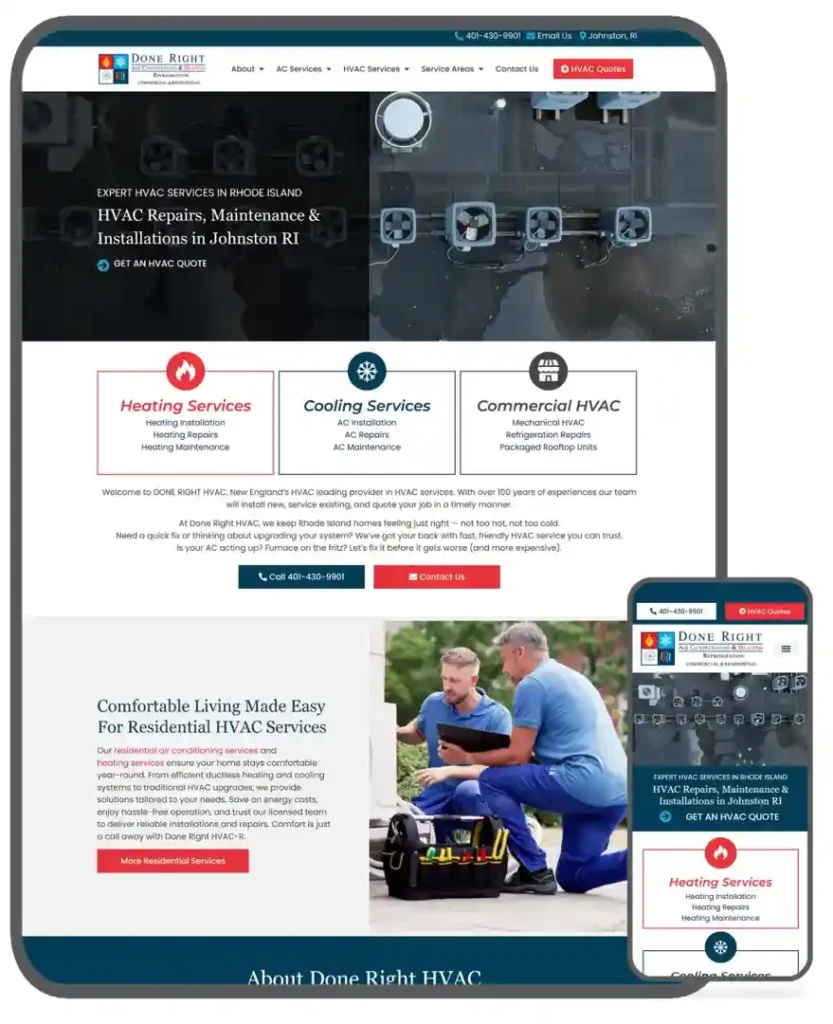
Get Your HVAC Business Online in Hours, Not Weeks
An hvac website template is a pre-designed website framework built for heating, ventilation, and air conditioning businesses. It allows you to launch a professional site quickly and affordably, without needing to code.
Key benefits include:
- Low Cost: Templates are a fraction of the cost of a custom-designed site.
- Fast Launch: Get your business online in hours, not weeks or months.
- Essential Features: They come with built-in lead forms, service pages, and mobile-responsive design.
The fact is, 80% of consumers use the internet to find local services like HVAC repair. Current research on local search behavior (see Local search)) shows that customers expect to compare providers, read reviews, and contact businesses online before they ever pick up the phone. If your business isn’t online, or if your site is outdated and not mobile-friendly, you’re losing customers. An HVAC website template is a budget-friendly shortcut to a professional digital presence. For less than the cost of a single service call, you can get a site with contact forms, service showcases, and layouts that work on any device.
With the HVAC industry growing and 60% of local searches happening on mobile, a responsive website is no longer optional—it’s essential for lead generation and competing in your market. While templates have some limits on customization, they are an excellent starting point for most small to medium HVAC businesses. They help you get online fast, capture leads, and establish credibility with customers searching for your services right now.
I’m Jeff Pratt, owner of JPG Designs. For over 15 years, I’ve helped HVAC contractors build digital systems that generate real revenue. I’ve seen how a well-chosen hvac website template, when properly customized, can transform a company’s growth.
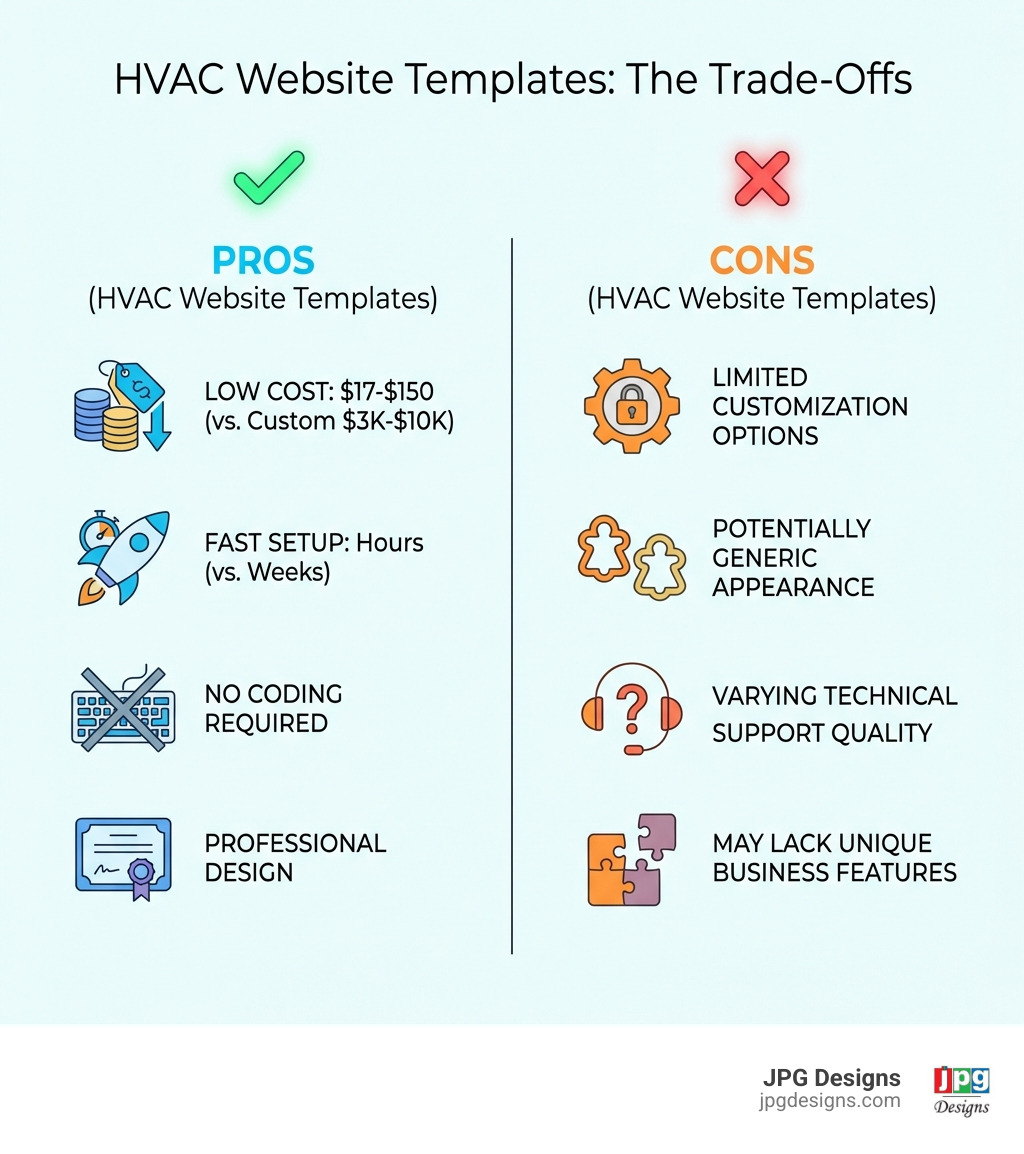
Quick hvac website template definitions:
Why a Template is a Smart Start for Your HVAC Website
As an HVAC professional in Rhode Island or Massachusetts, your time is better spent serving clients than wrestling with web development. Building a website from scratch is a daunting task, but an hvac website template offers a smart, practical solution. The main benefits are cost, speed, and ease of use. A custom website can cost thousands, a significant investment for a small business. In contrast, a template is a budget-friendly option that gets you online in hours, not months.
We believe every HVAC business deserves a strong online presence. For many, a template provides the perfect balance of affordability and professional appearance. You can explore more strategies in our HVAC Website Design Guide.
What is an HVAC website template and why is it beneficial?
An hvac website template is a pre-designed framework created for the HVAC industry. It’s a ready-made blueprint for your online presence, complete with relevant pages like “Services,” “About Us,” and “Contact.”
The benefits are substantial:
- Professional Appearance: Templates are professionally designed, ensuring your site looks modern and trustworthy, which instantly boosts brand credibility.
- Increased Lead Generation: They include built-in features like “Request a Quote” forms and clear calls-to-action to help convert visitors into customers.
- Industry-Specific Features: They often have sections for service lists, emergency call-outs, and equipment showcases.
- Time and Cost Savings: Templates save you significant time and money compared to a custom build.
The Difference: HTML Templates vs. WordPress Themes
You’ll generally find two types of templates: HTML templates and WordPress themes.
HTML Templates: These are static website files that are lightweight and load very fast. They offer a high degree of control if you know how to code, but making updates requires editing the code directly. They are best for simple, brochure-style sites that don’t need frequent changes.
WordPress Themes: These run on the WordPress Content Management System (CMS). They are dynamic and highly flexible, allowing you to update content, add pages, and manage your site through a user-friendly interface, often without touching any code. WordPress also has a vast ecosystem of plugins to add functionality like SEO tools or booking systems.
Here’s a quick comparison:
| Feature | HTML Templates | WordPress Themes |
|---|---|---|
| Ease of Use | Requires coding knowledge for edits | User-friendly CMS, often drag-and-drop |
| Customization | High control with code, limited otherwise | Highly customizable via theme options and plugins |
| Cost | Often a one-time, lower purchase fee | One-time fee for theme, plus hosting/plugin costs |
| Maintenance | Manual updates via code | Easier updates via CMS, plugin management |
| Flexibility | Best for static, simple sites | Ideal for blogs, e-commerce, dynamic content |
| Performance | Generally very fast and lightweight | Can be fast, but depends on hosting and plugins |
For most HVAC businesses in Massachusetts and Rhode Island seeking a robust and easily manageable website, a WordPress theme is the more practical and powerful solution.
Key Features for a High-Converting HVAC Website Template
A high-converting hvac website template does more than just look good; it turns visitors into customers. Here are the non-negotiable features your template must have to help your business thrive online.
First, mobile-first design is paramount. With 60% of local searches performed on mobile devices, your site must function perfectly on smartphones. Google’s mobile-first indexing prioritizes mobile-friendly sites, so a responsive design that adapts to any screen size is crucial for search rankings and user experience.
Next, your template must be SEO-optimized with clean code, fast loading speeds, and proper heading structures. This foundation helps your site rank higher in local search results. Other essential features include:
- Lead Generation Forms: Prominently placed “Request a Quote” or “Schedule Service” forms are the lifeblood of your site.
- Clear Calls-to-Action (CTAs): Buttons like “Call Us Today for a Free Estimate” guide visitors to take the next step.
- Dedicated Service Pages: Detail your offerings like AC repair, furnace installation, and maintenance to inform customers and target keywords.
- Testimonials Section: Build trust by showcasing feedback from real customers.
- Prominent Contact Information: Your phone number and address should be easy to find on every page.
For more detailed advice, check out our HVAC Web Design Tips, which covers current mobile and SEO best practices.
Must-Haves for Lead Generation and Customer Engagement
To transform your site from a simple brochure into a lead-generating machine, look for a template with these engaging features.
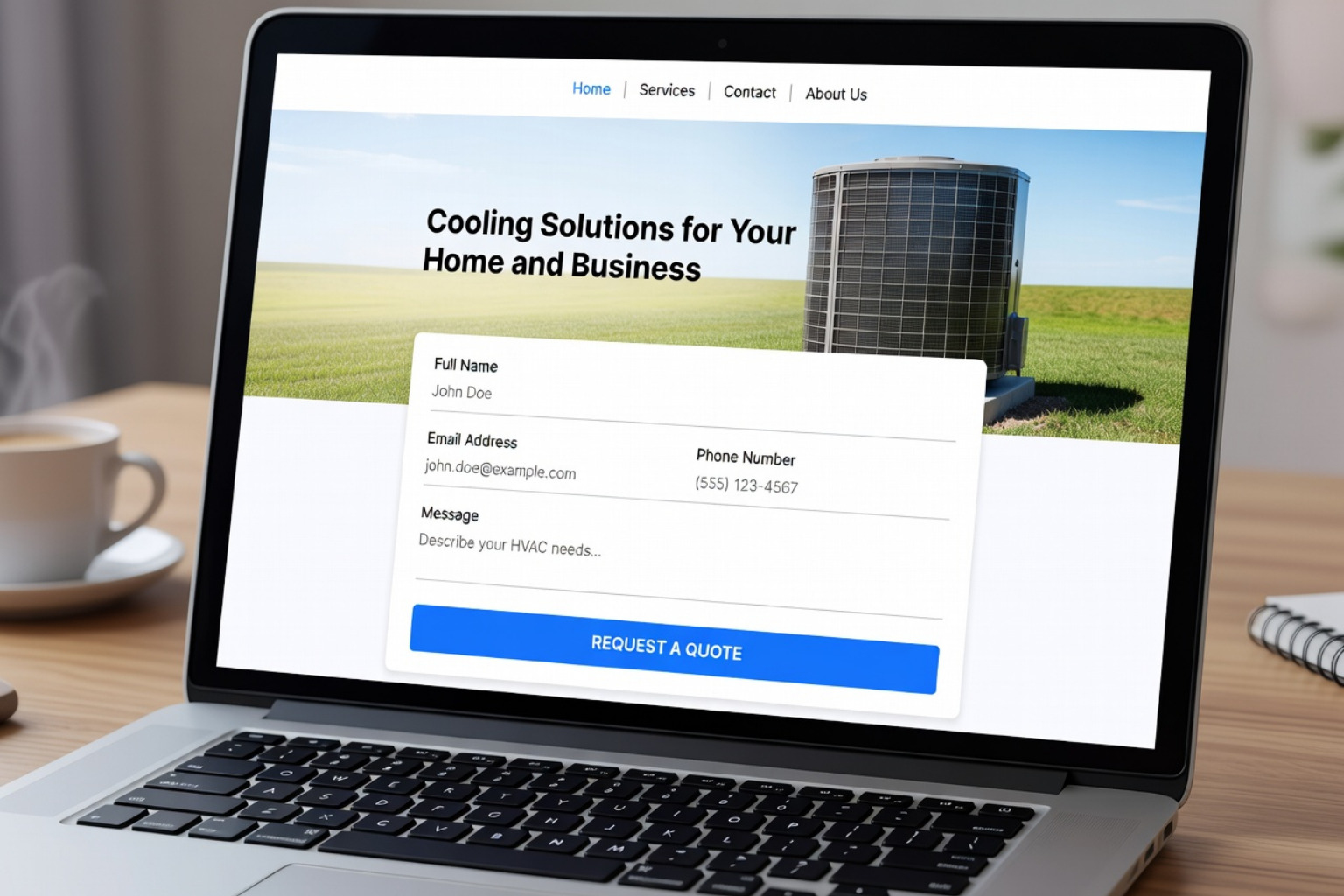
- Emergency Service Call-Out: A visible section for emergency service with a dedicated phone number is a critical lead generator.
- Service Area Map: A map helps local customers in Rhode Island and Massachusetts confirm you serve their area and boosts local SEO.
- “About Us” Page: Tell your company’s story to build trust and a personal connection with potential clients.
- Blog Integration: A blog establishes you as an expert and improves SEO with fresh, relevant content.
- FAQ Section: Address common customer questions about pricing, response times, and warranties to remove friction before they contact you.
These elements, integrated into a well-designed hvac website template, will actively engage visitors and grow your business. To learn more about optimizing your online presence, visit our page on More info about our web design services.
The Critical Role of Mobile-Friendliness and SEO
Mobile-friendliness and SEO are the foundation of a successful hvac website template. Because Google uses mobile-first indexing, the mobile version of your site determines your search ranking. A slow or poorly designed mobile site will make you invisible to potential customers.
A responsive design that ensures fast loading speeds is critical. Users expect sites to load instantly, and Google rewards speed with better rankings. Your template should also be built with SEO-friendly code and structure, making it easy to optimize titles, descriptions, and local SEO features like your business name, address, and phone number (NAP). These elements are vital for appearing in local searches when someone in Providence or Boston needs “AC repair near me.”
If you want to go deeper into current best practices, the broader web design community offers helpful free resources, such as Web design, which can give additional context on how modern, mobile-first sites are built and maintained.
A Roundup of the Best Types of HVAC Templates
Selecting the right hvac website template depends on your budget, technical comfort, and goals. We’ve broken down the main types of templates to help you choose the best fit for your business.
The Budget-Friendly Starter (HTML/Basic)

For new or budget-conscious HVAC businesses, a basic HTML template is an excellent starting point. These are known for their simplicity, clean design, and low one-time cost, often found on various online marketplaces.
Pros:
- Extremely Affordable: A minimal upfront investment gets you online.
- Fast Loading: Simple HTML sites are lightweight and load quickly.
- Professional Look: They are designed to establish credibility with a clean, professional appearance.
Cons:
- Requires HTML Knowledge for Edits: Changing content or design often requires basic coding skills.
- Limited Customization and Features: You are largely bound by the template’s original structure and may lack advanced functions.
This type of hvac website template is best for a “digital brochure” site that showcases services and contact info without needing frequent updates.
The All-in-One Powerhouse (WordPress Theme)
For a more robust, flexible, and scalable solution, a WordPress theme is often the best answer. These themes provide a comprehensive platform for growth and are widely available online.
Pros:
- Drag-and-Drop Page Builders: Many themes integrate with page builders, allowing for extensive customization without code.
- Extensive Customization: Gain more control over layouts, colors, and fonts to match your brand.
- Blog Functionality: WordPress is ideal for content marketing, helping you share tips and boost SEO.
- Scalability: Easily add new features like booking systems or e-commerce with a vast library of plugins.
Cons:
- Higher Initial Cost: Themes and premium plugins can cost more than basic HTML templates.
- Requires Hosting and Setup: You’ll need to arrange for web hosting and install the WordPress software.
- Ongoing Maintenance: Requires regular updates to the theme, plugins, and WordPress itself to ensure security.
A WordPress hvac website template is ideal for established HVAC businesses in Rhode Island or Massachusetts that want a dynamic, feature-rich site they can easily manage and expand. It’s a great solution for a long-term digital presence and can be the foundation for the Best HVAC Website.
The User-Friendly Website Builder Approach
For those who want to avoid all technical problems, website builders offer an appealing all-in-one solution. These platforms use a highly intuitive drag-and-drop interface to build a site from a template.
Pros:
- No Coding Needed: The visual editor means you don’t need any technical skills.
- All-Inclusive: The platform typically handles hosting, security, and maintenance.
- Built-in Tools: Many builders come with integrated tools for SEO, analytics, and marketing.
Cons:
- Subscription Model: You pay a recurring monthly or annual fee instead of a one-time purchase.
- Limited Design Freedom: You are confined to the builder’s ecosystem, which can limit unique design possibilities.
- Portability Issues: Moving your site to another platform can be difficult or impossible.
This approach is perfect for business owners who prioritize ease of use and want a hands-off solution for the technical backend of their website.
Customizing Your Template to Stand Out
Using an hvac website template doesn’t mean your site has to look generic. Personalization is key to standing out and reflecting your unique brand to customers in Rhode Island and Massachusetts. The goal is to leverage the template’s structure while injecting your company’s personality into every element. This builds trust and helps convert visitors into loyal customers.
For a deeper dive into how expert web design delivers lasting customer relationships, take a look at From Leads to Loyalty: How Expert HVAC Web Design Services Deliver.
How to make your HVAC website template unique
To make a template your own, focus on content and visual branding.
- Add Your Logo and Brand Colors: This is the first step to brand recognition. Ensure your logo is clear and the site’s color palette matches your company’s branding for a consistent look.
- Write Compelling Copy: Don’t use generic text. Explain why your services are superior. Address customer pain points (like “sweltering summers in Providence”) and present your service as the solution.
- Showcase Real Project Photos: Nothing builds trust like showing your actual work. Display high-quality photos of your team, vehicles, and completed jobs in Boston or Rhode Island. Before-and-after shots are especially effective.
- Feature Genuine Customer Testimonials: Real stories from satisfied clients are priceless social proof. Consider using customer photos or short video testimonials to validate your claims.
- Highlight Your Unique Selling Proposition (USP): What makes your HVAC business different? Whether it’s your fast response time, family-owned legacy, or special expertise, make sure your USP is clearly visible throughout the site.
By focusing on these strategies, you can transform a standard hvac website template into a powerful online asset that speaks directly to your target audience.
Frequently Asked Questions about HVAC Templates
We often get questions from HVAC business owners in Rhode Island and Massachusetts about using templates. Here are answers to the most common queries.
What are the typical pricing models for templates?
Pricing for an hvac website template varies by type:
- One-Time Purchase License: Common for HTML templates and WordPress themes found on online marketplaces. You pay a single fee for the right to use the template, which often includes limited support and updates.
- Subscription-Based (Website Builders): These platforms operate on a monthly or annual fee that covers the template, hosting, security, and support in one package.
- Free vs. Premium: Free templates are available but often have limited features and support. Premium templates cost money but offer better design, more functionality, and dedicated support.
What kind of support can I expect?
Support varies greatly by the template provider:
- Documentation: Most reputable templates come with guides and tutorials.
- Community Forums: Many platforms have active forums where users can get help from the community.
- Ticket-Based Support: Premium templates often include direct support from the developer for a set period, which can usually be extended for a fee.
- All-Inclusive Support: Subscription-based website builders typically include customer support as part of their service package.
It’s crucial to check the support options before you buy, especially if you aren’t technically savvy.
What are the main drawbacks of using a template?
While templates have many advantages, be aware of their potential drawbacks:
- Limited Customization: You are working within a predefined structure, which can make it challenging to achieve a truly unique design without coding expertise.
- Generic Look: If you don’t personalize your template with unique branding and content, your site may look like others using the same design.
- Code Bloat: Some feature-rich templates can be bloated with unnecessary code that slows down your site, hurting user experience and SEO.
- Missing Features: A template might not have a specific, specialized function your business needs, which could require custom development later.
- Security: With platforms like WordPress, keep themes and plugins updated to prevent security vulnerabilities.
Understanding these limitations helps you make an informed decision when choosing an hvac website template.
Beyond the Template: When to Choose Custom Design
Templates are a great start, and for many HVAC businesses in Rhode Island and Massachusetts, they provide an excellent, cost-effective solution to establish an online presence quickly. However, as your business grows, as your brand evolves, and as your digital marketing goals become more sophisticated, you may hit their limitations. When that happens, it’s a clear signal that it’s time to consider a custom web design.
A custom website offers unparalleled flexibility, unique branding, and optimized performance to maximize leads and conversions. With a custom build, every element is designed specifically for your business—your unique services, your local market, and your specific customer journey. This means a website that perfectly embodies your brand, stands out completely from competitors, and is built from the ground up with a focus on mobile-first indexing and advanced SEO strategies custom to your specific needs. It allows for seamless integration with specialized tools, bespoke functionalities, and a user experience crafted to convert your ideal client.
For a site built from the ground up with mobile-first SEO at its core, designed to dominate local search results and truly reflect the unique value your HVAC business brings to homes and businesses in Rhode Island and Massachusetts, consider partnering with a professional agency like JPG Designs. We specialize in creating high-performing, custom websites that are not just beautiful, but also powerful lead-generation machines. Ready to build a website that truly works for you? Explore our HVAC Contractor Web Design Services.