Why Consumer Email Marketing Still Delivers the Highest ROI
Consumer email marketing is the practice of sending targeted, permission-based emails to current and potential customers to drive sales, build loyalty, and generate leads.
Here’s what you need to know at a glance:
| What It Is | Why It Matters |
|---|---|
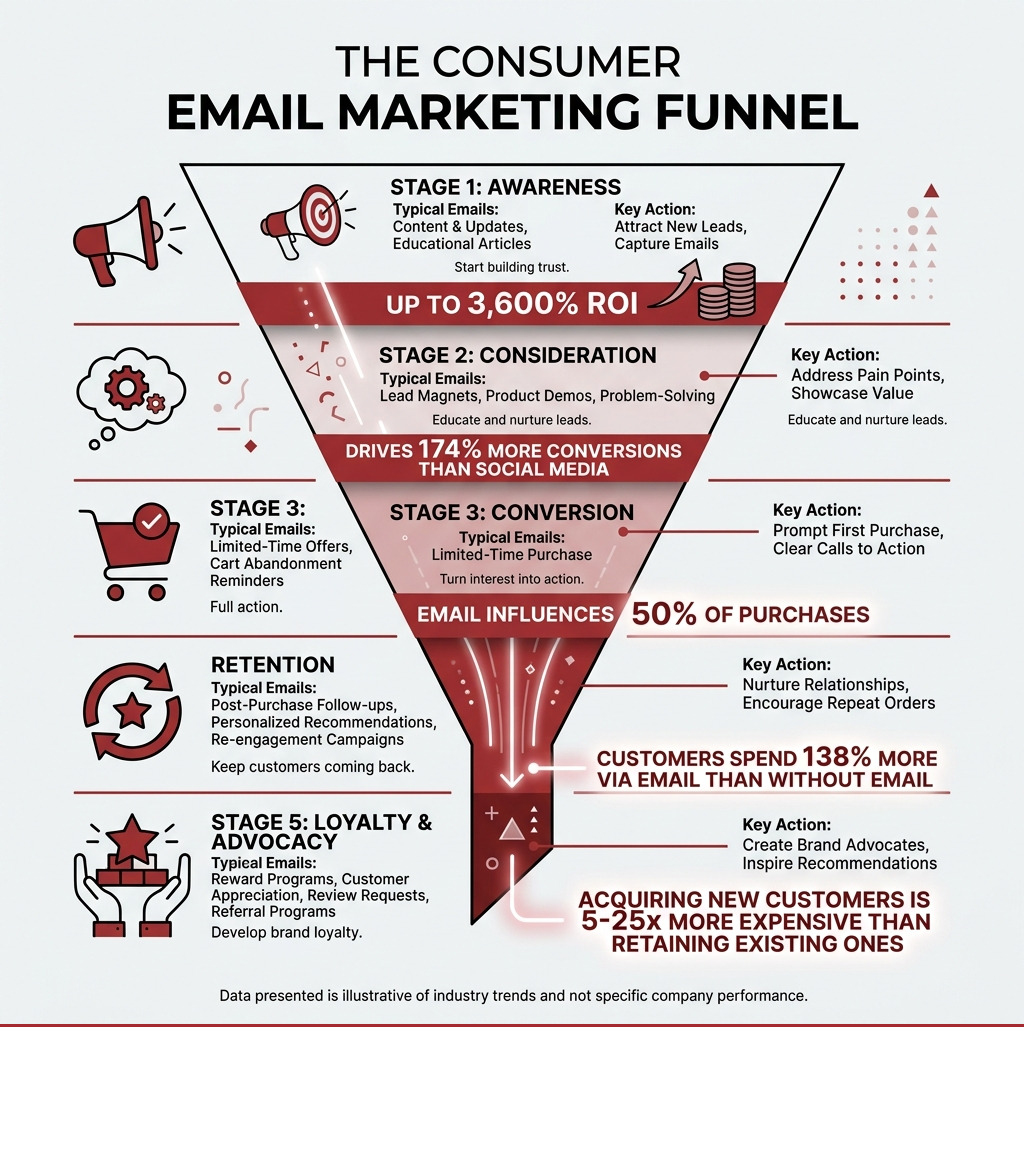
| Direct email communication with consumers | Delivers up to 3,600% ROI — $36 back for every $1 spent |
| Permission-based and opt-in | Reaches people who want to hear from you |
| Highly measurable | Track opens, clicks, and conversions in real time |
| Supports automation and personalization | Send the right message to the right person at the right time |
| Works across the full customer journey | From first touch to repeat purchase and loyalty |
Email lands directly in the inbox — not buried in a social media feed. With nearly 5 billion email users worldwide and 88% of people checking their email daily, no other channel gives you this level of direct access to your audience.
And yet, most small business owners either aren’t using email at all, or they’re sending generic blasts that get ignored. That’s a missed opportunity.
The global email marketing industry was valued at $8.3 billion in 2023 and is projected to nearly double to $18.9 billion by 2028. The businesses growing fastest right now are the ones using email strategically — with segmentation, automation, and personalization doing the heavy lifting.
I’m Jeff Pratt, owner of JPG Designs, a Rhode Island-based digital agency where I’ve spent over 15 years helping businesses build revenue-producing digital systems — including consumer email marketing strategies that turn subscribers into loyal customers. In this guide, I’ll walk you through exactly how to build, run, and optimize an email program that actually works today.
Consumer email marketing basics:
- Email marketing deliverability tips
- Email marketing personalization tips
- Advanced email analytics
Mastering Consumer Email Marketing Strategies
In the modern digital landscape, consumer email marketing has evolved from simple newsletters to highly sophisticated, data-driven ecosystems. To succeed today, we must move beyond the “batch and blast” mentality. Today’s consumers are savvy; they expect brands to understand their needs, preferences, and timing.
The secret to a high-performing strategy lies in the combination of four pillars: segmentation, personalization, automation, and AI integration. By leveraging these tools, we can ensure that every email sent provides genuine value rather than adding to the digital noise. For instance, according to recent benchmarks, healthy B2C brands drive between 20% and 40% of their total revenue through email marketing alone.
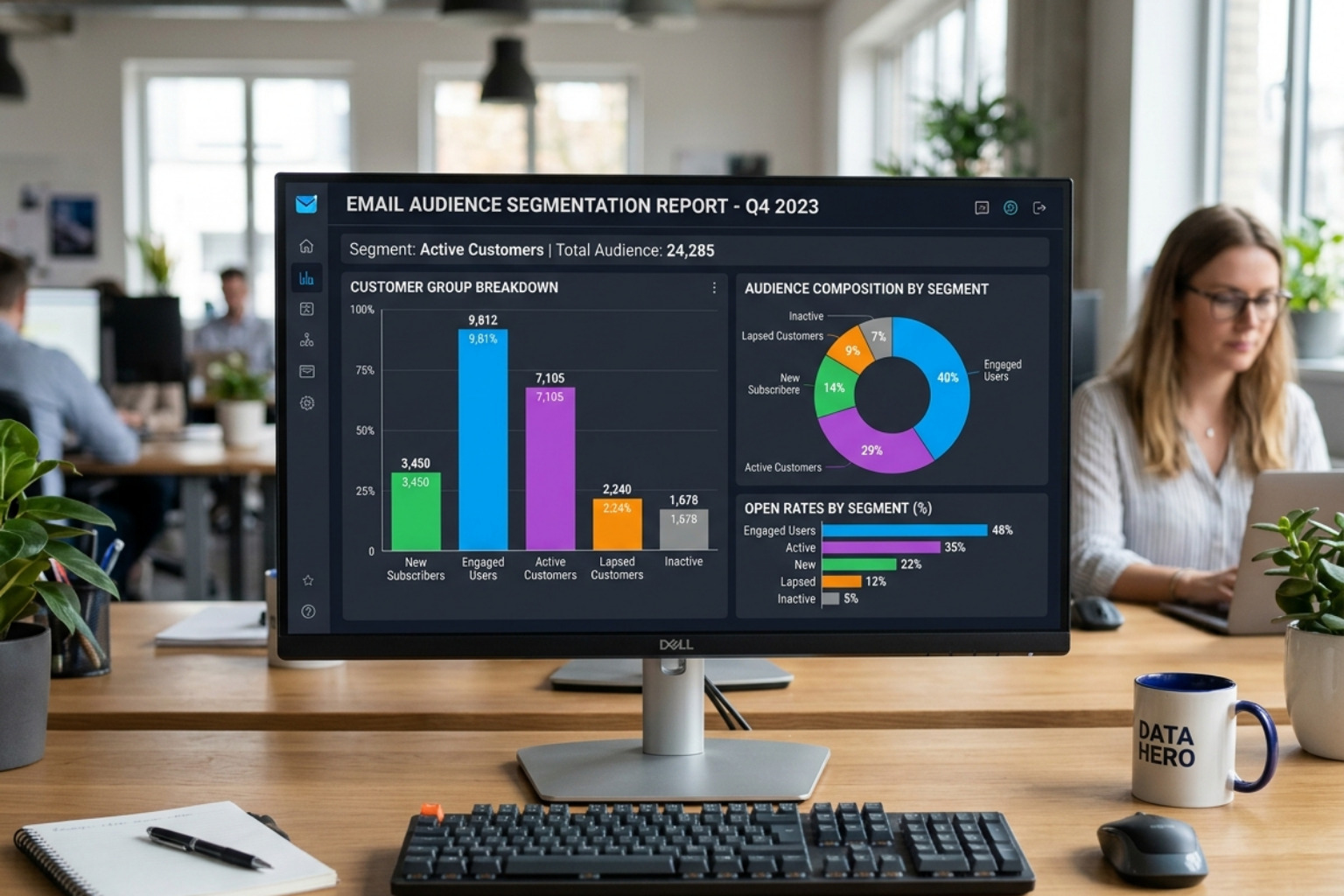
One of the most significant shifts we’ve seen is the move toward “owned channels.” With privacy changes like iOS 14.5 making third-party tracking more difficult, your email list is one of the few assets you truly own. It is a direct line to your customers that isn’t subject to the whims of social media algorithms. To get started on the right foot, check out our Unlocking The Power Of Email A Step By Step Guide for a foundational look at building your presence.
Furthermore, integrating AI isn’t just a futuristic concept; it’s a current necessity. AI helps us optimize send times (ensuring the email hits the inbox exactly when a specific user is likely to check it) and generate subject lines that actually get opened. For a deeper dive into how B2C brands are winning today, The B2C Email Marketing Guide – Klaviyo offers excellent insights into the current state of the industry.
Building an Organic Consumer Email Marketing List
If there is one rule we live by at JPG Designs, it’s this: Never buy an email list. Purchased lists are a fast track to the spam folder, low engagement, and potential legal trouble. Instead, we focus on organic growth—building a list of people who actually want to hear from us.
To grow an organic list, you need to provide an “ethical bribe” or a lead magnet. This is something of value that you give away in exchange for an email address. Common examples for consumer businesses include:
- Exclusive Discounts: A 10-20% off coupon for first-time subscribers.
- Gated Content: Useful guides, checklists, or lookbooks.
- Early Access: Being the first to know about new product drops or seasonal sales.
- Quizzes: “Find your perfect style” or “Which service do you need?” quizzes are incredible for collecting “zero-party data”—information the customer intentionally shares with you.
Once you have your lead magnet, you need high-converting landing pages and opt-in forms. These should be clean, mobile-responsive, and ask for the bare minimum of information (usually just a first name and email) to reduce friction. Using the Best Email Marketing Software For Small Businesses In 2022 can help you set up these forms quickly and professionally.
List building is a marathon, not a sprint. By focusing on quality over quantity, you ensure that your metrics remain healthy and your ROI stays high. For more on the fundamentals of setting up your first list, see these Email Campaign Basics and Best Practices | Salesforce.
Personalization and Segmentation in Consumer Email Marketing
If building the list is the engine, then personalization and segmentation are the high-octane fuel. Today, sending the same email to every person on your list is a recipe for “subscriber fatigue”—that moment when a user gets so bored of your irrelevant content that they hit the unsubscribe button (or worse, the spam button).
Segmentation is the process of dividing your list into smaller groups based on specific criteria. For consumer brands, we often segment by:
- Demographics: Age, gender, or location (essential for businesses in Rhode Island or Massachusetts).
- Behavioral Triggers: Did they click a link? Did they visit a specific product page?
- Purchase History: Are they a one-time buyer or a loyal VIP?
- RFM Analysis: This stands for Recency (how recently they bought), Frequency (how often they buy), and Monetary (how much they spend). This allows us to target big spenders differently than bargain hunters.
Personalization goes beyond just using the recipient’s first name. It involves dynamic content—elements of the email that change based on who is reading it. Imagine a clothing retailer sending an email where the images change based on the subscriber’s past browsing history: someone who looks at boots sees boots, while someone who looks at sneakers sees sneakers.
We always tell our clients: Stop Being A Stranger And Start Personalizing Your Emails. When a customer feels like you “get” them, they are much more likely to convert. For those looking to push the boundaries of what’s possible, exploring Beyond The Basics Unlock Your Inbox Potential With Advanced Email Marketing will show you how to use data to create truly immersive inbox experiences.
High-Performing Campaign Types and Automation
One of the most beautiful things about consumer email marketing is that the most profitable emails often send themselves. This is thanks to automation—setting up “flows” that are triggered by specific actions.
Here are the “Big Four” automated flows every consumer business needs:
- The Welcome Series: This is your first impression. It should trigger the moment someone signs up. Welcome emails have a 50% higher engagement rate than standard campaigns. Use this to introduce your brand story and deliver that lead magnet you promised.
- Abandoned Cart: This is the “low-hanging fruit” of email. If someone puts an item in their cart but doesn’t check out, an automated reminder can recover that sale. High-performing abandoned cart emails can generate significant revenue per recipient.
- Post-Purchase Flows: Don’t ignore a customer just because they bought something! Send a thank-you note, a request for a review, and recommendations for complementary products. This combats “buyer’s remorse” and sets the stage for the next sale.
- Win-Back Campaigns: If a subscriber hasn’t engaged or purchased in 90 days, send an automated “We miss you” email with a special incentive to bring them back into the fold.
Even service-based businesses can benefit from these tactics. For example, our guide on Plumber Email Marketing shows how local contractors can use automated reminders for annual maintenance to keep their schedules full year-round.
Design Best Practices and Mobile Optimization
Today, if your email doesn’t look good on a phone, it might as well not exist. Over 60% of all emails are now opened on mobile devices. At JPG Designs, our USP is mobile-first indexing, and we apply that same philosophy to email.
Essential Design Checklist:
- Single Column Layout: This is much easier to read on narrow screens.
- Large, Tappable Buttons: Your Call to Action (CTA) should be easy to hit with a thumb, not a tiny text link.
- Scalable Images: Ensure your images don’t break the layout or take forever to load. Use alt text for every image so that if the images are blocked, the user still knows what the email is about.
- Accessibility: Use high-contrast colors and readable font sizes (at least 14pt-16pt for body text).
- The Preheader: This is the “preview text” that appears after the subject line in the inbox. Use it to provide a “hook” that encourages the open.
For a deep dive into the technical side of making your emails shine, consult our Email Marketing Service Complete Guide. A well-designed email isn’t just about aesthetics; it’s about creating a frictionless path from the inbox to the checkout page.
Measuring Success and Ensuring Compliance
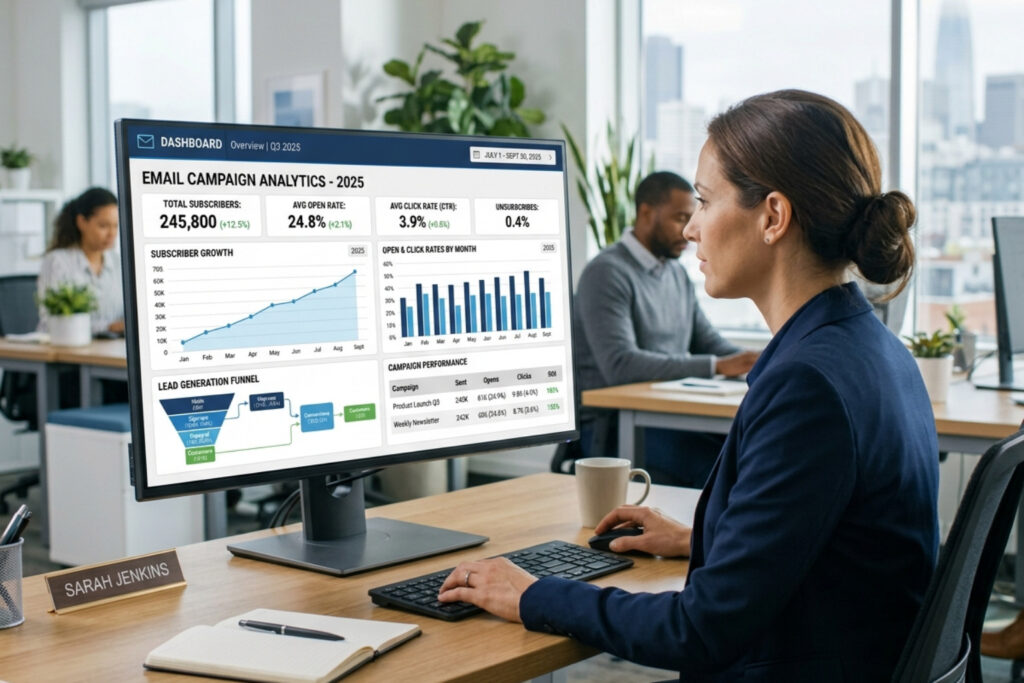
You can’t improve what you don’t measure. In consumer email marketing, we look at several Key Performance Indicators (KPIs) to judge the health of our campaigns.
| Metric | Benchmark (Avg) | What It Tells You |
|---|---|---|
| Open Rate | 15% – 25% | How effective your subject line and sender name are. |
| Click-Through Rate (CTR) | 2% – 5% | How engaging and relevant your content and CTAs are. |
| Conversion Rate | 1% – 3% | How well your email and landing page work together to drive a sale. |
| Bounce Rate | Under 2% | The “cleanliness” of your list (high bounces mean old/fake emails). |
| Unsubscribe Rate | Under 0.5% | Whether you are sending too many emails or irrelevant content. |
To get a clearer picture of your performance, we recommend using Advanced Email Analytics to track revenue per recipient (RPR) and long-term customer lifetime value.
A Note on Compliance: We must respect the law to protect our brand and our deliverability.
- CAN-SPAM (USA): Requires a clear way to unsubscribe, your physical business address in the footer, and honest subject lines.
- GDPR (Europe) / CCPA (California): Requires explicit consent and transparency about how you use data. Even if you are a local shop in Providence or Boston, if you have subscribers in these regions, you must comply.
Overcoming Deliverability and Spam Challenges
The biggest nightmare for any marketer is the “Spam Folder.” Deliverability is the art of ensuring your email actually reaches the inbox. This is determined by your Sender Reputation.
Think of your sender reputation like a credit score. If you send to “dead” emails, get high complaint rates, or use “spammy” words (like “FREE $$$ NOW!!”), your score drops.
How to stay out of the spam folder:
- Use SPF and DKIM: These are technical “signatures” that prove to email providers (like Gmail or Outlook) that the email is actually from you.
- Maintain List Hygiene: Regularly “scrub” your list to remove people who haven’t opened an email in over 6 months. It’s better to have a small, engaged list than a massive, dead one.
- Double Opt-In: Ask users to click a link in a confirmation email to verify their address. This ensures your list is high-quality from day one.
- Avoid Spam Triggers: Don’t use all caps in subject lines and keep your image-to-text ratio balanced.
If you’re looking for tools that help manage these technical aspects without breaking the bank, check out our comparison of the Unlock Savings Top Affordable Email Marketing Platforms Compared.
Scaling Your Strategy with JPG Designs
At the end of the day, consumer email marketing is about building relationships. It’s about being a welcome guest in someone’s inbox, not a nuisance. It takes time, data, and a bit of creative flair to get it right.
At JPG Designs, we specialize in more than just beautiful web design. We build the entire digital ecosystem that makes email marketing possible. From creating mobile-first websites that capture leads effectively to improving your Google rankings so new customers can find you, we provide the foundation for your growth.
If you are ready to stop guessing and start growing your revenue through a professional email strategy, we are here to help. Whether you are in Rhode Island, Massachusetts, or beyond, our team can help you navigate the complexities of modern marketing.
Ready to take the next step? Explore more info about digital marketing services or contact us today to see how we can turn your email list into your most profitable sales channel.
Frequently Asked Questions
Q: How often should I send marketing emails? A: For most consumer businesses, 1–4 times per month is a great starting point. The key is consistency. Don’t disappear for three months and then send five emails in a week.
Q: What is the best time to send emails? A: General research suggests mid-week mornings (Tuesday/Thursday at 10 AM) perform well, but the “best” time is whenever your specific audience is active. Modern AI tools can now automate this for each individual subscriber.
Q: Can I use AI to write my emails? A: Yes! AI is a great tool for overcoming writer’s block and generating subject line variations. However, always review and edit AI content to ensure it matches your unique brand voice and tone.