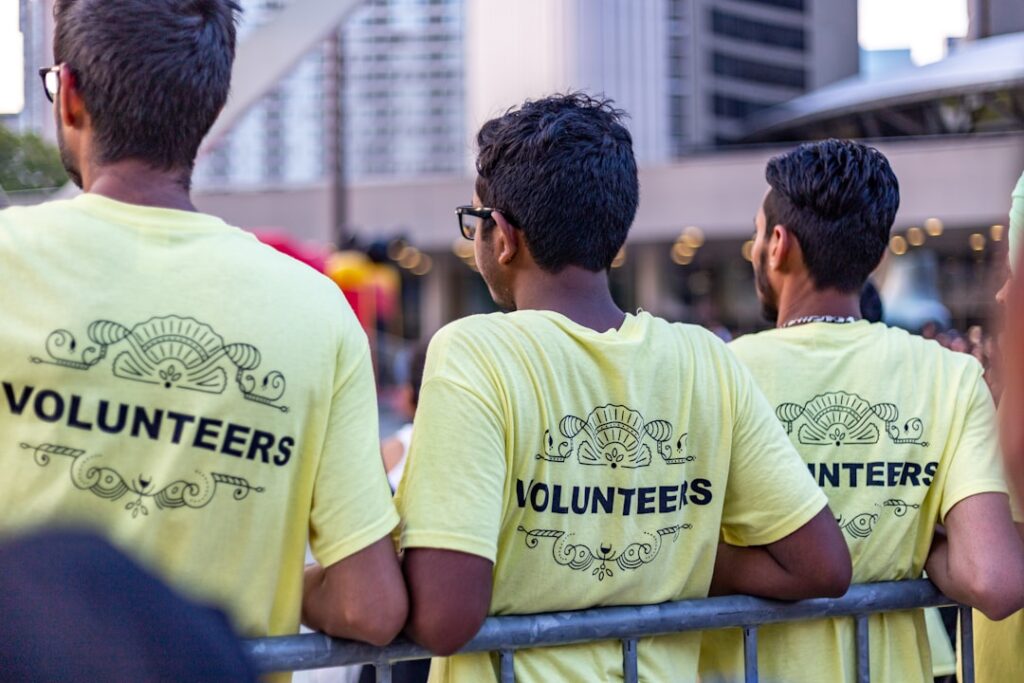
Why Web Development Non Profit Work Requires a Different Approach
Web development non profit organizations need is fundamentally different from commercial website work. Here’s what makes non-profit web development unique:
- Budget constraints – Nonprofits typically have 50-70% less budget than for-profit companies for web projects
- Mission-driven goals – Success is measured in donations, volunteer sign-ups, and community impact, not just traffic
- Multiple stakeholders – Boards, donors, staff, volunteers, and beneficiaries all need different things from the same site
- Trust requirements – Donors need transparency, credentials, and proof of impact before they contribute
- Accessibility mandates – Many nonprofits must meet WCAG 2.1 AA standards to serve diverse communities
Your website isn’t just a digital brochure. It’s the central hub where people learn about your cause, decide to donate, sign up to volunteer, and become long-term supporters. The difference between a website that simply exists and one that actively converts visitors into advocates can mean thousands of dollars in donations and dozens of new volunteers.
Non-profits face unique challenges. You’re working with limited budgets and small teams, yet you need to make a big impact. Your website has to work harder than a typical business site—it needs to tell your story, build trust, process donations securely, manage volunteers, promote events, and demonstrate real-world impact. All while being easy for non-technical staff to update.
Research shows that when done right, the impact is significant. Organizations report donation increases of 18-20% after strategic website improvements, with some specific features performing up to 50% better. One non-profit brought in $25,000 in just 4 hours through an optimized online campaign.
I’m Jeff Pratt, owner of JPG Designs, and I’ve spent my career helping organizations—including numerous nonprofits, educational institutions, and community groups—build websites that drive real results through strategic web development non profit solutions. My team understands that your website needs to do more than look good; it needs to convert compassion into action and visitors into lifelong supporters.
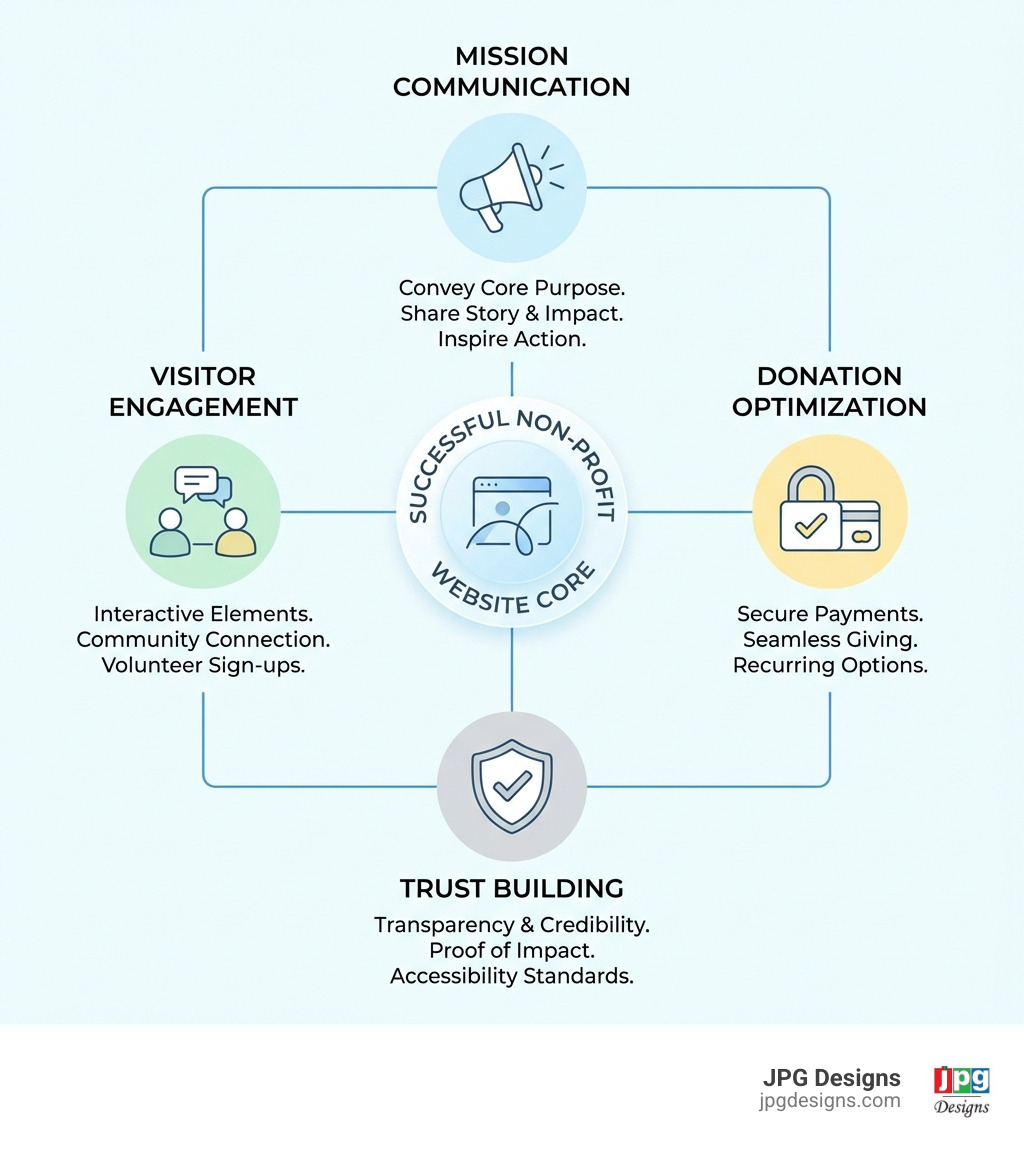
Web development non profit basics:
The Core of Effective Web Development Non Profit: Strategy and Storytelling

One of the biggest pain points we see with non-profit organizations is an unfocused website. Without a clear vision, your digital presence can become a jumble of information that confuses visitors and fails to inspire action. The solution? A clear, well-defined digital strategy that puts your mission and your audience at its heart.
For non-profits, your website is your most effective digital marketing tool—it’s the entrance to your organization. It must clearly and compellingly tell your story. This involves more than just listing facts; it’s about communicating your mission in a way that resonates emotionally with visitors. We begin with comprehensive user research and stakeholder research to understand who your audience is, what they need, and what motivates them. This allows us to map out user journeys and decision-making processes, ensuring every part of your website serves a purpose.
Our content strategy then takes center stage. We don’t just fill pages with text; we craft a narrative with a consistent tone and style that speaks directly to your supporters. A crucial part of this is ensuring inclusive and accessible content, making sure your message reaches everyone, regardless of their abilities. This user-focused approach to strategy, design, and development is what helps convert visitors into donors, volunteers, and ambassadors for your cause.
More info about our digital strategy services
Crafting a Compelling Narrative
To truly connect with your audience, your web development non profit efforts must prioritize compelling storytelling. This means moving beyond generic statements and embracing:
- Personal Narratives: Share stories of the individuals or communities your non-profit helps. These personal touches create an emotional connection that statistics alone cannot achieve.
- Success Stories: Highlight the positive outcomes of your work. How have donations or volunteer efforts translated into tangible change? Show, don’t just tell.
- Demonstrating Impact with Data: While emotional stories are powerful, data provides credibility. Present clear, concise statistics that quantify your impact. For example, “We planted 10,000 trees, improving air quality for over 5,000 residents in Rhode Island.”
- Jargon-Free Language: Avoid technical terms or internal acronyms that might confuse external visitors. Speak in plain, accessible language that anyone can understand.
- Consistent Tone and Voice: Ensure your brand’s personality shines through consistently across all website content. This builds recognition and trust.
- Building an Emotional Connection: Use evocative language and imagery that stirs empathy and inspires action.
- Using Powerful Imagery and Video: High-quality photos and videos can convey complex information quickly and effectively, making your mission more tangible and engaging. Visuals are often more memorable than text, especially for mobile users.
User Experience (UX) that Guides and Converts
The role of user experience (UX) and user interface (UI) design in web development non profit cannot be overstated. A beautiful website that’s hard to use is like a gorgeous car with no engine—it looks good, but it won’t get you anywhere. Our goal is to create websites that are not only visually appealing but also incredibly easy and enjoyable to steer, guiding your visitors seamlessly toward your mission.
- Information Architecture: This is the blueprint of your website, organizing content logically so users can find what they need effortlessly. We develop clear site maps and navigation structures.
- Wireframing and Prototyping: Before writing a single line of code, we create skeletal outlines (wireframes) and interactive mock-ups (prototypes) to test layouts and user flows. This allows us to refine the design based on feedback, saving time and resources in the long run.
- User Testing: We put our designs to the test with real users to identify any pain points or areas of confusion. This ensures the final product is intuitive and effective.
- Intuitive Navigation: Your website’s menu should be clear, concise, and easy to understand. Visitors should never feel lost or confused about where to go next.
- Mobile-First Design Approach: With over half of all website traffic coming from mobile devices, a mobile-first approach is essential. Your site must look and function flawlessly on smartphones and tablets. We build responsive mobile-first themes that adapt to any screen size, ensuring a positive experience for all users.
- Reducing Friction for Users: Every step a user takes on your site should be as smooth as possible. This means minimizing clicks, simplifying forms, and providing clear instructions.
- Guiding Visitors to Key Actions: Whether it’s a “Donate Now” button, a “Volunteer Sign-Up” form, or a “Learn More” link, your website should strategically place calls-to-action that guide visitors toward your primary goals.
Essential Features to Drive Donations and Engagement
A common pain point for many non-profits is low online donations and inconsistent engagement. The solution lies in integrating optimized features that make it easy for supporters to contribute and get involved. Your web development non profit project needs to include key functionalities designed to foster community and financial support.
Key Features for Driving Donations with web development non profit
For non-profits, the donation page is paramount. It needs to be simple, secure, and inspiring.
- Simple Donation Forms: Complex forms lead to abandoned donations. We design forms that are straightforward, asking for only essential information to reduce friction.
- Recurring Donation Options: Encourage sustained support by offering options for monthly, quarterly, or annual recurring donations. This provides a predictable revenue stream.
- Multiple Payment Gateways: Provide flexibility by integrating popular payment methods like credit cards, PayPal, and potentially even Apple Pay or Google Pay.
- Donation Impact Visualizer: Show donors exactly what their contribution can achieve. For example, “Your $50 donation can provide 10 meals for families in need.” Organizations like BuildOn effectively showcase their global impact and allow donors to allocate funds.
- Corporate Matching Gift Tools: Many companies offer matching gift programs. Integrating a search tool or information about these programs can significantly increase the value of donations. The ASPCA, for instance, uses a matching gifts page with a search tool.
- Secure Payment Processing (SSL): Trust is crucial when handling financial transactions. We ensure your website uses SSL certificates (HTTPS) for encrypted connections, protecting donor data and building confidence.
- More info about our web design services
Functionality for Community and Volunteer Engagement
Beyond donations, your website is a powerful tool for building a community of supporters and managing your invaluable volunteers.
- Volunteer Sign-Up Forms: Create clear, easy-to-find forms for prospective volunteers to express interest and sign up for opportunities. Include fields for skills, availability, and contact information.
- Event Registration Systems: If your non-profit hosts events (fundraisers, workshops, community gatherings), an integrated event calendar and registration system is a must. This streamlines sign-ups and payments.
- More info on charity event management
- Member-Only Portals: For membership-based non-profits, a secure portal can offer exclusive content, resources, or discussion areas, fostering a sense of community and value for members.
- Community Forums: Platforms for discussion and interaction can strengthen bonds among supporters, allowing them to share experiences, ask questions, and connect with your cause on a deeper level.
- Newsletter Sign-Ups: An email list is one of the most cost-effective tools for donor engagement and fundraising. Make it easy for visitors to subscribe to your newsletter to stay informed and engaged.
- Social Media Feed Integration: Displaying live social media feeds on your homepage keeps your content fresh and encourages visitors to follow you on other platforms, expanding your reach.
Leveraging WordPress and SEO for Maximum Reach
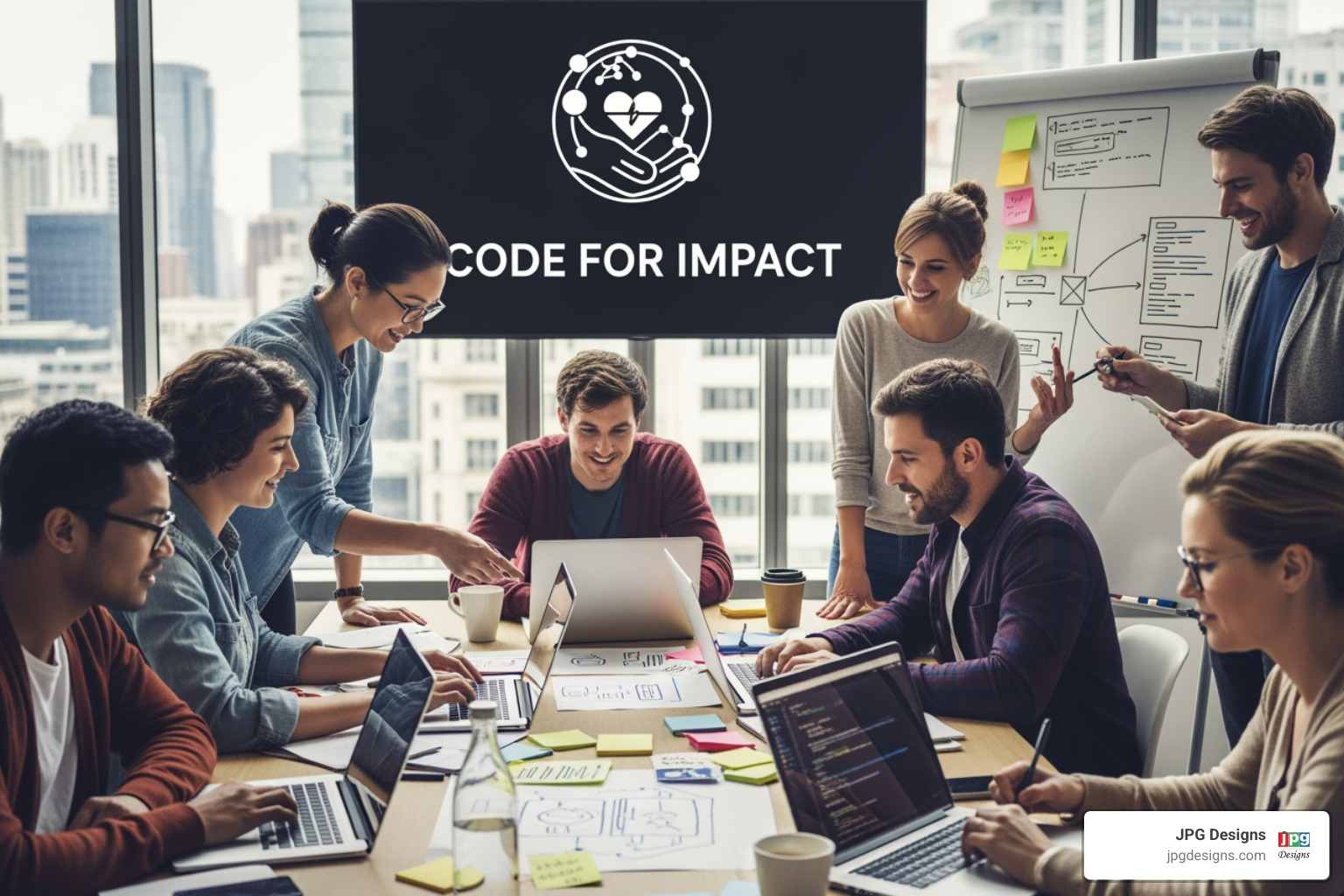
For many non-profits, budget is a primary concern, and technical expertise may be limited. This is where WordPress shines. It’s a powerhouse for web development non profit organizations, offering a perfect blend of cost-effectiveness, scalability, and user-friendliness. In fact, WordPress is the most highly adopted content management system in the sector, with a significant majority of non-profits globally leveraging its power.
Beyond the platform, having a strong online presence means being found by those who care about your cause. This is where Search Engine Optimization (SEO) comes into play. By optimizing your website for search engines, we can significantly increase your online visibility, helping you reach potential donors, volunteers, and beneficiaries who are actively searching for organizations like yours in Rhode Island and Massachusetts.
Why WordPress is the Go-To for Non-Profits
WordPress is more than just a blogging platform; it’s a robust content management system (CMS) that offers unparalleled flexibility for non-profits.
- Custom Themes and Plugins: While pre-built themes are budget-friendly, WordPress allows for custom themes and a vast ecosystem of plugins custom to non-profit needs. This means you can add specific functionalities like donation tracking, event management, or volunteer sign-ups without custom coding from scratch.
- Security and Maintenance: A well-maintained WordPress site is secure. We emphasize the importance of regular updates to the WordPress core, themes, and plugins to protect against vulnerabilities and ensure your site runs smoothly.
- Large Support Community: With its widespread adoption, WordPress boasts an enormous community of developers and users, meaning help and resources are readily available.
- Integration Capabilities: WordPress integrates seamlessly with a multitude of third-party tools, including CRMs, email marketing platforms, and donation software, creating a cohesive digital ecosystem for your non-profit.
- Empowering Non-Technical Staff to Manage Content: Perhaps one of WordPress’s greatest strengths for non-profits is its intuitive backend. It’s designed to be user-friendly, allowing even the least technical staff members to update content, post news, and manage basic site elements without needing to know a single line of code. This reduces reliance on external developers for simple updates, saving time and money.
- More info on website maintenance
SEO and Accessibility: Getting Found and Being Inclusive
Building a great website is only half the battle; people need to be able to find it, and everyone needs to be able to use it.
- Keyword Research for Mission-Related Terms: We conduct thorough keyword research to identify the terms and phrases your target audience uses when searching for causes like yours. This ensures your content is optimized for what people are actually looking for.
- On-Page SEO Best Practices: This includes optimizing page titles, meta descriptions, headings, and image alt text with relevant keywords. We also focus on creating high-quality, informative content that answers user questions and demonstrates your expertise.
- Local SEO for Community-Based Organizations: For non-profits serving specific communities in Rhode Island or Massachusetts, local SEO is crucial. This involves optimizing your Google My Business profile, building local citations, and ensuring your address and contact information are consistent across the web.
- Website Accessibility (WCAG): Ensuring your website is accessible to all users, including those with disabilities, is not just good practice—it’s often a legal requirement. We design and develop websites that adhere to standards like WCAG 2.1 AA, making sure everyone can access your information and engage with your mission. This includes providing alternative text for images, clear color contrast, keyboard navigation, and proper semantic HTML.
- Learn more about web accessibility standards
Building Trust and Measuring Website Success
A significant pain point for non-profits is the constant need to prove credibility to donors and stakeholders. The solution lies in building clear trust signals directly into your website and carefully tracking your performance to demonstrate impact. Your web development non profit strategy must include both.
How to Build Credibility Through Your Website
Trust is the bedrock of any successful non-profit. Your website is often the first interaction a potential donor or volunteer has with your organization, so it must instill confidence immediately.
- Displaying Credentials: Clearly showcase your legal status (e.g., 501(c)(3) status in the US) and any relevant registrations or affiliations. This immediately signals legitimacy.
- Showcasing Board Members and Staff: Transparency about your leadership team, including photos and brief bios, humanizes your organization and builds confidence.
- Publishing Annual Reports: Make your financial transparency readily available. Posting annual reports, impact reports, and audited financials demonstrates accountability and responsible use of funds.
- Donor Testimonials: Nothing speaks louder than the words of satisfied supporters. Feature quotes, stories, or even short video testimonials from individuals or organizations who have contributed to your cause.
- Clear Contact Information: Ensure your website has easily accessible contact information, including phone numbers, email addresses, and physical addresses for your offices in Rhode Island or Massachusetts. This shows you are reachable and transparent.
- Professional Design: A well-designed, modern, and functional website signals professionalism and competence. Conversely, an outdated or poorly functioning site can erode trust.
Measuring Your Website’s ROI
How do you know if your web development non profit investment is paying off? By measuring what matters. We can help you set up robust analytics to track your website’s performance against your organizational goals.
- Tracking Donation Conversion Rates: This is a crucial metric. How many website visitors complete a donation? We monitor this to identify opportunities for optimization and improvement.
- Monitoring Volunteer Sign-Ups: Track the number of individuals who complete your volunteer application or inquiry forms. This helps assess the effectiveness of your volunteer recruitment efforts.
- Measuring Email List Growth: Your email list is a vital asset. Monitor how many new subscribers you gain through your website to gauge content engagement and outreach effectiveness.
- Analyzing User Engagement Metrics: Beyond conversions, we look at metrics like time on site, bounce rate, pages per session, and popular content to understand how users interact with your website. This provides insights into what’s working and what could be improved.
- Setting Clear Goals: Before we even begin development, we work with you to establish clear, measurable goals for your website. What does success look like for your non-profit? Is it a 20% increase in donations, a 15% increase in volunteer sign-ups, or improved engagement with your educational resources?
- Using Data to Make Informed Decisions: With Google Analytics and other tracking tools, we provide you with the data you need to understand your audience better, refine your strategies, and continuously improve your website’s performance. Some organizations have seen KPIs jump 18-20%, and specific components improve by as much as 50% after strategic improvements.
Frequently Asked Questions about Non-Profit Web Development
How much should a non-profit budget for a new website?
Budgeting for a new website is a common concern for non-profits, and the answer isn’t one-size-fits-all. Project costs can vary widely depending on several factors:
- Complexity: A simple informational site will cost less than one with extensive custom features, member portals, or complex integrations.
- Custom Features: The more unique functionalities you require (e.g., custom donation dashboards, advanced event management, specialized volunteer matching), the higher the cost.
- Agency Choice: Working with a specialized web development non profit agency that understands your unique needs often provides better value and expertise, though their rates might differ from a generalist firm. Typically, a professional website can range from $1,000 to $8,000 or more, depending on these factors.
- Tiered Pricing Models: Many agencies offer tiered packages (e.g., Standard, Advanced, E-commerce) to suit different budget levels and functional requirements.
- Focus on Value and ROI: Instead of just looking for the lowest price, consider the long-term return on investment (ROI). A well-designed website that effectively converts visitors into donors and volunteers will pay for itself many times over.
- Account for Ongoing Costs: The initial build is just one part of the investment. You’ll need to budget for ongoing website hosting and domain name registration, which are essential for keeping your site online. While some designers might offer “free” website design, these fundamental ongoing costs remain the non-profit’s responsibility.
How can we ensure our website is secure, especially with donor data?
Security is paramount, especially when handling sensitive donor information. We prioritize robust security measures for all our non-profit clients:
- Use a Secure Hosting Provider: Choose a reputable web host that offers strong security protocols, regular backups, and reliable uptime.
- Implement SSL Certificates (HTTPS): An SSL certificate encrypts the connection between your website and your visitors’ browsers, protecting data transfer. This is indicated by “HTTPS” in your website’s URL and a padlock icon. Google also gives preference to secure websites in search rankings.
- Choose a Reliable CMS and Keep it Updated: Platforms like WordPress are generally secure, but only if kept up-to-date. Regular updates to the WordPress core, themes, and plugins are crucial to patch vulnerabilities.
- Use Trusted Donation Plugins/Software: Integrate with well-established and secure donation platforms or plugins that specialize in handling financial transactions safely.
- Adhere to Data Privacy Laws: Ensure your website complies with relevant data privacy regulations, such as GDPR (General Data Protection Regulation) or other regional laws, especially if you collect personal data from users in those areas. This includes clear privacy policies and cookie consent mechanisms.
What is the single most important element of a non-profit website?
While many elements contribute to a successful non-profit website, if we had to pick just one, it would be a clear and compelling call-to-action (CTA).
Your website needs to guide users toward specific goals. The primary “Donate” button, for instance, should be prominent, easy to find, and strategically placed on every page. But CTAs aren’t just about donations; every page should encourage a specific next step, whether it’s:
- “Volunteer Now”
- “Sign Up for Our Newsletter”
- “Learn More About Our Programs”
- “Attend an Event”
- “Read Our Impact Report”
A strong CTA removes ambiguity and tells your visitors exactly what you want them to do, converting passive interest into active engagement. Without clear guidance, even the most beautifully designed and informative website can fail to achieve its mission-driven objectives.
Conclusion: Your Website as a Mission-Amplifier
In the dynamic world of digital presence, a well-crafted website is no longer a luxury but a necessity for non-profits. It’s the engine that drives your mission forward, changing passive visitors into passionate supporters. We’ve explored the unique challenges faced by non-profits and how strategic web development non profit solutions, coupled with powerful storytelling, intuitive user experiences, essential features, and robust SEO, can overcome them.
A website isn’t just a cost; it’s an investment in your cause, empowering your organization to change more lives in Rhode Island, Massachusetts, and beyond. At JPG Designs, we understand the unique needs of non-profits, and we’re committed to helping you amplify your impact.
Ready to take the next step and lift your digital presence? Let’s build a website that not only tells your story but also inspires action and drives real change.