Why Analytics for Nonprofit Organizations Is a Game-Changer
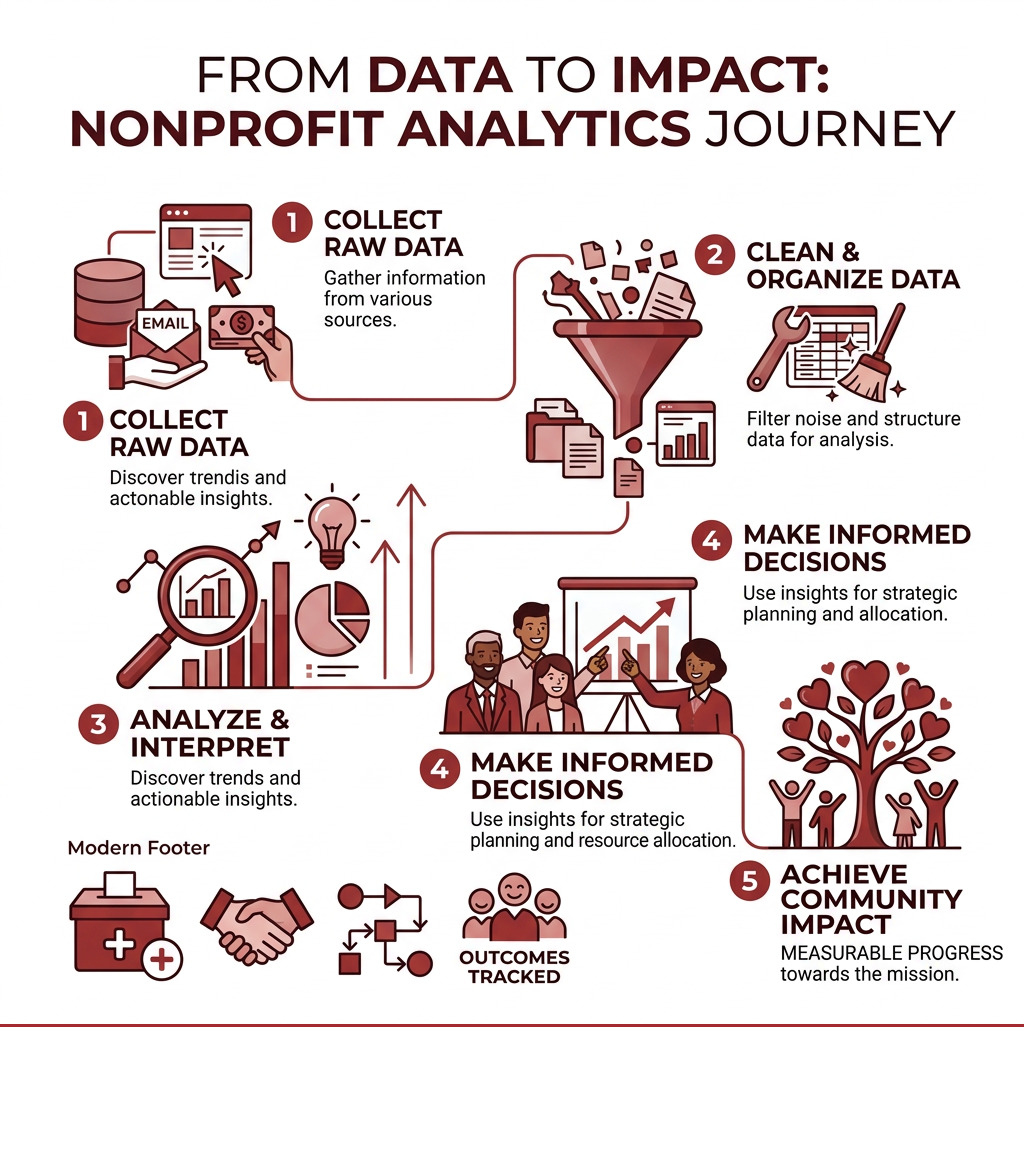
Analytics for nonprofit organizations is the process of collecting, organizing, and using data to make smarter decisions — about fundraising, donor engagement, program effectiveness, and daily operations.
Here’s a quick look at what nonprofit analytics can do for you:
| Goal | How Analytics Helps |
|---|---|
| Raise more money | Identify top donors and optimize campaigns |
| Keep donors longer | Spot at-risk donors before they lapse |
| Stretch your budget | Cut waste by finding operational inefficiencies |
| Prove your impact | Track and report program outcomes clearly |
| Grow online | Measure website traffic, conversions, and email performance |
Most nonprofits are sitting on a goldmine of data — and not using it.
Every donation, email open, website visit, and volunteer sign-up tells you something important. But without a system to capture and read that data, it just disappears.
The problem isn’t a lack of data. It’s a lack of time and tools to turn that data into decisions.
Consider this: nonprofits spend 80% of their time on manual data cleanup instead of actually learning from their data. That’s time that could be spent serving your community, not wrestling with spreadsheets.
And the stakes are high. With 88% of funding coming from just 12% of donors, knowing who your best supporters are — and how to reach them — isn’t optional. It’s survival.
This guide breaks down exactly how to use analytics to work smarter, not harder, even with a lean team and a tight budget.
I’m Jeff Pratt, owner of JPG Designs, a digital agency with extensive experience helping nonprofits build data-informed digital strategies — from website performance to implementing analytics for nonprofit organizations of all sizes. I’ve seen how the right data setup can transform a mission-driven organization’s reach and results, and I’m here to walk you through it step by step.
Analytics for nonprofit vocab to learn:
Maximizing Impact with Analytics for Nonprofit Organizations
In our experience working with non-profit-organizations across Rhode Island and Massachusetts, we’ve found that many teams feel like they are constantly running on a treadmill. They are working hard, but they aren’t always moving forward as fast as they’d like. This is where analytics for nonprofit organizations changes the game. It moves you from “guessing” to “knowing.”
The Power of the 88/12 Rule
One of the most eye-opening statistics in the sector is that 88% of funding comes from 12% of donors. If we treat every person in our database exactly the same, we are wasting precious resources. Analytics allows us to identify that 12% — the major donors and the “super-supporters” — so we can nurture those relationships with the care they deserve.
Fixing the Leaky Bucket
The average donor retention rate typically hovers between 40% and 45%. That means for every ten donors you recruited last year, six are likely gone. By using data to spot patterns in why donors leave, we can intervene early. For example, if the data shows that donors who haven’t been contacted in 90 days are 50% more likely to lapse, we can automate a “we miss you” message to keep them engaged.
Streamlining the Workflow
Many small teams are overwhelmed by admin tasks. We want to help you move away from manual entry and toward automated insights. When you unlock-giving-easy-ways-to-accept-online-donations, you aren’t just making it easier for the donor; you are creating a digital paper trail that can be analyzed instantly.
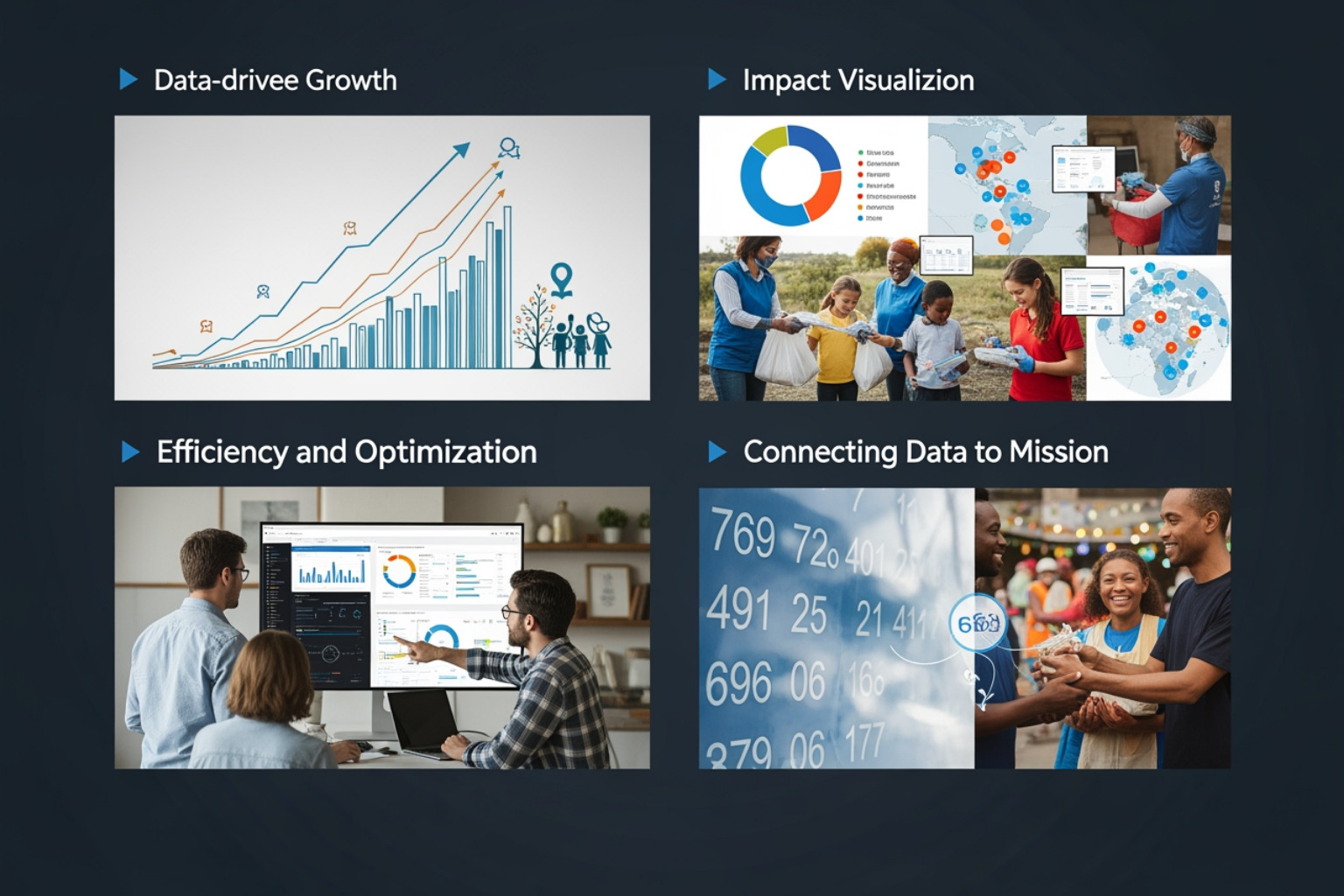
Manual vs. Automated Analytics Workflows
| Feature | Manual Data Entry (The Old Way) | Automated Analytics (The New Way) |
|---|---|---|
| Time Spent | Hours of “cleanup” and spreadsheet wrestling | Minutes to generate a live report |
| Accuracy | High risk of human error and duplicates | Consistent, verified data from the source |
| Insight Speed | Insights are weeks or months old | Real-time data for weekly decisions |
| Donor View | Fragmented (email here, donations there) | 360-degree view of every supporter |
Leveraging Donor Analytics for Nonprofit Growth
Donor analytics isn’t just a list of names and numbers. It’s a deep dive into the “who,” “what,” and “why” of your support base. By building detailed individual profiles, we can tailor our marketing to match donor interests.
1. Demographic and Psychographic Insights
Demographics tell you who they are (age, location, job), but psychographics tell you why they care. For example, if your data shows a group of donors values fitness and community, they might be the perfect audience for 5K fundraisers rather than a formal gala.
2. Giving Patterns and RFM
We look at Recency, Frequency, and Monetary value (RFM).
- Recency: When was their last gift?
- Frequency: How often do they give?
- Monetary: How much do they give? A donor who gives $10 every single month is often more valuable over the long term than a one-time $100 donor because their “lifetime value” is higher and their support is predictable.
3. Predictive Modeling
Advanced analytics for nonprofit use cases involve predictive modeling. This uses historical data to forecast future behavior. If we know that a donor’s wealth markers and past engagement align with major gift behaviors, we can prioritize a personal meeting with them. Currently, only about 13% of nonprofits are using AI for this, which means there is a huge opportunity for your organization to get ahead of the curve.
Measuring Program Effectiveness and Operational Efficiency
It’s not enough to say we are doing good work; we have to prove it. Donors and grant-makers are increasingly looking for “outcomes,” not just “outputs.”
Tracking Outcomes
Instead of just reporting that we served 500 meals, analytics helps us track the long-term impact on those it serves. Did those 500 meals lead to improved health outcomes? Did the after-school program lead to higher graduation rates? Data allows us to tell that story with confidence.
Operational Efficiency and Cost Reduction
Every dollar saved on operations is another dollar for your mission. By analyzing spending patterns, we can identify “bottlenecks.” For instance, if data shows that staff are spending 10 hours a week manually reconciling donation receipts, we can implement a tool to automate that, effectively “hiring” back a quarter of a staff member’s time for free.
The Importance of Data Hygiene
None of this works if your data is “dirty.” Practice good data hygiene by regularly auditing your database, removing duplicates, and standardizing how you enter information. Clean data is the foundation of any successful digital strategy.
Essential KPIs and Web Analytics for Nonprofit Success
At JPG Designs, we specialize in helping organizations understand their digital footprint. Your website is often the first point of contact for a new donor, so we need to know how it’s performing.
Google Analytics for Nonprofits
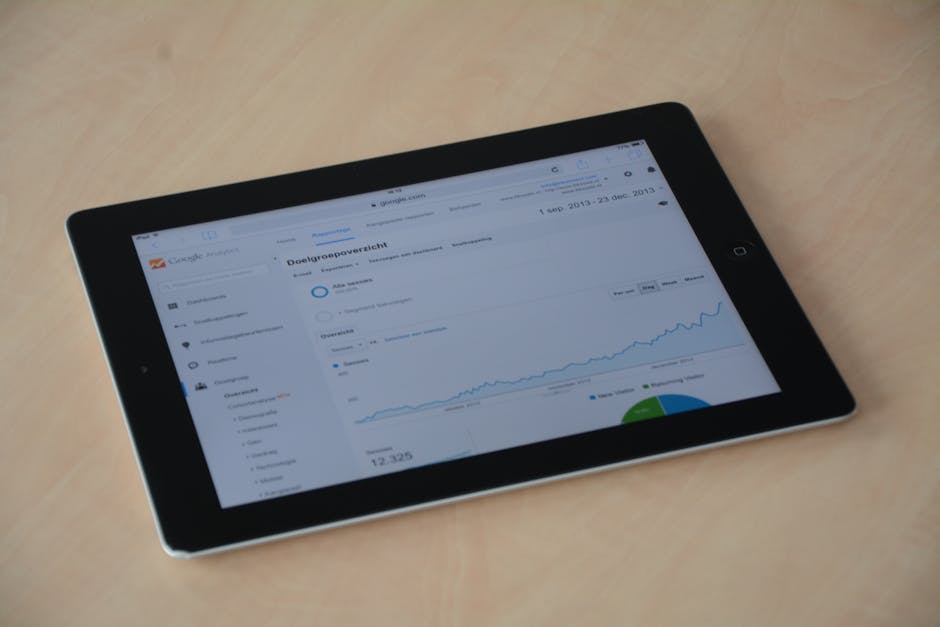
Google Analytics is a must-have free tool. It helps us see where your visitors are coming from and what they do once they arrive. If you want to dive deeper, check out our guide on everything-you-need-to-know-about-google-analytics.
Key Metrics to Track:
- Organic Traffic: This accounts for 44% of total traffic to nonprofit websites. If this number is low, you need a strong nonprofit SEO strategy.
- Conversion Rate: What percentage of visitors actually donate? According to M+R Benchmarks, desktop visitors have a 16% conversion rate on donation pages, while mobile visitors are at 10%. This is why we focus on mobile-first design.
- Average Session Duration: For nonprofits, the industry standard is between two and three minutes. If people are leaving in under 30 seconds, your content isn’t resonating.
- Email Performance: The average nonprofit raises nearly $5,600 per email campaign. Tracking click-through rates (the industry average is around 2-3%) helps us refine our messaging.
Implementing a Data-Driven Culture on a Limited Budget
We know that most nonprofits don’t have a “Data Scientist” on staff. The good news is that you don’t need one to start using analytics for nonprofit growth. You just need a plan.
The 30-Day Implementation Plan
- Week 1: Define Your Goals. Pick 3-5 key decisions you want to make (e.g., “Which email subject lines work best?”).
- Week 2: Audit Your Tools. Are you using your CRM to its full potential? Is Google Analytics installed?
- Week 3: Clean the Data. Spend time merging duplicates and fixing formatting issues.
- Week 4: Run Your First Report. Don’t aim for perfection; aim for one actionable insight.
Leveraging Free Resources
Don’t leave money on the table. The Google Grant provides up to $10,000 per month in free search advertising for eligible nonprofits. This is a massive opportunity to drive traffic and collect data at no cost. Additionally, search ads have the highest ROI for nonprofits at $4.78 for every dollar “spent.”
The Role of AI and Ethics
While only about 13% of nonprofits use AI for predictive analytics, that number is growing. AI can help summarize qualitative feedback from surveys or predict which donors are likely to increase their giving. However, we must always prioritize data privacy and transparency. Ensure your privacy policy is clear and that you are using donor data ethically.
Overcoming Common Data Challenges and Fragmentation
The biggest hurdle we see is “data silos.” Your donation data is in one place, your email data is in another, and your volunteer hours are in a third. This fragmentation leads to that “80% cleanup” problem we mentioned earlier.
Centralized Reporting
The goal is to move toward a non-profit-digital-strategy where all your systems talk to each other. When your CRM integrates with your website and your email platform, you get a single source of truth. This allows for web-design-services-for-non-profit-organizations that aren’t just pretty to look at, but are built to capture and funnel data effectively.
Good Data Hygiene Habits
- Standardize Entry: Decide now if it’s “Street” or “St.” and stick to it.
- Regular Audits: Schedule a quarterly “data cleaning” day.
- Unique IDs: Use unique IDs for every person to prevent the same “John Smith” from appearing three times.
Future-Proofing Your Mission with AI and Predictive Insights
As we look toward the future, analytics for nonprofit organizations will become even more sophisticated. We are moving from “What happened?” (Descriptive Analytics) to “What should we do?” (Prescriptive Analytics).
Outcome Forecasting
Imagine being able to forecast exactly how much a year-end campaign will raise based on the first three days of data. This allows you to adjust your strategy in real-time, sending an extra push if you’re behind or pivoting your messaging if a specific story isn’t landing.
Professional Development and Certification
For those looking to lead this charge within their organization, the CFRE International application offers education points for data and fundraising training. Investing in your team’s “data literacy” is one of the best long-term moves you can make.
Real-World Impact
We’ve seen nonprofits use these insights to:
- Identify that 10% of their donors were eligible for corporate matching gifts, but only 1.31% were actually being matched. By adding a simple “check your eligibility” tool, they doubled their revenue from those donors.
- Discover that a specific geographic region in Massachusetts had a high concentration of lapsed donors, leading to a targeted “re-engagement” event in that area.
- Switch from expensive direct mail to high-ROI search ads, saving thousands in printing and postage.
Conclusion: Data is the Wind in Your Sails
At JPG Designs, we believe that your mission is too important to be left to chance. By embracing analytics for nonprofit organizations, you aren’t becoming “corporate” — you are becoming more effective. You are ensuring that every hour of volunteer time and every dollar of donor money is used to its maximum potential.
Whether you are a small charity in Rhode Island or a large foundation in Massachusetts, the path to greater impact starts with the data you already have. Let’s stop cleaning and start learning.
Are you ready to transform your nonprofit’s digital presence and start making data-driven decisions? We are here to help you build a website and a digital strategy that works as hard as you do.
Ready to grow? Explore our Web Design Services for Non-Profit Organizations or learn more about SEO for nonprofits to start reaching more supporters today.