Why Charity Event Management Matters for Your Mission
Charity event management is the strategic process of planning, executing, and following up on events to raise funds and awareness for your nonprofit. It involves everything from setting goals and creating a budget to marketing, coordinating logistics, and building lasting donor relationships.
After your event, does this question linger: Did you just throw a party, or did you genuinely connect people to your mission? According to a Community Brands study, only 30% of event planners are confident in their attendee experience strategy. This means 70% of organizations may be using limited resources on events without a clear plan for the attendee’s journey.
Effective event management doesn’t require a massive budget; it requires a structured approach that ties every touchpoint back to your mission. When done right, events build community, create emotional connections, and turn attendees into lifelong advocates.
This guide provides a step-by-step framework for nonprofits to plan, execute, and follow up on successful fundraising events. You’ll learn to align your event with your mission, secure sponsorships, market effectively, and maximize your impact.
I’m Jeff Pratt, owner of JPG Designs. For over 15 years, I’ve helped nonprofits build digital systems to support their fundraising. Through effective charity event management and strong online strategies, we help organizations amplify their missions and create lasting community connections.
The Blueprint for Success: Strategic Planning and Goal Setting
Most events fail not on the day of, but months earlier when the strategic foundation isn’t laid. Organizations often jump to booking entertainment without first asking: Why are we doing this? What do we want to achieve?
Strategic planning is where you define your event’s purpose, align it with your mission, choose the right format, and create a workable budget. It’s the architectural plan for your event; skipping it is a recipe for chaos.

This phase is about crafting your event’s story, evaluating what’s feasible, and making smart decisions about your time and money. Get this right, and everything else becomes easier.
Aligning Your Event with Your Mission and Goals
Every charity event must raise both funds and awareness. Your event is a stage to show supporters what you do, why it matters, and how their involvement creates change. To be effective, your event must echo your mission in everything. If you run a literacy program, incorporate storytelling. If you protect wildlife, include nature-inspired activities. This consistency builds credibility and helps people understand what they’re supporting.
To make this concrete, set SMART goals—Specific, Measurable, Achievable, Relevant, and Time-bound. Instead of a vague goal like “get more donors,” aim for “recruit 150 new donors through event registrations by December 31st.”
These goals become your Key Performance Indicators (KPIs). Beyond the total funds raised, track metrics like:
- New donor acquisition: How many first-time supporters did you engage?
- Volunteer sign-ups: How many attendees want to get more involved?
- Social media engagement: Are people talking about your cause online?
- Post-event engagement: How many attendees stayed connected afterward?
Defining these KPIs upfront ensures every decision moves you toward a specific, measurable outcome.
Choosing the Right Event Format for Your Audience
With your goals set, choose an event format that fits your audience and objectives. The right choice depends on who you’re trying to reach.
- Galas are formal affairs ideal for cultivating major donors and corporate partners, but they require a substantial budget.
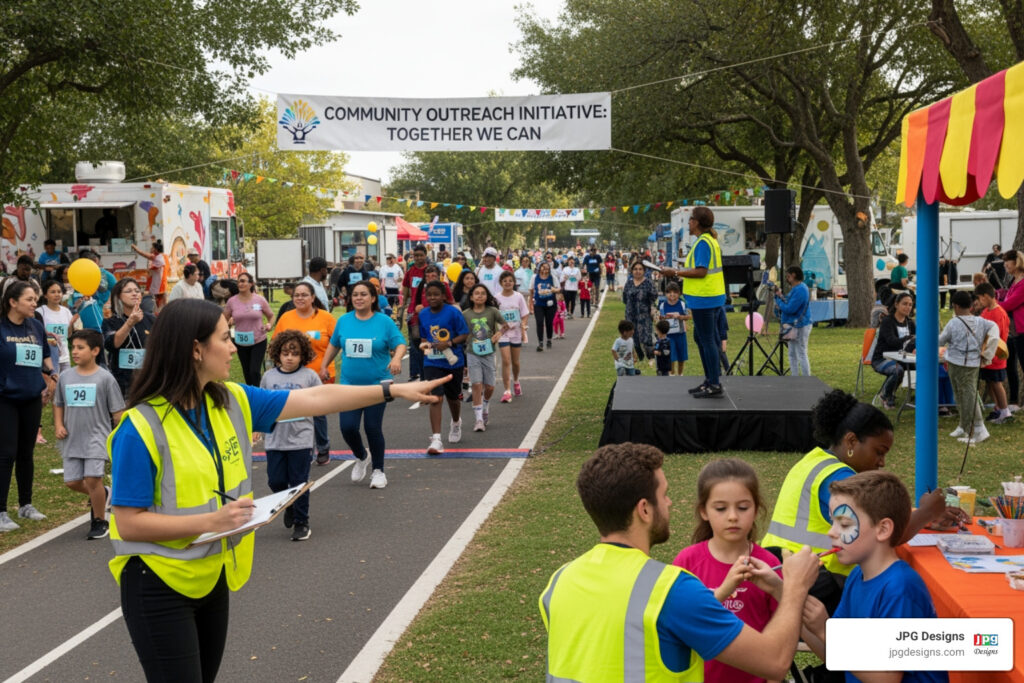
- Fun runs and community walks are accessible to a wider audience, including families. They are great for peer-to-peer fundraising and have a lower budget. Theme ideas like color runs can make participation more memorable.
- Auctions (live, silent, or online) create competitive energy that drives donations. They work well when you can secure desirable items or experiences.
- A golf or putt-putt tournament combines sponsorships with community-building competition.
- Virtual and hybrid events minimize overhead and expand your reach globally. A hybrid event blends in-person connection with digital participation, but requires reliable streaming technology to engage both audiences equally.
The format should feel natural for your cause and audience. Don’t default to the same event every year if it isn’t meeting your goals.
Creating a Detailed Budget to Maximize ROI
A detailed budget maximizes your fundraising while minimizing costs. It’s a living document that guides every spending decision.
Start by listing all potential expenses. Venue and catering costs are often the largest, so choose thoughtfully. A community center might work just as well as a pricey hotel. A buffet is more cost-effective than a plated dinner. For entertainment, consider asking talented local performers to donate their time.
Budgeting tips emphasize securing in-kind donations—donated goods and services that reduce your out-of-pocket expenses. Local businesses are often willing to contribute products or services.
Always include a contingency fund of 10-15% of your total budget for unexpected costs. This buffer prevents last-minute panic.
Finally, track every expense in real-time using a spreadsheet or CRM. This discipline keeps you on budget and provides accurate data for calculating your return on investment. The goal isn’t just to raise money—it’s to raise significantly more than you spend.
Fueling Your Mission: Sponsorships, Marketing, and Outreach
With a solid blueprint, it’s time to build momentum. This phase of charity event management shifts from planning to action: securing funding and creating the buzz that will fill seats and inspire giving. Strong sponsorships and smart marketing are essential to prevent a well-planned event from falling flat.

This is about building bridges—connecting your mission with corporate partners and reaching potential attendees where they are. These connections fuel your event budget, community presence, and long-term donor relationships.
Securing Corporate Sponsorships and Building Partnerships
Corporations give billions to nonprofits annually, seeking causes that align with their values. To stand out, you must show them why your event deserves their support.
Start by identifying prospects whose brand values match your mission. An environmental group should target outdoor retailers; a children’s literacy program should approach bookstores. Next, create tiered sponsorship packets. These are sales tools that outline exactly what sponsors get for their investment. Include your mission, event details, fundraising goals, and specific benefits at each level (e.g., logo placement, speaking opportunities, social media recognition).
Effective event sponsorship strategies involve building relationships. Use a constituent relationship management (CRM) system to track every interaction—who you’ve contacted, their response, and their interests. A sponsor who has a positive experience is more likely to return and increase their commitment next year.
Effective Marketing to Boost Visibility and Engagement
Will people show up? Effective marketing turns your planning into participation. The foundation is storytelling that creates emotional connections. Instead of just announcing your event, share the story of someone whose life was changed by your work. Show attendees the impact their ticket purchase will make.
Use a multi-channel approach to meet people where they are:
- Social Media: Create a unique event hashtag and encourage staff, volunteers, and sponsors to use it. It’s the top channel for event promotion because it fosters organic conversation.
- Email Automation: Set up automated sequences for save-the-dates, registration confirmations, reminders, and thank-yous. Segment your audience for personalized messaging.
- Text Messaging: With a 98% open rate, texts are powerful for last-minute reminders and urgent updates. Use them sparingly to maintain their impact.
- Your Website: Your well-designed nonprofit website is your promotional hub. Create a dedicated landing page with all essential details and an easy registration process.
- Google Ad Grants: Eligible nonprofits can receive up to $10,000 per month in free advertising from Google Ad Grants, dramatically expanding your reach.
The goal is engagement that converts interest into action. Every marketing touchpoint should make it easy for someone to register, share, or donate.
Flawless Execution: Mastering Charity Event Management
The planning is done and the word is out. Now, charity event management shifts from strategy to action. Your job is to create an experience so smooth and engaging that attendees leave feeling connected to your mission.
This section covers the logistical backbone of your event: coordinating volunteers, managing vendors, and using technology to create a seamless experience that turns attendees into advocates.
Streamlining Logistics and Empowering Volunteers
Logistics can make or break your event. When choosing a venue, ask about capacity, accessibility, parking, and included amenities. Then, create detailed contracts with all vendors (caterers, AV technicians, decorators) that specify deliverables, arrival times, and a day-of contact.
Your volunteers are the heroes of the event. To recruit and train a team of volunteers effectively, follow these steps:
- Match people to roles that fit their skills (e.g., detail-oriented people for registration, outgoing people as greeters).
- Create clear role descriptions so everyone knows what is expected.
- Hold a pre-event training session to walk through the schedule, answer questions, and build morale.
- Establish a day-of communication plan, like a group messaging app, for quick updates.
- Show appreciation with breaks, snacks, and heartfelt thank-you notes after the event.
When volunteers feel prepared and valued, it lifts the entire attendee experience.
Leveraging Technology for Smooth Event Operations
Technology is essential for modern charity event management. According to Community Brands research, 48% of event planners prioritize new tech. The right tools eliminate manual work and provide real-time insights.
- Event software automates ticketing and registration, collecting the data you need and updating your database in real time.
- Payment processing capabilities must be secure and simple, handling credit cards and digital wallets seamlessly. The easier it is to give, the more people will.
- Mobile check-in with QR codes eliminates long lines at the door, setting a professional tone from the start.
- Integrated fundraising tools let you manage online auctions and track donations from a single dashboard.
- Real-time reporting allows you to see how much you’ve raised at any moment, helping you make informed decisions like launching a last-minute matching gift challenge.
Delivering an Impactful Day-Of Experience
All the planning culminates in the day-of experience. Your goal is to engage people from arrival to departure.
Start with a warm welcome from a visible, friendly greeting team and use clear signage to help attendees steer. Throughout the program, create “mission moments”—a short video, a heartfelt testimonial, or a live demonstration—to remind attendees why they are there. These emotional touchpoints show tangible impact and inspire generosity.
For cultivating major donors, consider offering exclusive experiences like a private meet-and-greet or reserved seating. Keep the program flow smooth with a well-rehearsed agenda to prevent awkward transitions and maintain energy. Finally, publicly acknowledge your sponsors and volunteers through shout-outs and prominent logo displays. Recognition shows gratitude and reinforces the partnerships that make your work possible.
Beyond the Event: Maximizing Impact and Building for the Future
Your work isn’t over when the guests leave. The post-event phase is where you solidify connections, prove your impact, and build the foundation for future success. The event created the spark; now it’s your job to fan it into a lasting flame of support.
Tracking Success and Evaluating Event ROI
Did the event work? To understand its true value, you must track key metrics beyond the final donation total. Analyze these KPIs to get a complete picture:
- Net Revenue: Total funds raised minus all event expenses.
- Cost-Per-Dollar-Raised: How efficiently you raised funds (e.g., it cost $0.50 to raise every $1.00).
- New Donor Acquisition Rate: The number of first-time givers.
- Attendee Satisfaction: Feedback gathered from post-event surveys.
- Media Mentions & Social Reach: How far your message traveled online and in the press.
- Post-Event Engagement: Open rates and click-throughs on follow-up communications.
Compile these results into a comprehensive impact report to demonstrate their impact to your board, donors, and other stakeholders. Show not just the dollars raised, but the awareness generated and community built.
Best Practices for Post-Event Engagement and Stewardship
Post-event engagement is where you transform one-time attendees into lifelong supporters. Don’t drop the ball.
- Thank Supporters Promptly: Send personalized thank-you emails or notes within 48 hours.
- Share the Results: Within a week, announce your fundraising totals and explain the tangible impact. Instead of “we raised $50,000,” say “your generosity will provide meals for 200 families.”
- Gather Feedback: Send a short survey to ask what attendees loved and what could be improved.
- Nurture New Donors: Welcome first-time givers into your community with stories about your work and invitations to get more involved. This is key to strengthening donor relationships.
- Maintain Momentum: Use the event’s energy to announce your next volunteer opportunity or campaign.
Common Mistakes in Charity Event Management (and How to Avoid Them)
Knowing common pitfalls helps you avoid them. Here are the biggest mistakes to watch out for:
- Unclear Goals: Hosting an event “because we always have” is a trap. Define SMART goals before you begin planning.
- Poor Budgeting: Overspending can turn a fundraiser into a money pit. Create a detailed budget, include a 10-15% contingency fund, and seek in-kind donations.
- Neglecting Promotion: A great event needs an audience. Develop a multi-channel marketing plan early and use your well-designed nonprofit website as the central hub.
- Forgetting Follow-Up: This mistake leaves money and relationships on the table. Plan your stewardship strategy before the event.
- Underutilizing Volunteers: Confused or unappreciated volunteers affect the attendee experience. Recruit and train volunteers thoughtfully and thank them often.
- Ignoring Technology: Manual processes create bottlenecks. Accept the right event software for registration and use modern payment processing capabilities to make giving easy.
- Clunky Attendee Experience: Long lines or confusing signage create stress. Walk through the attendee journey beforehand to fix friction points.
Frequently Asked Questions about Charity Event Management
Here are straightforward answers to the most common questions about charity event management.
What is the primary purpose of a charity event?
A charity event has two primary purposes: raising essential funds and raising awareness for your mission. While fundraising is critical, the event is also a unique opportunity to create a memorable, emotional connection to your work. It’s where you can transform one-time donors into lifelong advocates by showing them your impact firsthand.
How do you measure the success of a charity event?
Success is measured by more than just the final donation total. A comprehensive evaluation includes:
- Net revenue and return on investment (ROI) to gauge financial efficiency.
- The number of new donors acquired to measure audience growth.
- Attendee satisfaction, gathered through surveys, to predict future attendance.
- Media mentions and social media reach to assess brand awareness.
- Post-event engagement rates to see who remains interested in your cause.
Tracking these metrics provides a complete picture of your event’s total impact.
What’s the most important element of planning a charity event?
The most critical element is having a clear purpose and a set of goals that align directly with your nonprofit’s mission. This foundation guides every subsequent decision, from choosing the event format and budget to crafting marketing messages and planning your follow-up strategy. When your entire team understands the “why” behind the event, you create a cohesive and authentic experience that resonates with attendees and drives meaningful results.
Conclusion: Turn Your Vision into a Successful Reality
You now have a roadmap for changing fundraising events into powerful mission moments. Effective charity event management is about creating experiences that turn casual supporters into lifelong advocates.
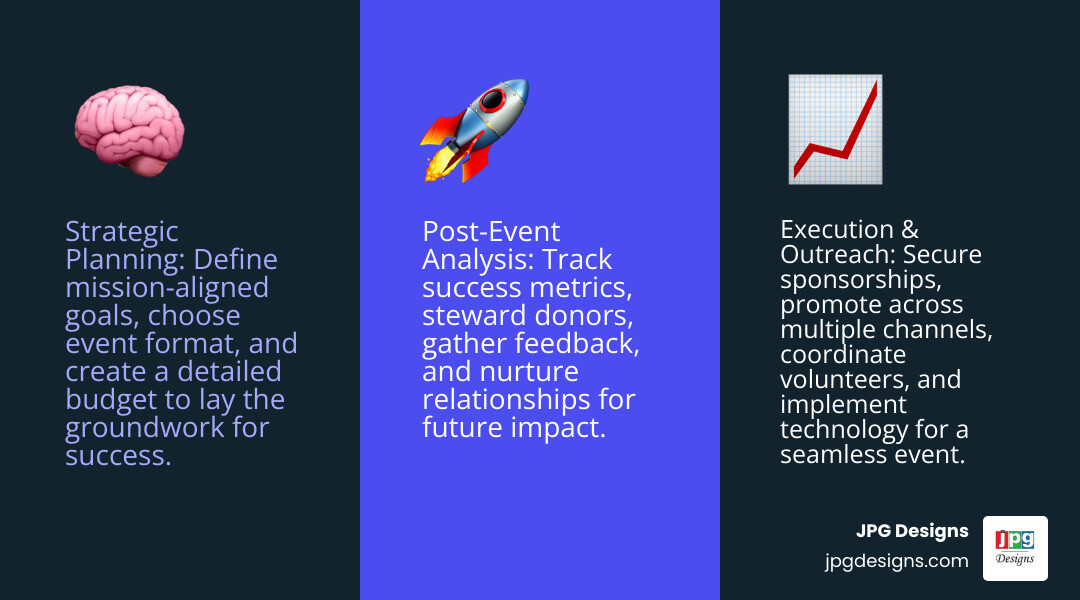
We’ve covered the three essential stages: strategic planning to set your foundation, flawless execution to bring your vision to life, and thoughtful follow-up to turn event energy into sustained momentum. The real power of a well-managed event is in the ripples of impact it creates—the new volunteer, the committed corporate partner, and the first-time donor who becomes a monthly giver.
Organizations with a strong online presence consistently see greater event success. Your website is your 24/7 fundraising hub, storytelling platform, and the first impression for potential supporters. It’s the digital foundation that supports every aspect of your mission.
At JPG Designs, I’ve spent over 15 years helping nonprofits in Rhode Island and beyond build websites that work hard for their mission, making it easy for supporters to engage, donate, and spread the word.
Ready to build the digital foundation that will amplify your next event’s impact?