
Why Every Non-Profit Needs a Clear Digital Roadmap
Non-profit digital strategy is a comprehensive plan that outlines how your organization will use digital technology—from your website to email marketing to social media—to advance your mission, engage supporters, and achieve fundraising goals.
What a strong non-profit digital strategy includes:
- Clear, measurable goals tied to your mission and fundraising targets
- Optimized website as your central hub for engagement and donations
- Defined audience personas and custom messaging for each
- Strategic channel selection (email, social media, search) based on where your supporters are
- Performance tracking through analytics to measure what’s working
- Budget and tools aligned with your capacity and growth plans
- Team roles and training to ensure effective execution
A staggering 87% of nonprofits don’t have a digital strategy in place, leading to wasted effort, missed donations, and supporters who can’t connect with your cause. The good news? You don’t need a massive budget or a tech team—just a clear playbook to turn your mission into measurable digital action.
Today’s supporters research online, expect mobile-friendly experiences, and want to see your impact through stories. If your digital presence falls short—as many nonprofits report theirs does—you’ll lose them. This is about building a focused system that connects your cause with the people who care.
I’m Jeff Pratt, owner of JPG Designs. For more than a decade and a half, I’ve helped nonprofits and community programs build digital presences that drive real results. A strong non-profit digital strategy is no longer optional; it’s the foundation for sustainable growth and impact.
The ‘Why’: The Urgent Need for a Cohesive Digital Plan
Let me be direct: a non-profit digital strategy isn’t a nice-to-have anymore. It’s essential.
Without a strategy, your hard work on social media, email, and your website is likely disconnected and inefficient. Up to 85% of organizations agree that a lack of digital strategy is a major challenge. I’ve seen passionate Rhode Island nonprofits struggle to translate their real-world impact online. Their message gets lost, donation processes are confusing, and supporters can’t find them.
It’s not about trends; it’s about a comprehensive plan that ensures your digital presence serves your mission. Your mission is too important to be invisible online. Whether you’re in Providence or Cranston, your cause deserves to be seen and supported. A strong non-profit digital strategy transforms scattered activities into a focused engine for change, ensuring every online interaction moves you closer to your goals.
The Core Benefits of a Strong Digital Strategy
When you implement a thoughtful digital strategy, all those disconnected pieces start working together.
- More efficient operations: Automate tasks like thank-you emails and event reminders to free up your team for mission-critical work.
- Improved fundraising: An optimized donation process, targeted email campaigns, and inspiring social media appeals work together to boost funding.
- Data as an asset: Understand your supporters—who they are, how they engage—to personalize communication and build deeper relationships.
- Scaled impact: Reach thousands of people with your message without needing thousands of staff members.
- Expanded community reach: Break down geographical barriers, allowing someone in Woonsocket or a former resident now in California to connect with and support your cause.
- Stronger supporter relationships: Consistent, meaningful touchpoints through digital channels build trust and loyalty over time.
For more on why your online presence matters so much, check out The Importance of a Well-Designed Website for Nonprofits.
The Cost of Inaction: What Happens Without a Strategy?
Now let’s talk about what happens when you don’t have a strategy. It’s not pretty.
- You’re losing donations. A confusing or non-mobile-friendly donation process turns supporters away. With 17% of American adults being “smartphone-only” internet users, a poor mobile experience is a critical failure.
- Supporters are drifting away. Sporadic communication means you’re forgotten between appeals. Out of sight is out of mind.
- You’re wasting resources. Disconnected tools and ineffective content creation waste precious time and money that could go toward your mission.
- Your growth has stalled. Without effectively reaching new audiences and engaging existing ones, fundraising and volunteer recruitment plateau.
- You risk becoming irrelevant. An outdated digital presence makes your entire organization seem outdated, regardless of your real-world impact. Perception matters.
The truth is, every nonprofit from Cranston to Cumberland deserves an online presence that reflects the dedication and impact of their real-world work. Your digital strategy shouldn’t be an afterthought—it should be a core part of how you advance your mission.
The Blueprint: Building Your Non-Profit Digital Strategy Step-by-Step
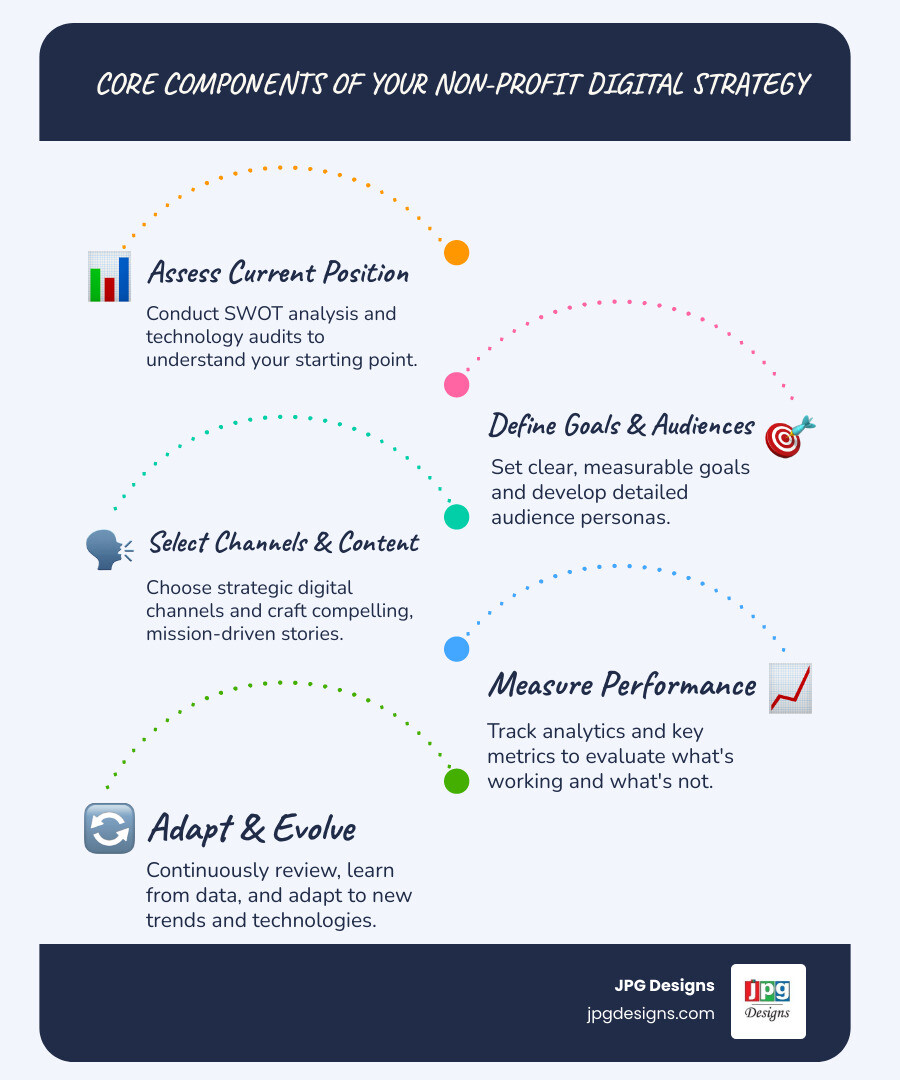
Building an effective non-profit digital strategy doesn’t have to be overwhelming. It’s a focused plan to achieve your goals through smart digital marketing—a roadmap to amplify your mission online. A structured approach helps you define objectives, use resources wisely, and measure what works. Your strategy is a living document that should adapt as your organization grows.
Step 1: Assess Your Current Position and Define a Winning Non-profit Digital Strategy
You can’t chart a course if you don’t know where you’re starting. This first step is about taking an honest look at where your organization stands today.
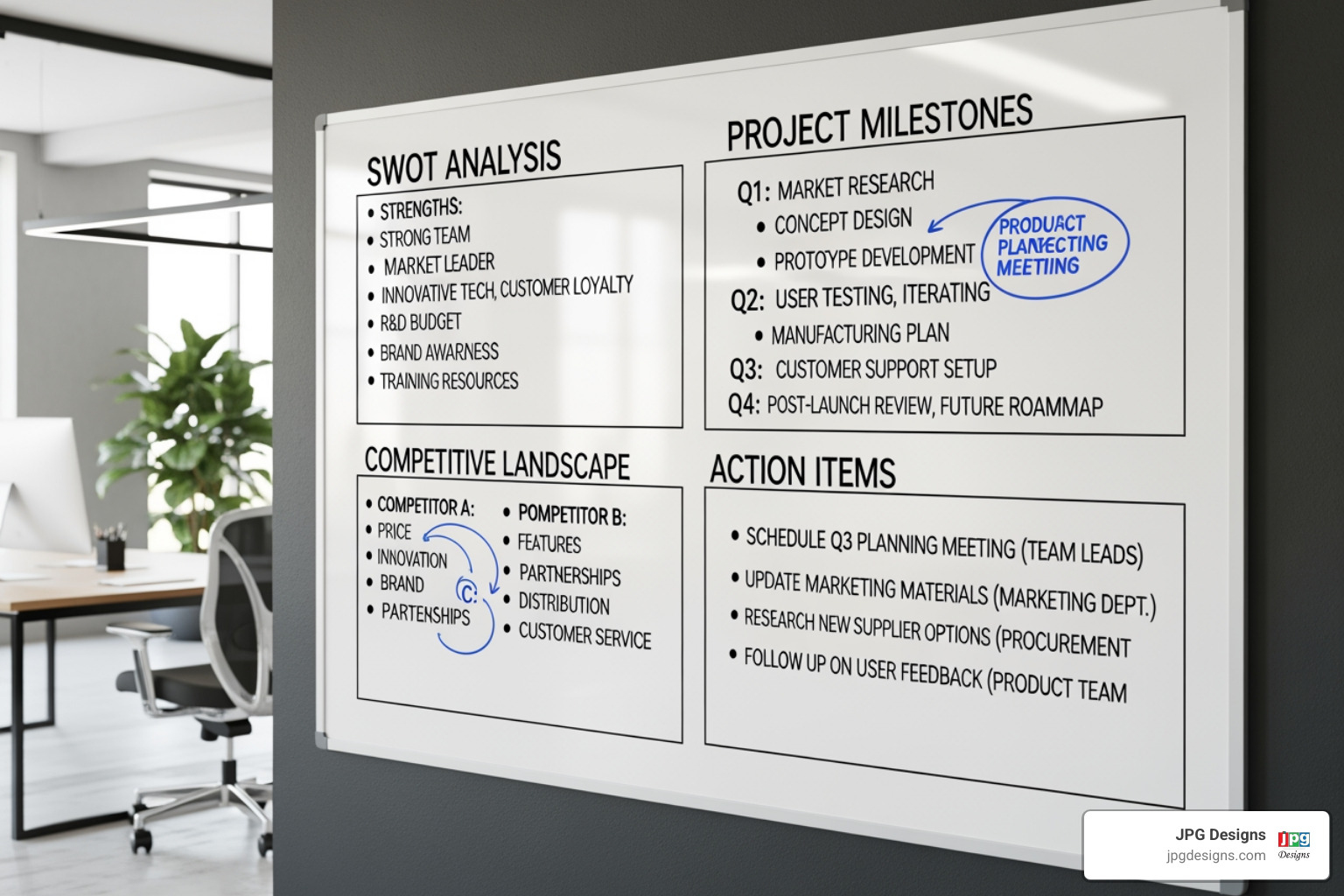
- SWOT Analysis: Start by examining your Strengths, Weaknesses, Opportunities, and Threats. Where do you shine digitally? What’s holding you back (like 83% of nonprofits, it might be limited staff expertise)?
- Technology Stack Audit: List all your digital tools (website platform, CRM, email software). Are they working together, or are you manually copying data?
- Audience Personas: Define who you’re trying to reach. A young donor in Providence engages differently than a retired volunteer in Westerly. Understanding them helps you craft messages that resonate.
- Fundraising Alignment: Your digital strategy must directly support your fundraising goals. How will your website convert visitors? Which channels will find new supporters?
- SMART Goals: Set goals that are Specific, Measurable, Achievable, Relevant, and Time-bound. Instead of “get more donations,” aim for “increase monthly recurring donors from 50 to 75 by December 31st.”
Step 2: Budget, Tools, and Team Alignment
Once you know where you are and where you want to go, it’s time to talk resources.
- Budgeting: Most nonprofits have tight budgets. Your technology budget includes software, consulting, integrations, and maintenance. Technology is an investment in your mission’s future. For more, see our insights on 3 Technological Expenses You Should Budget For.
- Choosing the Right Tools: The best strategy uses multiple tools working together. Find solutions that are easy to use, scalable, and integrate well. We can help you find the right fit for your needs and budget, whether you’re in Newport or North Kingstown.
- Tool Integrations: When your tools talk to each other, your data flows seamlessly. A website donation can automatically update your CRM, trigger a thank-you email, and segment the donor for future communications, saving hours of staff time.
- Team and Training: Even the best tools are useless without a trained team. Investing in training is essential to get real value from your digital tools. This is a critical step, as 83% of organizations are held back by a lack of staff expertise.
- Roles and Responsibilities: Define who manages the website, social media, and data analysis. Clear roles ensure tasks get done instead of falling through the cracks.
The Toolkit: Channels and Content to Amplify Your Mission
With your blueprint ready, it’s time to build your digital toolkit. This means choosing the right channels and creating content that connects with your supporters. It’s not about being everywhere, but about building a bridge between your mission and your supporters.

Your Website: The Digital Hub for Your Mission
Your website is the central hub of your non-profit digital strategy and your most powerful engagement tool. All other channels should lead back to it. Since 17% of American adults are smartphone-only internet users, your site must be mobile-friendly. Responsive Web Design: A Must-Have for Modern Websites is essential to ensure a perfect experience on any device, from a phone in Pawtucket to a desktop in Cranston.
Beyond mobile, your site needs excellent user experience (UX): intuitive navigation, fast load times, and engaging visuals. Guide visitors with clear calls-to-action like “Donate Now” or “Volunteer Today.” Make donating simple with secure, mobile-friendly forms that require minimal steps. Website Accessibility is also essential, ensuring everyone can access your content and demonstrating your commitment to inclusivity.
Social Media & Email: Building Community and Driving Action
Your key channels should work in harmony: your website is the hub, email marketing nurtures relationships, social media builds community, online advertising expands reach, and SEO ensures you’re found in searches.
On social media, focus on building genuine community, not chasing vanity metrics like likes and followers. Build real connections by sharing consistent, valuable content, interacting with your audience, and showing the people behind your mission. Work smarter by repurposing content across platforms. For more, see our Strategies for Effective Social Media Marketing.
Email marketing offers high ROI when done right. The keys are personalization and segmentation. Use compelling subject lines, scannable content, and a single, clear call-to-action. Lead with emotion to remind supporters of their impact.
The Power of Storytelling and Compelling Content
People forget statistics, but they remember stories. Storytelling is vital for connecting emotionally and inspiring action. While Content is King, compelling stories are the crown jewels.
When sharing impact, focus on individual change and make the supporter the hero. Show how their donation or volunteer hours led to a positive outcome. Video is a powerful medium for these stories, and behind-the-scenes content builds transparency and connection.
Follow the principles in The 10 Ingredients of Great Content Writing to ensure all your content is clear, engaging, and serves your mission. Every piece of content you create should move your supporters closer to action.
The Long Game: Measuring, Adapting, and Future-Proofing
A successful non-profit digital strategy is like a garden: it needs regular attention to thrive. As the digital landscape shifts, your strategy must adapt with it. The most impactful organizations aren’t those with the biggest budgets, but those who use data to learn and adapt.
Step 3: Execute and Measure Your Non-profit Digital Strategy
Measurement is essential; without it, you’re just guessing. You need to know if your strategy is actually working.
- Key Performance Indicators (KPIs): These metrics tie directly to your SMART goals. Track website conversion rates, email list growth, social media engagement, and donation data to see what’s working.
- Website Analytics: Use tools like Google Analytics to understand visitor behavior. Monitor bounce rates, time on page, and goal completions to see how users interact with your site.
- Email Metrics: Track open rates to gauge subject line effectiveness and click-through rates to measure content engagement. Unsubscribe rates provide valuable feedback.
- Social Media Engagement: Focus on meaningful interactions like comments, shares, and saves, not just vanity metrics like follower counts.
- Donation Data: Analyze recurring vs. one-time donations, average donation size, and which channels bring in the most valuable supporters to allocate resources effectively.
- A/B Testing: Methodically test different email subject lines, donation pages, or social media posts. Small, tested tweaks can lead to significant improvements over time.
Step 4: Adaptability, Partnerships, and Future Trends
Your non-profit digital strategy must evolve with the digital world. Flexibility is key to survival.
- Quarterly Reviews: Gather your team every three months to review analytics and ask what’s working and what isn’t. This keeps your strategy responsive.
- Strategic Partnerships: Multiply your impact by collaborating with organizations that share your values. Consider co-hosting virtual events, exploring corporate sponsorships, or partnering with local influencers in Rhode Island to expand your reach.
- Staying Flexible: Keep an eye on new platforms and evolving audience preferences, but don’t chase every shiny object. Run small experiments and, most importantly, listen to your community. For more on advertising, explore Maximizing Your ROI With SEO & Google Ads.
- Embracing New Technology: Stay open to tools that help your team work smarter. Technology can assist with data analysis, reporting, and content ideas, freeing your team for more human-centric work like building relationships.
Step 5: Cybersecurity, Data Privacy, and Responsible Technology Use
Protecting supporter data is crucial for maintaining trust. It’s a responsibility that grows with your digital presence.
- Data Privacy: Collect only necessary data and be transparent about its use.
- Cybersecurity Best Practices: Use strong passwords and multi-factor authentication. Keep software updated and train staff on security awareness. Ensure your site has an SSL certificate; learn Why Your Website Needs an SSL Certificate.
- Leveraging Technology: Use digital tools to help with research, content creation, and scheduling to make your team more efficient.
- Ethical Use of Tools: Ensure your use of technology aligns with your mission and ethical guidelines. Prioritize transparency, fairness, and accountability in all digital interactions to protect your reputation.
Frequently Asked Questions about Nonprofit Digital Strategy
What are the most common challenges nonprofits face when creating a digital strategy?
The most common challenges are lack of time, limited staff expertise, tight budgets, and fear of new technology. These challenges are surmountable. Start small and prioritize high-impact, low-effort tasks using an Impact/Effort matrix. When needed, seek expert guidance. We’ve helped many Rhode Island nonprofits overcome these exact challenges.
How can a small nonprofit with a limited budget create an effective digital strategy?
A limited budget doesn’t prevent an effective non-profit digital strategy. Focus on high-impact, low-cost activities:
- Use free tools: A Google for Nonprofits account provides free advertising credits, collaboration tools, and more.
- Optimize for search (SEO): This is a powerful long-term investment to help supporters find you organically.
- Build community: Focus on one or two key social media channels where your audience is active.
- Grow your email list: Email offers incredible ROI and provides a direct line to your supporters.
- Prioritize storytelling: An authentic, compelling story will always outperform an expensive, impersonal ad.
How often should a nonprofit revise its digital strategy?
Your non-profit digital strategy is a living document that requires regular updates. Conduct a major review annually to assess big-picture alignment. Hold quarterly check-ins to analyze data and make tactical adjustments.
The digital world evolves rapidly, so staying flexible is a competitive advantage. Your strategy must adapt to new trends, organizational goals, and external changes.
Conclusion: Your Mission, Amplified
You have the playbook. Now it’s time to take action.
A powerful non-profit digital strategy is your lifeline to greater awareness, engagement, and sustainability. It turns your website into a 24/7 fundraiser, your emails into a source of recurring donations, and your social media into a community of champions.
This doesn’t require a huge budget, just clarity and focus. Start with one step. Optimize your donation page or launch an email campaign. Small actions compound into meaningful impact.
We’ve seen Rhode Island nonprofits thrive with a strategic digital approach—increasing donations, volunteers, and program reach. At JPG Designs, we help nonprofits maximize their impact. We understand your challenges and believe the right strategy can help your mission create the change you envision.
Your supporters are waiting, and your mission deserves to be heard.
Ready to build a digital presence that drives your mission forward? Explore our services for Non-profit Organizations.