Why Email Marketing Remains Your Most Profitable Digital Channel
How email marketing works is a question every business owner should understand, because this channel consistently delivers the highest return on investment of any marketing strategy. At its core, email marketing is a permission-based channel where businesses use specialized software to send automated, personalized, and trackable messages to subscribers who have opted-in.
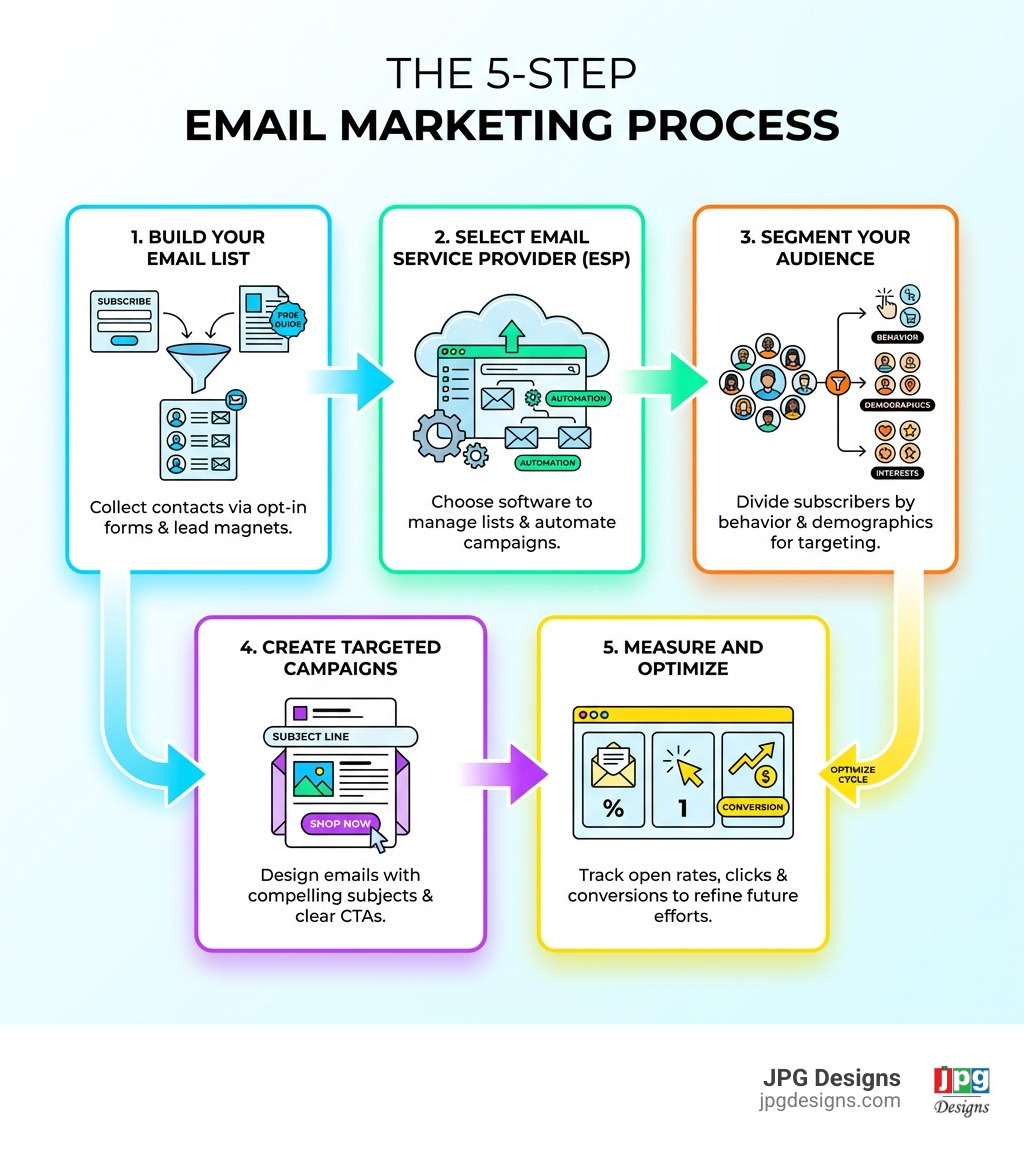
The Email Marketing Process in 5 Steps:
- Build Your Email List – Collect email addresses from people who want to hear from you through opt-in forms, lead magnets, and website signup opportunities
- Choose an Email Service Provider – Select software to manage your list, design emails, and automate campaigns
- Segment Your Audience – Divide subscribers into groups based on behavior, demographics, or interests for targeted messaging
- Create and Send Campaigns – Design emails with compelling subject lines, valuable content, and clear calls-to-action
- Measure and Optimize – Track open rates, clicks, and conversions to continuously improve performance
More than just promotions, email is a direct channel that bypasses social media algorithms, putting your message in your subscriber’s inbox. With nearly 5 billion users and an average ROI of $36-40 for every $1 spent, it’s a cost-effective way for small businesses to build relationships and drive sales.
The beauty of email marketing lies in its ownership model. Unlike social media platforms where algorithm changes can tank your reach overnight, your email list is an asset you control. When you send an email, you know it reaches your subscriber’s inbox – no intermediary deciding whether your content deserves visibility.
For service-based businesses, contractors, and B2B companies, email marketing solves a critical challenge: staying top-of-mind with customers and prospects without constantly chasing leads. A well-executed email strategy nurtures relationships over time, educates prospects, and converts interest into revenue – all while you focus on running your business.
I’m Jeff Pratt, owner of JPG Designs, and over the past 15 years I’ve helped hundreds of businesses implement email marketing systems that generate consistent leads and revenue. Understanding how email marketing works is essential for any business looking to build predictable growth, and I’ve seen how the right strategy transforms customer relationships and bottom-line results.
How email marketing works? helpful reading:
The Unbeatable ROI of Email Marketing: Why It’s Your Most Powerful Tool
Justifying marketing spend is a major pain point for business owners. Email marketing provides a clear answer, consistently delivering the highest return on investment (ROI) of any channel—an average of $36 to $44 for every dollar spent. With 59% of marketers citing email as their top source of ROI, this efficiency makes it a crucial growth opportunity, not an expense.
The core benefits of email marketing are clear. It provides direct access to your audience, landing your message right in their inbox without the interference of ever-changing algorithms. This direct line of communication is a powerful tool for customer acquisition, proving to be 40 times more effective than Facebook and Twitter combined.
Furthermore, email marketing excels at building brand loyalty. When customers opt-in to receive your emails, they’re inviting you into their digital space, signaling a level of trust. This “owned media” channel gives you unparalleled control over your message and audience, unlike “rented media” like social media platforms. You’re not at the mercy of platform policies or algorithm shifts; your connection with your audience remains stable and direct.
The true magic happens when you personalize and segment your campaigns. By tailoring messages to specific groups or individuals, you can dramatically increase relevance and engagement. Research shows that segmented and personalized campaigns can increase revenue by as much as 760 percent. This level of targeting ensures your audience receives content they genuinely want to see, fostering deeper relationships and driving conversions.
How Email Marketing Works: The Core Components of a Successful Strategy
Many businesses struggle with where to begin their email marketing journey. The good news is that understanding how email marketing works can be broken down into three essential components: clear goals, a high-quality email list, and a reliable Email Service Provider (ESP). Think of it like building a house: you need a solid foundation (your list), a powerful engine (your ESP), and a blueprint (your goals).

Step 1: Building Your Foundation – The High-Quality Email List
A high-quality email list is the bedrock of successful email marketing. Quality trumps quantity; a small list of engaged subscribers is far more valuable than a large list of uninterested contacts.
Why you should never buy email lists: While tempting for quick growth, buying lists is a trap. They often contain invalid or spam-trap addresses that damage your sender reputation, hurt engagement, and risk legal penalties under laws like CAN-SPAM or GDPR. It’s not worth the risk.
Opt-in consent is paramount: Every subscriber must have explicitly given you permission to receive emails. This is both a legal requirement and a core principle of effective marketing, as opted-in subscribers are already interested in your brand and more receptive to your messages.
Strategies for building your list the right way:
- Lead Magnets: Offer something valuable in exchange for an email address, such as an e-book, a free guide (like our own increase leads with a modern website), a checklist, a webinar, or a discount code. This provides immediate value to your potential subscriber.
- Gated Content: Position premium content (like in-depth reports or case studies) behind an email signup form.
- Website Pop-ups & Forms: Strategically place opt-in forms on your website, including homepage banners, blog post sidebars, and exit-intent pop-ups. Ensure these forms are clear, concise, and highlight the benefits of subscribing.
- Double Opt-in: Implement a double opt-in process where subscribers receive a confirmation email they must click to verify their subscription. This extra step ensures a higher quality list, fewer spam complaints, and better deliverability.
Building a healthy, engaged email list is an ongoing process that requires patience and consistent effort.
Step 2: Choosing Your Engine – The Email Service Provider (ESP)
Once you have a growing list, you’ll need the right tools to manage and communicate with it. This is where an Email Service Provider (ESP) comes in. An ESP is software that allows you to design, send, manage, and track your email campaigns efficiently. Trying to do this manually with a regular inbox provider is like trying to build a house with a screwdriver – it’s just not designed for the job!
The role of an ESP: Your ESP handles the heavy lifting of email marketing, from ensuring your emails actually reach inboxes (deliverability) to providing robust analytics. Key features to look for in an ESP include:
- List Management: Organize and segment your subscribers effortlessly.
- Email Design & Templates: User-friendly drag-and-drop editors and customizable templates to create professional-looking emails without needing coding skills.
- Automation: Set up automated email sequences (like welcome series or abandoned cart reminders) that trigger based on subscriber actions.
- Analytics & Reporting: Track key metrics such as open rates, click-through rates, and conversions to understand campaign performance.
- Deliverability Tools: Features that help you avoid spam filters and maintain a good sender reputation.
Choosing the right ESP is crucial for your business’s success. It should be scalable to grow with you, integrate with your other marketing tools (like your CRM), and be user-friendly for your team. At JPG Designs, we understand the nuances of different platforms and can help you select and integrate the best solution that aligns with your specific business needs and budget, whether you’re a small local business in Rhode Island or a growing company in Massachusetts.
Step 3: Charting Your Course – Setting Clear Goals and KPIs
Without clear goals, your email marketing efforts will be like sailing without a compass – you’ll be moving, but not necessarily in the right direction. Before sending a single email, define what you want to achieve.
Defining your objectives: Common email marketing goals include:
- Brand Awareness: Keeping your business top-of-mind.
- Lead Nurturing: Guiding potential customers through the sales funnel.
- Sales & Conversions: Driving direct purchases or sign-ups.
- Customer Loyalty & Retention: Building stronger relationships and encouraging repeat business.
- Promoting Content: Driving traffic to your blog posts, videos, or other valuable resources.
Key Performance Indicators (KPIs): Once your goals are set, you need measurable metrics to track your progress. These are your KPIs. For instance, if your goal is to increase sales, your KPIs might include conversion rate and revenue per email. If it’s brand awareness, you might focus on open rates and engagement. We dive deeper into how to define these critical metrics in our guide on What are KPIs?. Aligning your metrics directly to your goals ensures you’re measuring what truly matters for your business’s success.
Crafting Campaigns That Convert: From Segmentation to Send
A common pain point we see is businesses pouring effort into emails only to see low open rates and clicks. The solution often lies in the art and science of crafting campaigns that truly resonate. This involves smart segmentation, compelling content, and strategic design.
The Power of Personalization and Segmentation
This is where how email marketing works truly transforms from generic broadcasting to highly effective direct communication. Imagine receiving an email that feels like it was written just for you – that’s the power of personalization and segmentation.
What is segmentation? It’s the process of dividing your email list into smaller, more specific groups based on shared characteristics or behaviors. Instead of sending the same email to everyone, you send custom messages to these segments.
Segmentation criteria can include:
- Demographics: Age, location (e.g., specific offers for customers in Rhode Island vs. Massachusetts), gender, occupation.
- Behavior: Past purchases, website browsing history, email engagement (who opens and clicks frequently), abandoned carts.
- Purchase History: Customers who bought Product A might be interested in Product B.
- Expressed Interests: What topics they opted into during signup.
What is personalization? It’s using the data you’ve gathered through segmentation to create highly relevant and individual experiences. This goes beyond just using a recipient’s first name. It involves dynamic content blocks that change based on their profile, product recommendations based on past activity, or even custom offers. Recent data shows customers prefer personalization, with personalized experiences leading to a 20% increase in sales on average. We continuously work to help businesses with understanding and adapting to reach your target audience through these powerful techniques.
Types of Marketing Emails and When to Use Them
Different goals require different types of emails. Here’s a quick rundown of essential email types and their ideal uses:
- Welcome Series: Sent immediately after signup to make a great first impression, introduce your brand, and deliver any promised lead magnets. They have exceptionally high engagement rates.
- Newsletters: Regular emails (weekly, monthly) that share valuable content, news, and updates. They nurture relationships and establish you as an expert.
- Promotional Offers: Announce sales, discounts, or new products to drive immediate action and conversions.
- Lead Nurturing Sequences: An automated series that educates prospects over time, guiding them toward a purchase.
- Transactional Emails: Automated responses to customer actions like purchases or password resets. They have very high open rates because recipients expect them.
- Re-engagement Campaigns: Sent to inactive subscribers to win them back, often with a special incentive or a simple check-in.
- Abandoned Cart Emails: Remind customers about items left in their cart. These are highly effective, generating significant revenue from a small segment.
How email marketing works to grab attention: Designing Emails That Get Noticed
Even with perfect segmentation, your email needs to stand out in a crowded inbox. Effective design and compelling copy are crucial.
- Compelling Subject Lines: This is your email’s first impression. Keep it concise (under 50 characters), intriguing, and relevant. Avoid spammy words, excessive capitalization, or punctuation that might trigger spam filters. A/B test different subject lines to see what resonates best with your audience.
- Clear Call-to-Action (CTA): Every email should have a single, clear purpose and a prominent CTA button telling the reader exactly what to do next (“Shop Now,” “Read More,” “Download Your Guide”).
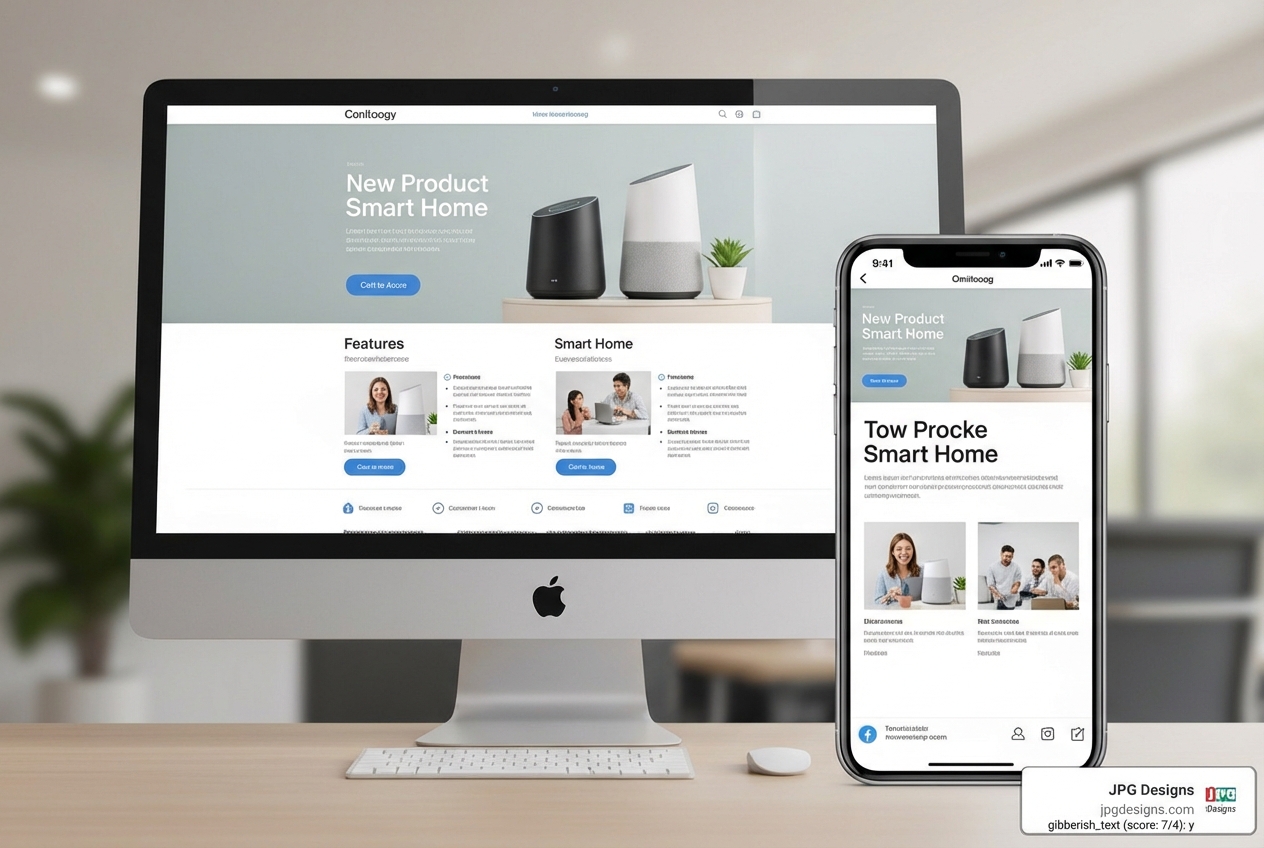
- Mobile-First Design: With nearly 50% of email engagement coming from mobile devices, your emails must look good and function perfectly on smartphones. We specialize in responsive web design and apply the same principles to email, ensuring your messages are accessible and engaging on any device.
- Visuals and Branding: Use high-quality images, videos, and consistent branding (logos, colors, fonts) to make your emails visually appealing and instantly recognizable. However, don’t overdo it; a study found most emails contained 10-39 images, so strike a balance.
- A/B Testing Best Practices: Don’t guess what works! A/B test elements like subject lines, CTAs, email copy, images, and send times. Test one variable at a time to accurately identify what drives improvements.
Ensuring Success: Deliverability, Analytics, and Compliance
Even the most beautifully designed, perfectly segmented email is useless if it doesn’t reach the inbox or comply with regulations. This section addresses crucial aspects of how email marketing works behind the scenes to ensure your efforts pay off.
How email marketing works to land in the inbox: Deliverability Best Practices
One of the most frustrating pain points is when your carefully crafted emails end up in spam folders. Email deliverability is about ensuring your emails land in the primary inbox, not the junk folder.
- Avoiding Spam Filters: Spam filters are sophisticated. They analyze everything from your sender reputation and email content to technical authentication. Avoid spammy words, excessive exclamation marks, and all-caps in subject lines. Maintain a healthy text-to-image ratio.
- Sender Reputation: This is a score Internet Service Providers (ISPs) assign to your sending IP address and domain. A good reputation means your emails are more likely to be delivered. Factors include low spam complaints, low bounce rates, and high engagement.
- List Hygiene: Regularly clean your email list by removing inactive subscribers, hard bounces (permanent delivery failures), and unsubscribes. Sending to a clean, engaged list signals to ISPs that you’re a reputable sender.
- Email Authentication (SPF, DKIM, DMARC): These are technical standards that verify your emails are legitimate and coming from your authorized domain. Setting these up correctly is vital for deliverability, especially with recent updates from major email providers like Gmail that require stronger authentication for bulk senders.
Measuring Your ROI and Key Metrics
You’ve heard us say it: email marketing offers a phenomenal ROI. But how do you measure it? Tracking key metrics is essential to understand how email marketing works for your specific business. We offer advanced email analytics services to help you make sense of your data.
- Open Rate: The percentage of recipients who opened your email. Its reliability has decreased due to privacy features like Apple Mail Privacy Protection, which can inflate numbers.
- Click-Through Rate (CTR): The percentage of recipients who clicked a link in your email. It’s a strong indicator of content engagement.
- Conversion Rate: The percentage of recipients who completed a desired action (e.g., made a purchase, filled out a form) after clicking through from your email. This directly ties back to your sales goals.
- Unsubscribe Rate: The percentage of recipients who opted out of your list. A high unsubscribe rate can signal issues with content relevance, frequency, or audience targeting.
- Calculating ROI: To truly understand your return, compare the revenue generated from your email campaigns against the costs (ESP fees, content creation, labor). As mentioned, the average ROI is $36-44 for every $1 spent, making it a highly profitable channel.
Staying Compliant: Navigating Email Marketing Laws
Ignoring legal and compliance considerations is a recipe for disaster, leading to hefty fines and reputational damage. While specific laws may vary by region, the core principles of consent and transparency are universal.
- CAN-SPAM Act (United States): This U.S. law requires truthful headers, a physical address, and a clear opt-out method. While it doesn’t mandate opt-in consent, opt-out requests must be honored promptly. Learn more from the FTC’s CAN-SPAM Act Compliance Guide for Business.
- GDPR (General Data Protection Regulation – European Union): This strict EU law requires explicit, informed consent for marketing emails and gives individuals control over their data. It applies to any business processing data from EU citizens.
- CASL (Canadian Anti-Spam Law – Canada): One of the strictest anti-spam laws globally, CASL requires express or implied consent before sending commercial emails, a clear explanation of why the recipient is receiving the email, and an easy way to unsubscribe.
Compliance Best Practices:
- Obtain Consent: Always get explicit permission. Double opt-in is highly recommended for proof of consent.
- Transparency: Clearly state who you are and why you’re emailing.
- Easy Unsubscribe: Provide a clear, one-click unsubscribe link in every email and process requests immediately (within 10 business days for CAN-SPAM).
- Physical Address: Include your business’s physical postal address.
- Privacy Policy: Have a clear and accessible privacy policy detailing how you collect, store, and use subscriber data.
- Regular Audits: Periodically review your practices to ensure ongoing compliance.
The Future of Email: Automation and AI
For many businesses, scaling their email marketing efforts and staying competitive feels like an uphill battle. This is where the future of how email marketing works truly shines: through the intelligent application of automation and Artificial Intelligence (AI).
Marketing Automation: Marketing automation is the backbone of modern email marketing. It uses predefined rules to trigger emails based on subscriber actions, delivering relevant messages at the perfect moment without manual work. Automated campaigns like welcome series, abandoned cart reminders, and birthday greetings run in the background, saving hours and nurturing customer journeys so no one is forgotten.
AI for Subject Lines: Crafting compelling subject lines is an art, but AI is rapidly making it a science. AI tools can analyze vast amounts of data to predict which subject lines will perform best, helping you optimize open rates. Some platforms even offer AI assistants that can generate engaging subject line options for you, saving time and boosting effectiveness.
AI for Content Personalization: AI lifts personalization beyond merge tags. It can dynamically adjust content, product recommendations, and layouts based on real-time behavior and predictive analytics. This ensures every recipient sees the most relevant content, boosting engagement and conversions.
Send-Time Optimization: When is the best time to send an email? It varies for every individual! AI algorithms can analyze historical engagement data for each subscriber and predict the optimal time to send an email for that specific person, maximizing their likelihood of opening and clicking.
The integration of AI and automation makes email marketing more efficient, effective, and capable of delivering truly personalized experiences at scale. These technologies are not just trends but essential tools for staying ahead.
Frequently Asked Questions about How Email Marketing Works
We often get asked common questions about email marketing. Here are some of the most frequent ones:
What is a good open rate for email marketing?
A “good” open rate varies by industry but generally falls between 15% and 25%. However, privacy features like Apple Mail Privacy Protection make this metric less reliable by inflating numbers. Instead of focusing on benchmarks, aim to improve your own rate over time by using compelling subject lines and sending to an engaged, segmented list. A good open rate is one that’s better than your last.
How much does email marketing cost?
Email marketing is highly cost-effective given its strong ROI. Costs primarily depend on your Email Service Provider (ESP), which typically charges based on subscriber count or email volume. Plans range from free for small lists to thousands for large enterprises with advanced features like automation and analytics.
For small businesses in Rhode Island or Massachusetts, starting with a free or low-cost plan is easy. The investment is minimal compared to the average return of $36-44 for every dollar spent.
How often should I send marketing emails?
The right frequency balances quality and consistency. There’s no single answer, so focus on these factors:
- Audience Preference: Test different frequencies and monitor engagement and unsubscribe rates to see what your audience prefers.
- Content Value: Only send emails when you have something valuable to share. Consistent value allows for higher frequency.
- Segmentation: Different segments may prefer different schedules. A nurturing sequence might be more frequent than a general newsletter.
Start with a consistent schedule (e.g., weekly) and adjust based on audience feedback. The goal is to stay top-of-mind without being annoying.
Conclusion
Understanding how email marketing works is no longer optional; it’s a strategic imperative for any business aiming for predictable growth and strong customer relationships. We’ve explored its unbeatable ROI, the core components of building a successful strategy—your list, ESP, and goals—and the art of crafting campaigns that convert through personalization, segmentation, and compelling design. We’ve also highlighted the critical importance of deliverability, robust analytics, and staying compliant with legal regulations.
Email marketing is a dynamic field, constantly evolving with advancements in automation and AI, making it more powerful and precise than ever before. It’s not a set-it-and-forget-it solution, but a continuous process of testing, learning, and optimizing. When done right, it’s a direct, owned channel that fosters loyalty, drives sales, and builds lasting connections with your audience.
At JPG Designs, we’re passionate about helping businesses in Rhode Island and Massachusetts open up this power. From crafting mobile-first websites that generate leads to implementing sophisticated email marketing strategies, we ensure your digital presence works as hard as you do. Ready to transform your customer engagement and boost your bottom line? Explore our digital marketing services and let’s make your email marketing truly shine.