Why Understanding Image Rights Matters for Your Business
What are image rights? They are the legal rights that control how a person’s name, image, likeness, voice, signature, and other identifiable characteristics can be used commercially. In simple terms, image rights give individuals the power to decide who can profit from their identity and how.
Quick Answer:
- Definition: Legal rights protecting a person’s identity from unauthorized commercial use
- What’s Protected: Name, photograph, voice, signature, likeness, mannerisms, catchphrases
- Key Principle: You need permission to use someone’s identity to sell products or services
- UK Status: No single law protects image rights—multiple laws apply (passing off, trademarks, privacy, defamation)
- Global Variation: The US has “right of publicity” laws, Europe has “personality rights,” and enforcement differs widely
This matters because even small businesses can face serious legal trouble for using someone’s image without permission. A local restaurant posting a photo of a celebrity customer on social media, a contractor using an athlete’s picture in an ad, or a nonprofit featuring a recognizable face in fundraising materials—all could trigger legal action if done without consent. Sports are worth more than 3 percent of world trade, and a huge portion of that value comes from image rights licensing. The stakes are real, and the rules are confusing.
I’m Jeff Pratt, owner of JPG Designs, and over 15 years helping businesses build their online presence, I’ve seen countless companies unknowingly violate image rights in their marketing materials, social media, and websites. Understanding what are image rights is essential for any business that uses photos, testimonials, or endorsements in their digital marketing.
What are Image Rights and How Are They Defined?
At its core, what are image rights? The term refers to an individual’s proprietary rights in their personality. It’s about their ability to control and profit from their persona, and to prevent unauthorized third parties from using it commercially. This “persona” can be broadly defined, encompassing a wide array of personal characteristics.
According to a clear definition from LexisNexis, image rights refer to “an individual’s proprietary rights in their personality and the ability to exploit, and to prevent unauthorised third parties from making use of, an individual’s persona, including their name, nickname, image, likeness, signature and other indicia that are inextricably connected with that individual.”
Beyond just a photograph, this can include:
- Name: Your given name, stage name, or even a widely recognized nickname.
- Image: Still photos, moving images (video), or animated depictions.
- Voice: The distinctive sound of your voice.
- Signature: Your unique handwritten mark.
- Likeness: Any visual representation that identifies you, even if not a direct photo.
- Mannerisms & Catchphrases: Recognizable gestures, facial expressions, or phrases that are distinctly yours.
- Iconic Acts, Logos, Trademarks: Elements closely associated with your public identity.
Essentially, image rights treat your unique identity as a valuable asset – a form of “personality as property” – that can be commercially exploited through endorsements, advertising, and other ventures. This commercial value is precisely why understanding and protecting these rights is so crucial, especially in an age where digital content spreads rapidly.
What are image rights vs. trademark rights?
While often intertwined, image rights and trademark rights are distinct legal concepts. Think of it this way:
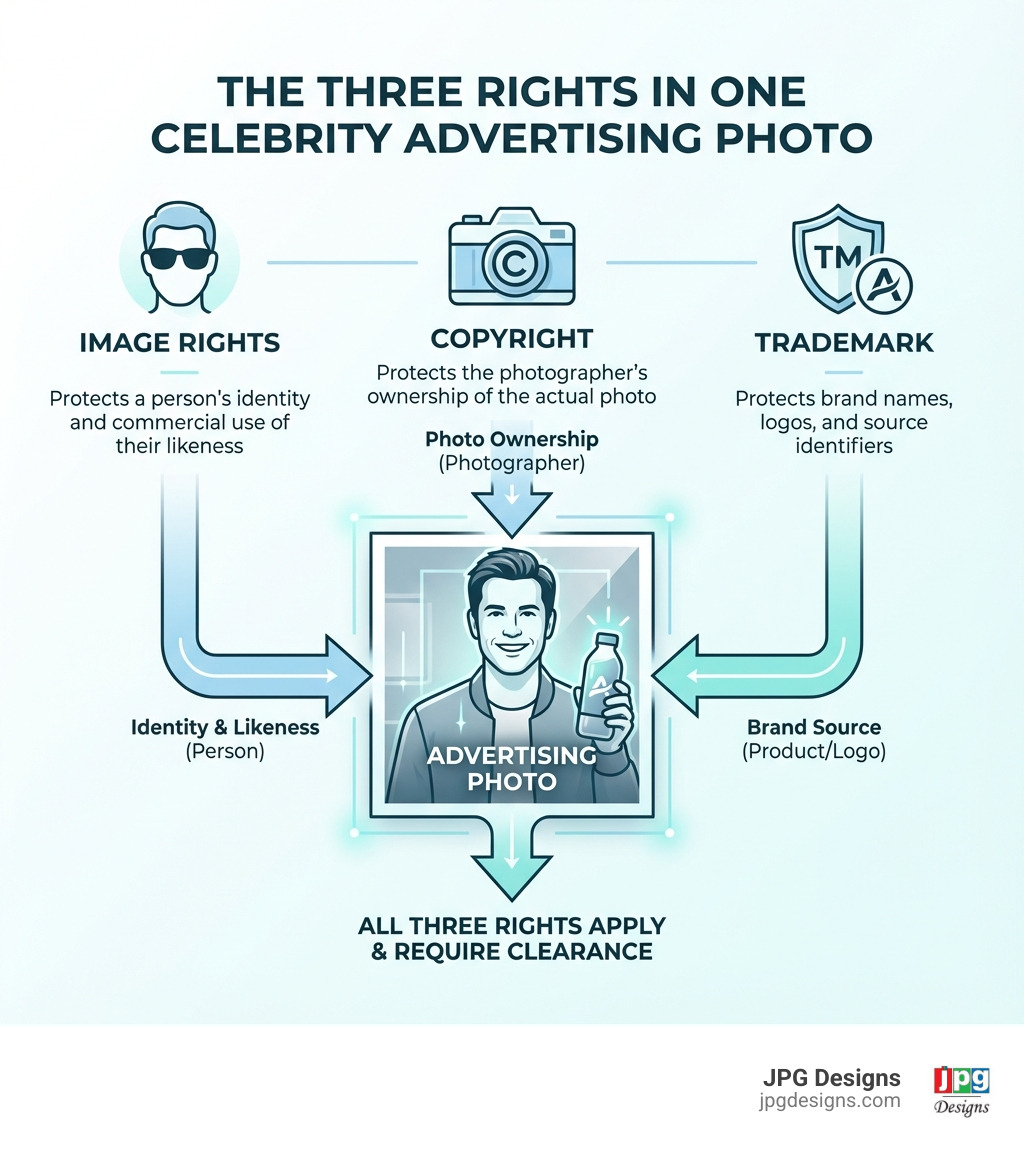
- Trademark rights primarily protect brand identity. They safeguard words, names, symbols, sounds, or colors that distinguish goods and services from those manufactured or sold by others. A trademark acts as a source identifier. For example, the Nike “swoosh” or the phrase “Just Do It” are trademarks that tell you who produced a product. If you’re building your brand identity, trademarks are vital for your business.
- Image rights, on the other hand, protect the persona of an individual. They’re about the person themselves and the commercial value tied to their unique identity.
The overlap occurs when an individual’s name or likeness becomes so famous that it functions as a brand in itself. For instance, the names ‘David Beckham’ and ‘Victoria Beckham’ are registered trademarks, protecting their names from being used to sell unauthorized goods or services. In such cases, trademark law can be a powerful tool for protecting an aspect of an individual’s image rights. However, trademark protection is often limited to specifically registered goods and services, whereas the scope of image rights is determined by a person’s unique characteristics and public association.
What are image rights vs. copyright?
This is a common point of confusion. Let’s clarify:
- Copyright protects original creative works, including photographs. The photographer who takes a picture typically owns the copyright to that specific image. This means they control how that photo is reproduced, distributed, and displayed.
- Image rights protect the subject of the photograph – the person depicted in it.
The critical distinction is that owning the copyright to a photo does not automatically grant you the right to use the person’s image within that photo for commercial purposes. For example, if you hire a photographer to take a picture of a celebrity, the photographer owns the copyright to the photo. But you would also need the celebrity’s permission (their image rights) to use that photo in an advertisement or on a product. You need separate permissions: one from the photographer for the image itself, and one from the individual for the use of their likeness.
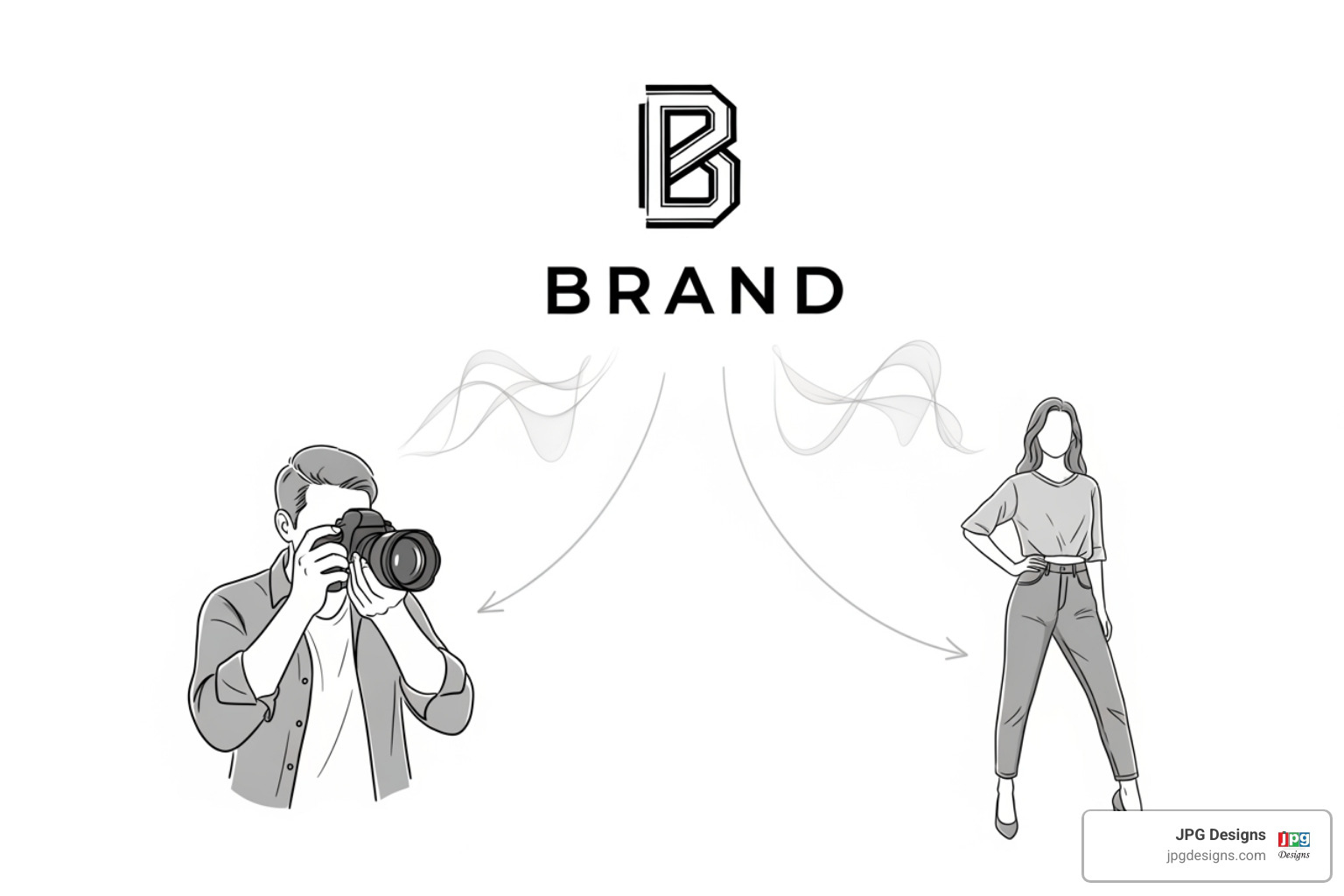
This is a crucial point for any business, especially those in Rhode Island or Massachusetts, looking to use images in their marketing. Just because you’ve licensed a photo from a stock library doesn’t mean you have the right to imply endorsement from the person in the picture. Always ensure your licensing agreements cover the intended commercial use of the individual’s likeness.
The UK’s Patchwork Approach to Image Rights Protection
One of the most surprising aspects of what are image rights in many jurisdictions is the lack of a single, unified law. In the UK, for example, there is no specific statute dealing with image rights for individuals. Instead, protection must be pieced together from a “patchwork” of existing laws and legal principles. This creates a rather complex legal maze, often requiring legal experts to steer.
Despite this fragmented approach, the commercial value of image rights, particularly in sectors like sports, is immense. As WIPO highlights, sports alone are worth “more than 3 percent of world trade,” with significant revenue generated from the commercialization of image rights for well-known teams and sports personalities. This underscores the importance of understanding how these diverse legal frameworks apply.
Passing Off
One of the primary ways image rights are protected in the UK is through the common law tort of “passing off.” This legal action protects a person’s goodwill and reputation from being misrepresented by others. For a successful passing off claim, three key elements, often called the “classic trinity,” must be proven:
- Goodwill and Reputation: The individual must have established a significant reputation or goodwill that is commercially valuable.
- Misrepresentation: The unauthorized use of their image must create a false impression in the public’s mind that there is a connection between the individual and the product or service, or that the individual endorses it.
- Damage: The individual must have suffered, or be likely to suffer, damage to their goodwill or reputation as a result of this misrepresentation.
A notable example is the case of Formula 1 driver Eddie Irvine, who successfully sued Talksport Ltd after they used a doctored photograph of him to promote their radio station, implying his endorsement. This illustrates how even subtle misrepresentations can lead to successful claims.
Privacy, Data Protection, and Defamation
Beyond commercial misrepresentation, other legal frameworks offer protection for an individual’s image:
- Privacy and Misuse of Private Information: While there isn’t a direct “right to privacy” statute in the UK, the Human Rights Act 1998 (incorporating Article 8 of the European Convention on Human Rights) provides a right to respect for private and family life. This can be used to protect against the unauthorized use of images taken in private settings. The famous “Douglas v Hello!” case, involving unauthorized wedding photos of Catherine Zeta Jones and Michael Douglas, is a prime example of how courts apply breach of confidence and misuse of private information to protect celebrity privacy.
- Data Protection: The General Data Protection Regulation (GDPR) and the Data Protection Act apply when photographs are considered “personal data.” If an image allows an individual to be identified, it falls under these regulations, requiring proper consent for processing and use, especially for commercial purposes. LexisNexis notes that “image” in a data protection context can refer to both the physical likeness and the public’s perception of a person.
- Defamation: If your business uses someone’s image in a way that damages their reputation, you could face a defamation claim. This protects individuals from false statements that harm their standing in the community.
Using Celebrity Images for Commercial Gain
The message here is crystal clear for businesses in Rhode Island and Massachusetts: You cannot use images of celebrities for commercial purposes without their express permission. Period. This extends beyond direct advertising to any implication of endorsement. The Consumer Protection from Unfair Trading Regulations 2008 specifically prohibit false claims of endorsement or approval.
It’s a common misconception that if you get permission from the photographer, you’re all set. As we’ve discussed, this only covers the copyright for the photo itself. You must also obtain permission from the celebrity or their agent. Failing to do so carries significant legal risks, including:
- Injunctions: Court orders to immediately stop using the infringing image.
- Financial Damages: Compensation for the “lost license fee” the celebrity would have charged, or for damage to their reputation.
- Account of Profits: Forcing your business to hand over any profits made from the unauthorized use.
The safest course of action is always explicit consent, ideally in a written agreement.

A Global Perspective on Image Rights
The legal landscape for what are image rights is far from uniform across the globe. While some regions, like the UK, rely on a patchwork of existing laws, others have specific statutes or well-established doctrines. This international variation is critical for businesses operating across borders or those whose content reaches a global audience. The concepts generally fall into two categories: “right of publicity” (predominant in the US) and “personality rights” (common in civil law jurisdictions).
United States
In the United States, the protection of image rights falls under what is known as the “right of publicity.” Unlike a single federal law, this right is primarily governed by state-by-state laws, leading to significant variations. This means that rules and enforcement can differ whether your business is in Rhode Island, Massachusetts, or California.
Many states have statutes, while others rely on common law. California, being home to Hollywood, has one of the most robust right of publicity laws, enshrined in its Civil Code Section 3344(a). This statute explicitly protects individuals against the knowing use of their “name, voice, signature, photograph, or likeness, in any manner, on or in products, merchandise, or goods, or for purposes of advertising or selling, or soliciting purchases of, products, merchandise, goods or services,” without prior consent.
A landmark US Supreme Court case, Zacchini v. Scripps-Howard Broadcasting Co. (1977), affirmed the right of publicity, ruling that the First Amendment did not immunize a TV station from liability for broadcasting a human cannonball act without consent. This case solidified the principle that individuals have a right to control the commercial exploitation of their performances and identity.
A particularly sensitive aspect of US law is the handling of post-mortem rights, or the image rights of deceased celebrities. These rights can, in many states, survive the death of the individual, allowing their estates to control and profit from their likeness for a specified period. This duration varies widely: some states like Indiana and Oklahoma offer 100 years of protection, while California extends rights for 70 years after death. This is especially relevant for “necromarketing,” where deceased celebrities are used in advertising, sometimes through CGI or holograms. While the UK is still “moot” on this, the US has specific laws that require careful navigation by companies.
Germany & Europe
In contrast to the UK’s common law approach, continental European countries generally recognize and protect image rights as part of broader “personality rights” safeguarded under national constitutional rules and civil codes.
Germany provides a strong example, where personality rights are protected under the German Civil Code. The concept of an “absolute person of contemporary history” allows for the depiction of individuals who are part of history, but still grants them some protection of their privacy rights outside the public sphere.
However, the remedies awarded for infringements in some European jurisdictions can be surprisingly low. Consider the case of German goalkeeper Oliver Khan, who was awarded a mere EUR 3,000 when Electronic Arts GmbH used his image in a FIFA game without permission. Similarly, in Switzerland, courts rarely award more than CHF 10,000 to CHF 20,000 for infringements of sports image rights. These figures highlight that while the rights exist, the financial consequences of infringement might not always be substantial enough to deter unauthorized use.
Unique Jurisdictions: The Guernsey Example
Amidst the varied global landscape, the Bailiwick of Guernsey stands out for its proactive and specific legislation. Recognizing the growing commercial value of image rights, Guernsey introduced the Image Rights Bailiwick of Guernsey Ordinance 2012. This unique law allows for the registration of a “personality right” – encompassing a person’s name, image, voice, signature, and other characteristics – along with associated images.
This registry effectively turns image rights into a distinct, marketable asset, similar to a trademark, providing a clear legal framework for their ownership, transfer, and exploitation. It offers a structured approach that many other jurisdictions, including the UK, currently lack, making Guernsey an interesting case study in the evolution of image rights protection.
Modern Challenges and the Future of Image Rights
The digital age has turned the concept of what are image rights on its head. The ease of sharing images and videos across social media platforms, the rapid virality of content, and the global reach of the internet have introduced unprecedented complexities. For individuals, this often means a significant loss of control over their own likeness once it enters the digital sphere. What starts as a harmless post can quickly become a meme or be repurposed for commercial gain without consent, making traditional enforcement mechanisms feel slow and inadequate. This underscores why businesses need robust strategies for effective social media marketing that prioritize legal compliance.
The Rise of AI and Deepfakes
Perhaps the most significant modern challenge to image rights comes from the rapid advancements in Artificial Intelligence, particularly in the field of synthetic media and deepfakes. Deepfakes are AI-generated images or videos that can convincingly depict individuals saying or doing things they never did. This technology poses a terrifying threat, enabling:
- Unauthorized Likeness: Creating entirely new, realistic images or videos of someone without their involvement or permission.
- Reputational Damage: Fabricating content that could severely harm an individual’s public image or career.
- Legal Gray Areas: Current laws are often ill-equipped to handle the nuances of AI-generated content, raising complex questions about authorship, intent, and liability.
The legal frameworks surrounding deepfakes are still very much in their infancy, creating a pressing need for new laws and regulations to protect individuals from this potent form of identity theft and manipulation.
Should Image Rights Be a Distinct IP Right?
Given the complexities and challenges, a significant debate is ongoing among legal experts: Should image rights be recognized as a distinct intellectual property right, rather than relying on a patchwork of existing laws?
Arguments for making image rights a distinct IP right often center on:
- Clarity and Consistency: A dedicated law would provide clear definitions, scope, and enforcement mechanisms, reducing ambiguity for both rights holders and users.
- Stronger Legal Standing: It would grant individuals a more direct and robust legal basis to protect and commercialize their persona.
- Easier Enforcement: Streamlined legal processes could make it simpler and more efficient to combat unauthorized use, especially in the digital environment.
- Economic Benefits: It would create a more predictable and stable framework for commercial exploitation, potentially open uping further economic value. Many experts, particularly in places like India, advocate for this, noting the ambiguities and limited scope of current protections.
Arguments against, or concerns about, such a move often highlight:
- Stifling Creativity: Critics worry it could overly restrict artistic expression, parody, or commentary.
- Freedom of Expression: There’s a delicate balance with freedom of speech and the press.
- Over-Commercialization: Concerns that it could lead to excessive commercial control over aspects of public life.
The debate is far from settled, but the increasing commercial value of individual identity and the threats posed by digital technologies are pushing many jurisdictions to reconsider their approach.
Commercialising and Enforcing Your Image Rights
For individuals with a commercially valuable persona – whether they are athletes, entertainers, or prominent public figures – actively managing and commercializing their image rights is essential. This typically involves entering into various image rights agreements, licensing deals, and endorsement contracts. These agreements are crucial for protecting your asset, ensuring you are compensated fairly for the use of your likeness, and maintaining control over your brand. For businesses, this means working with legal counsel to draft clear contracts when engaging with individuals whose image they wish to use.
How Are Image Rights Valued?
Valuing image rights is a complex process, far from an exact science. It involves assessing the individual’s fame, public profile, marketability, and commercial potential. Factors such as their reach, influence, perceived integrity, and past commercial successes all play a role.
Common valuation methods often include the “income approach,” which estimates the future revenue streams that can be generated from the individual’s image through endorsements, appearances, and other commercial activities. This requires expert analysis, often involving financial professionals and marketing specialists, to project earnings and account for risks such as injury (for athletes) or reputational damage.
What Legal Remedies Are Available for Infringement?
If someone uses your image rights without permission, several legal remedies may be available, depending on the jurisdiction and the specific nature of the infringement:
- Injunctions: These are court orders compelling the infringing party to stop the unauthorized use immediately. Injunctions can be “interim” (temporary, pending a full trial) or “final” (permanent). Sometimes, a “Quia Timet” injunction can even be sought to prevent an anticipated breach.
- Damages for Loss: This is monetary compensation awarded to the rights holder for the financial harm suffered. In many European cases, damages are calculated as a “lost license fee”—what the rights holder would have charged for permission. However, as seen in the Oliver Khan and Swiss cases, these awards can sometimes be relatively low.
- Account of Profits: This remedy requires the infringing party to hand over any profits they made as a direct result of the unauthorized use of the image.
- Delivery Up: A court may order the infringing party to deliver up or destroy any goods, materials, or articles that infringe the image rights.
- Customs Authorities: In cases of counterfeit goods, customs authorities can sometimes be engaged to prevent infringing products from entering a territory.
Proving financial harm can be challenging, especially for less famous individuals, which is why having a clear valuation strategy is beneficial.
Morality Clauses and Rights of the Deceased
Protecting brand reputation is paramount in image rights agreements. This is where morality clauses come into play. These clauses are common in endorsement and licensing contracts, designed to protect the licensor’s commercial and financial interests. They stipulate that the celebrity or athlete must maintain high standards of personal and professional conduct and avoid any actions that could bring disrepute to themselves or the associated brand. The “fall from grace” of a celebrity, such as Tiger Woods’ marital infidelity, often triggers these clauses, allowing brands to terminate contracts or reduce payments. Conversely, sports personalities can also include clauses to ensure licensors act responsibly, for example, regarding ethical production of endorsed goods.
As for the rights of the deceased, this remains a complex and varied area. As noted, US states differ significantly in whether and for how long these “post-mortem rights” endure. In the UK, the law is still “moot” regarding the use of deceased celebrities’ images for commercial purposes (“necromarketing”). While some US states have specific laws, English and Scottish law are currently untested. Companies are generally advised to obtain permission from the deceased’s estate as a matter of courtesy and to mitigate potential legal risks, even if the law is unclear.
Conclusion
Understanding what are image rights is no longer just a concern for celebrities and their legal teams; it’s a vital consideration for any business operating in today’s visually-driven, digital world. From avoiding costly legal battles over unauthorized use to strategically leveraging the power of personal branding, these rights represent both a significant risk and a valuable asset.
We’ve seen that the legal protection of image rights varies dramatically across countries, from the UK’s intricate patchwork of common law and statutes to the US’s state-specific right of publicity laws, and unique approaches like Guernsey’s image rights registry. The rise of AI and deepfakes only adds layers of complexity, pushing for a global re-evaluation of how we define and protect personal identity in commercial contexts.
For businesses in Rhode Island and Massachusetts, the takeaway is clear: always seek explicit permission before using an individual’s name, image, or likeness for commercial purposes. Just because an image is publicly available, or you have copyright permission for a photo, doesn’t mean you have the right to imply endorsement. Protecting your brand and respecting the rights of others goes hand-in-hand with building a strong, reputable online presence.
At JPG Designs, we understand the nuances of digital marketing and web design, helping businesses steer the complexities of online content. If you’re looking to ensure your website and marketing materials are not only visually stunning but also legally sound, we’re here to help. Contact us for expert web design and digital marketing services that prioritize both creativity and compliance.