

Why Your Local Business Needs Google My Business Optimization
Google My Business optimization is the process of enhancing your Google Business Profile to improve your visibility in local search results, Google Maps, and the Local Pack.
Quick Optimization Checklist:
- Claim and verify your Google Business Profile
- Complete all sections with accurate business information
- Select precise categories that match your business
- Upload high-quality photos regularly (businesses with photos get 42% more direction requests)
- Collect and respond to reviews to build prominence
- Post weekly updates using Google Posts
- Add products and services with detailed descriptions
- Enable messaging and answer questions promptly
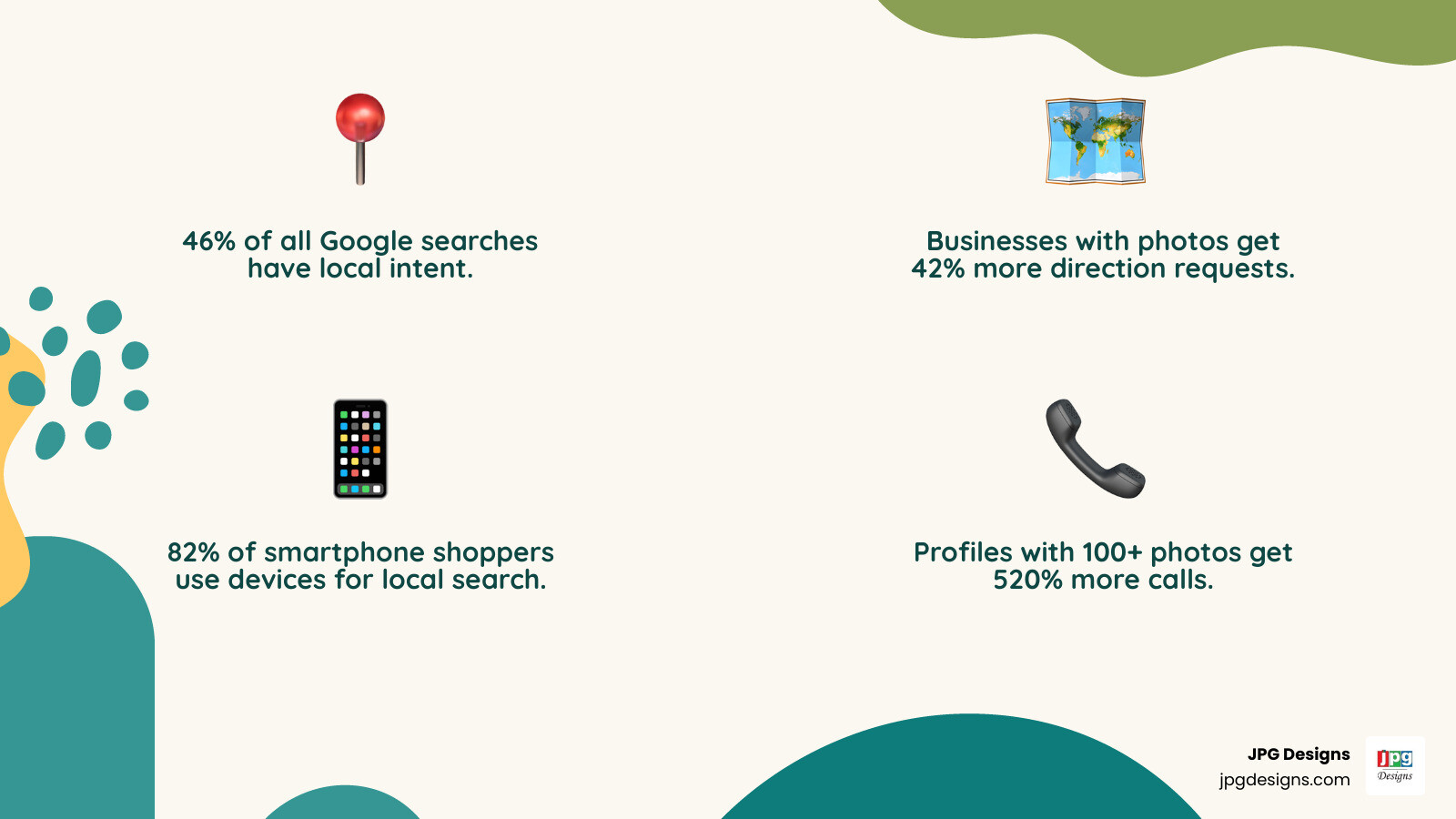
Your Google Business Profile often appears before your website in local searches, making optimization critical. With 46% of all Google searches having local intent and 82% of smartphone shoppers using their devices for local search, your profile is your digital storefront.
The challenge is that most business owners underestimate this free tool. The typical Business Profile averages only 1,260 views per month with fewer than 59 actions taken—a conversion rate under 5%. That’s leaving money on the table.
However, fully optimized profiles see dramatic results. Companies with over 100 photos get 520% more calls, 2,717% more direction requests, and 1,065% more website clicks than average. And 62% of customers will write a review if you ask.
Google aims to show the best local businesses, not just the closest. Ranking well requires signaling relevance, building prominence through reviews, and maintaining complete, accurate information that helps Google understand what you offer.
I’m Jeff Pratt, owner of JPG Designs. For over a decade, I’ve helped hundreds of Rhode Island and Massachusetts businesses improve their local visibility with strategic Google My Business optimization. My team turns overlooked profiles into lead-generating machines for contractors, service providers, B2B companies, and nonprofits across New England.
Why You’re Invisible: Cracking Google’s Local Ranking Code
Wondering why your Rhode Island or Massachusetts business is invisible in local search? It’s a common pain point. Appearing in the Local Pack or on Google Maps isn’t magic; it’s the result of Google’s local search algorithm. This algorithm evaluates three core factors: Relevance, Distance, and Prominence. Understanding them is the first step to improving your visibility.
Google’s goal is to show customers the best nearby businesses. A complete and updated Google Business Profile improves your local ranking. Google confirms there’s no way to pay for better local rankings; it all comes down to signaling your value.
For a deeper dive, review How Google determines local ranking directly from the source. To understand the broader benefits, check out Why Your Business Can Benefit Greatly From Local SEO.
Understanding Relevance
Relevance is how well your Business Profile matches a search query. If a customer in Providence, RI, searches for “HVAC repair,” Google wants to show the most relevant HVAC businesses. To achieve this, you need to provide complete and detailed business information.
This starts with selecting the most accurate primary business category. If you’re a nail salon, choose “Nail Salon,” not just “Salon.” Then, add relevant secondary categories to refine your services. These precise categories help Google understand what you offer, making you more findable in findy searches—which account for 84% of Business Profile views.
Your business description also plays a vital role. A well-written description helps Google understand your offerings and can convert searchers into customers. It should clearly state what your business does, what sets it apart, and its history. Integrating keywords naturally, along with strong on-page SEO on your website, tells Google you are the answer to a searcher’s query.
Understanding Distance
Distance refers to how far a business is from the searcher. If a user doesn’t share their location, Google estimates it. This makes your physical address (for storefronts) or defined service areas (for businesses like plumbers in Warwick, RI) critical.
For businesses with a physical location, an accurate, verified address is paramount. For service-area businesses, clearly defining your service radius is key. This tells Google where you operate, allowing you to appear in relevant local searches.
The rise of mobile search amplifies the importance of distance. With 82% of smartphone shoppers using their device for local search, users often need immediate, nearby solutions. Our expertise at JPG Designs in mobile-first indexing ensures your GBP and website are optimized for these on-the-go searches. For more, explore What is Mobile-First Indexing?.
Understanding Prominence
Prominence is how well-known your business is—think of it as your online reputation. It’s based on factors like backlinks, review count, and your overall web presence.
Online reviews are a massive component. More positive reviews and a steady stream of new ones (review velocity) signal to Google that you’re a reputable business. Responding to all reviews shows you value feedback, which Google appreciates. Neglecting reviews is a huge missed opportunity.
Beyond reviews, backlinks from other reputable websites and consistent citations (mentions of your business name, address, and phone number, or NAP) contribute to your brand authority. A strong, consistent online presence tells Google you are a prominent player in your local market. For more insights, refer to How Google Ranking Can Help Your Business.
The Foundation: Building a Complete and Trustworthy Business Profile
An incomplete or inaccurate Google Business Profile is a major pain point. If a potential customer in Boston finds your profile half-empty or with outdated information, it creates a poor first impression, leading to lost trust and missed opportunities. The solution is a complete and trustworthy profile.
Claiming and verifying your Google Business Profile is the first step. It proves you’re authorized to manage the listing and prevents others from editing it. Once verified, complete every section of your profile. Think of it as a comprehensive resume for your business; more detail is always better.
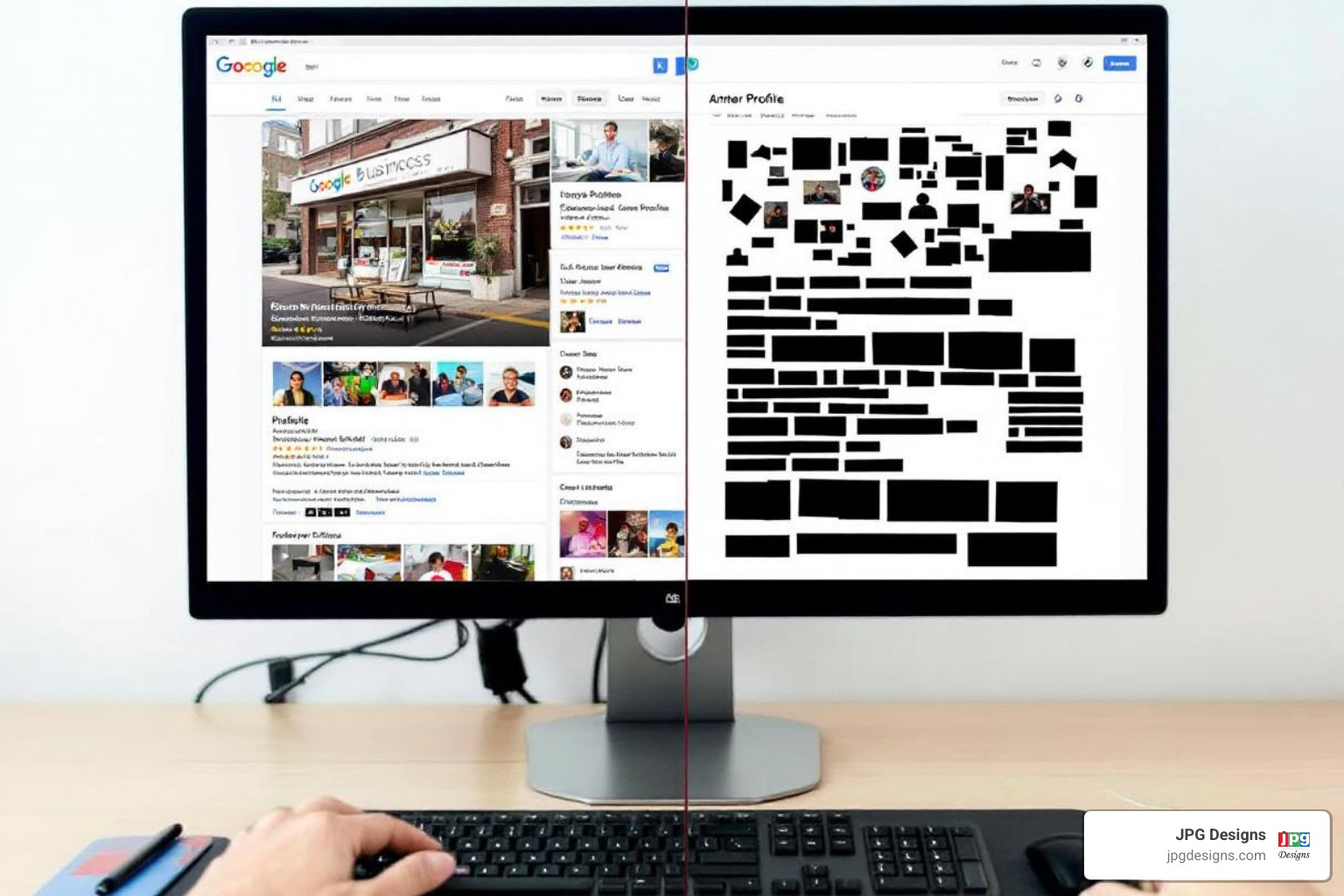
Google wants to provide searchers with the most accurate information. Businesses with complete profiles are easier for Google to recommend in search results. For a step-by-step guide, check out How to Setup and Optimize Your GMB (Google My Business).
Nailing Your Core Information (NAP)
Your business Name, Address, and Phone number (NAP) are the cornerstone of your profile. This information must be accurate and consistent across all online listings, including your website and social media. Inconsistent NAP confuses Google and dilutes your prominence signals.
- Business Name: Use your exact legal business name. Avoid keyword stuffing (e.g., adding “Best Plumber in Providence” to “Smith’s Plumbing”), as this can lead to penalties.
- Address: For brick-and-mortar businesses, provide the full, accurate street address. If you’re a service-area business (like a landscaper in Cranston, RI), clear the address field and define your service areas instead.
- Phone Number: Use a local phone number. A call tracking number can provide better data on how many calls your profile generates.
- Website URL: Link to your official website. We’ll discuss using UTM parameters to track traffic from your GBP later.
- Business Hours: Keep your hours updated, especially for holidays or special events. Nothing frustrates a customer more than arriving at a closed business.
Choosing Categories and Attributes
Choosing the right categories is one of the most impactful decisions for your profile. Your primary category is the most important, telling Google the main nature of your business. Be specific: choose “Italian Restaurant” in North Kingstown, RI, not just “Restaurant.”
After setting a primary category, add up to nine secondary categories to capture a wider range of searches. Specific categories can also open up features that make your profile more attractive.
Attributes are additional descriptors that highlight specific features, like “Wi-Fi available,” “outdoor seating,” or “wheelchair accessible.” Some are defined by you, while others are crowd-sourced. Adding relevant attributes helps customers find exactly what they’re looking for and can showcase unique selling points like being a “Black-owned business” or “LGBTQ+ friendly.”
Writing a Compelling Business Description
Your business description is your chance to tell your story in 750 characters. Use this space to describe what you offer, what sets you apart, and your history, while naturally integrating keywords for your Rhode Island and Massachusetts audience.
The first 250 characters are most prominent, so front-load your key information and value proposition. You can repurpose content from your website’s “About Us” page for brand consistency. Avoid promotional language, prices, links, or HTML, as Google prohibits them here. A well-crafted description helps both Google and customers understand your business, boosting your relevance. For tips, see Content is King: Creating High-Quality SEO Optimized Content.
Advanced Google My Business Optimization: Engaging Customers & Dominating the Local Pack
With a solid foundation, it’s time to use dynamic features to engage customers and dominate the local pack. This is where your business can showcase its personality and expertise in the New England market.
An optimized profile is an interactive platform, not just a static listing. Actively using these features sends strong relevance signals to Google, boosting your local SEO. For a broader view, see Local SEO Search Engine Optimization with Google My Business.
Mastering Photos and Videos
Visuals are powerful. Businesses with photos get 42% more requests for driving directions and 35% more website clicks. To truly make an impact, businesses with over 100 photos see staggering results: 520% more calls, 2,717% more direction requests, and 1,065% more website clicks. The key is high-quality, diverse, and relevant photos and videos.
- Logo & Cover Photo: Use a square logo and a strong, brand-representative cover photo. These are often the first visuals customers see.
- Interior & Exterior Shots: Show off your location with high-quality photos of your storefront and interior. A 360° photo, added via Google’s Street View app, gives a realistic preview.
- Work & Team Photos: Showcase your services in action and your friendly team to build trust.
- Video Uploads: Don’t forget video. Short, engaging videos (up to 30 seconds) can tell your business’s story dynamically.
Add at least one new photo weekly to signal activity to Google. Ensure your photos are high-quality, not stock images, and adhere to Google’s photo guidelines. For more insights, read Professional Photography or Stock Photos?.
Leveraging Google Posts, Q&A, and Messaging
These interactive features turn passive viewers into engaged customers directly on your profile.
- Google Posts: Use these mini-updates to announce offers, events, or new products for your Rhode Island customers. Posts act as free advertising, so post weekly with a clear call to action. Most expire after seven days.
- Q&A Section: This is a goldmine for addressing customer pain points. Actively monitor and answer questions promptly. You can also “seed” your own Q&A by posting frequently asked questions and answering them yourself to proactively address concerns.
- Messaging: Enabling messaging allows customers to text you directly from your profile—a potential game-changer for lead generation. If you enable it, be committed to fast replies. Learn more about engagement in Strategies for Effective Social Media Marketing.
Showcasing Products and Services
Many businesses overlook the Products and Services sections, which address the customer pain point of not knowing what a business offers. These sections let you list offerings with descriptions and prices, driving conversions from your profile.
- Products Section: Essential for retail, this section lets you list products with images, descriptions, and prices, allowing customers to browse your inventory from Google.
- Services Section: For service-based businesses, like our electrician clients in Massachusetts, this section lets you detail each service with descriptions and pricing. This helps Google match you with more specific search queries.
Populating these sections gives customers valuable information and provides Google with more keywords and context, boosting your relevance. This can significantly increase sales, as discussed in Boost Revenue: Sell Local Products & Services Online.
Measuring Success and Avoiding Costly Mistakes
How do you know if your Google My Business optimization efforts are working? The uncertainty of marketing ROI is a common pain point. The solution is diligent performance tracking and awareness of common pitfalls. GBP optimization requires continuous monitoring to ensure a good return on investment.
How to Measure Your GBP Performance
Google provides a powerful, free tool called “Insights” within your Google Business Profile dashboard. This is your window into customer interactions.
- How Customers Find You: Insights show whether customers found you via “Direct” searches (typing your business name) or “Findy” searches (searching a category, product, or service). A high percentage of findy searches indicates strong visibility for general queries.
- Customer Actions: This is where you see the real impact. Insights track how many customers visited your website, requested directions, called your business, or sent a message.
- Search Queries: You can see the actual search terms customers used to find you. This is invaluable for understanding your audience and finding new keyword opportunities.
For more granular tracking, use UTM parameters for all links on your profile (website, booking links, posts). UTMs (Urchin Tracking Modules) are small code snippets added to a URL that tell Google Analytics where the traffic came from. This allows you to track clicks from your GBP separately, giving you a clear picture of its ROI. Understanding these metrics is crucial for making data-driven decisions. If you’re new to analytics, Everything You Need to Know About Google Analytics is a great place to start.
Common Mistakes and Latest Updates in Google My Business optimization
Avoiding common mistakes is as important as implementing best practices. Here are some pitfalls to avoid:
- Keyword Stuffing the Business Name: Adding keywords or locations to your business name is against Google’s guidelines and can lead to suspension.
- Incorrect or Generic Categories: Using broad categories like “Service” instead of “HVAC Contractor” limits your relevance.
- Inconsistent NAP Information: Discrepancies in your Name, Address, or Phone number across online listings confuse Google.
- Ignoring Reviews: Not responding to reviews signals inactivity and can damage your reputation.
- Not Using Google Posts: Neglecting this free channel means missing opportunities to share updates and offers.
- Incomplete Profiles: Google can’t recommend what it doesn’t know. Fill out every section.
Google Business Profile is a dynamic platform. For example, Google has shifted much of the management interface directly into Search and Maps (the “New Merchant Experience”). Staying informed about these changes and adhering to the official Guidelines for representing your business on Google is key to avoiding penalties.
For multi-location businesses in Rhode Island and Massachusetts, managing multiple profiles requires a strategic approach. Ensure consistency across all listings, but optimize each profile for its specific location with localized content and accurate service areas.
Frequently Asked Questions about Google Business Profile Optimization
How long does it take to see results from Google My Business optimization?
While some changes yield instant results, significant ranking improvements from comprehensive Google My Business optimization typically take 30 to 90 days. The timeframe varies based on your industry, local competition in areas like Newport or Worcester, and alignment with Google’s algorithm. It’s an ongoing process, not a one-time fix.
Is a Google Business Profile really free?
Yes, creating and managing a Google Business Profile is completely free. Google provides this tool at no cost to help businesses manage their presence on Search and Maps. While paid advertising options exist, the core optimization and management features are free, making it a powerful marketing tool for local businesses.
How often should I update my Google Business Profile?
Regular updates are crucial. We recommend:
- Daily/Weekly: Respond to new reviews and Q&A. Publish new Google Posts.
- Monthly: Review Insights data and add new photos.
- Quarterly/Annually: Re-evaluate categories, attributes, and your business description.
- As Needed: Immediately update business hours for holidays, closures, or any contact information changes.
Consistent activity signals to Google that your profile is active and well-maintained, which contributes to better local rankings.
Conclusion: Take Control of Your Local SEO
Google My Business optimization is non-negotiable for any local business aiming to thrive today. We’ve outlined a powerful roadmap covering Google’s ranking factors, profile perfection, customer engagement, and performance tracking.
The benefits are undeniable: increased visibility, engagement, and conversions, leading to more calls, direction requests, and website clicks. It empowers you to turn local searchers in Rhode Island and Massachusetts into loyal customers.
While the process seems extensive, it’s an ongoing journey. Consistent effort and attention to detail will yield significant rewards. Don’t leave your digital storefront to chance.
If you’re ready to transform your Google Business Profile into a lead-generating machine, we’re here to help. At JPG Designs, we specialize in crafting mobile-first websites and implementing robust digital marketing strategies, including expert Google My Business optimization, to ensure your business stands out.
Contact JPG Designs for expert digital marketing services today, and let’s make sure your business is not just visible, but truly unmissable, on Google.