
What Does SEO Stand For? Your Quick Answer
What does SEO stand for? SEO stands for Search Engine Optimization. It’s the practice of improving your website to rank higher on search engines like Google, helping customers find your business when they search online.
Quick Definition:
- Search Engine Optimization
- The process of optimizing your website’s content, structure, and technical setup
- Goal: Rank higher in organic (unpaid) search results
- Result: More qualified visitors finding your business naturally
Struggling to get noticed online? You’re not alone. With over 8.5 billion Google searches daily, your customers are looking for what you offer. If your website isn’t optimized, they’re finding your competitors instead.
Google controls over 83% of the search market, and 53% of all website traffic comes from organic search. This makes SEO your business’s digital lifeline, not just a nice-to-have.
Understanding SEO is the first step to changing your online visibility. It’s not about tricks; it’s about making your website clear and helpful for both people and search engines. It’s the bridge between your business and people actively searching for your services.
I’m Jeff Pratt, owner of JPG Designs. For well over a decade, I’ve helped hundreds of businesses transform their online visibility and achieve sustainable growth through strategic SEO.
What does seo stand for terms to know:
What Does SEO Stand For and Why Is It Your Business’s Lifeline?
Many business owners invest in a beautiful website, only to see it get no traffic. It’s like having a stunning storefront on a deserted island—nobody knows it’s there. This is where understanding what does SEO stand for becomes your lifeline.
Search Engine Optimization is the bridge between your business and the people actively searching for what you offer. Its primary goal is to increase both the quality and quantity of traffic to your website from organic search results. Quality means attracting visitors who need your services; quantity means getting more of them.
This matters because Google controls over 83% of the global search engine market. When someone in Providence or Warwick needs your services, they’re starting on Google. If you don’t show up, you’re invisible. When you do rank well, you build brand credibility, establish authority, and gain a competitive edge. We’ve seen this happen repeatedly, which is why we detail its impact in our guide on How Google Ranking Can Help Your Business.
SEO is about earning “unpaid” or “organic” traffic. These visitors find you naturally because Google believes your website is the best answer to their search—not because you paid for an ad. Without proper optimization, even the best website can get lost on page five of Google’s results. If this sounds familiar, you’ll find solutions in our article Why Your Website is Not Attracting Traffic and How to Fix It.
The Critical Difference Between Paid and Organic Search
Google’s results page shows two types of listings: paid and organic.
Paid search results appear at the top, marked with an “Ad” label. Businesses bid on keywords using platforms like Google Ads in a Pay-Per-Click (PPC) model. You pay for every click. It’s like renting a billboard—when you stop paying, your visibility vanishes.
Organic search results are the unpaid listings below the ads. These sites earned their position through SEO. No payment is required per click.
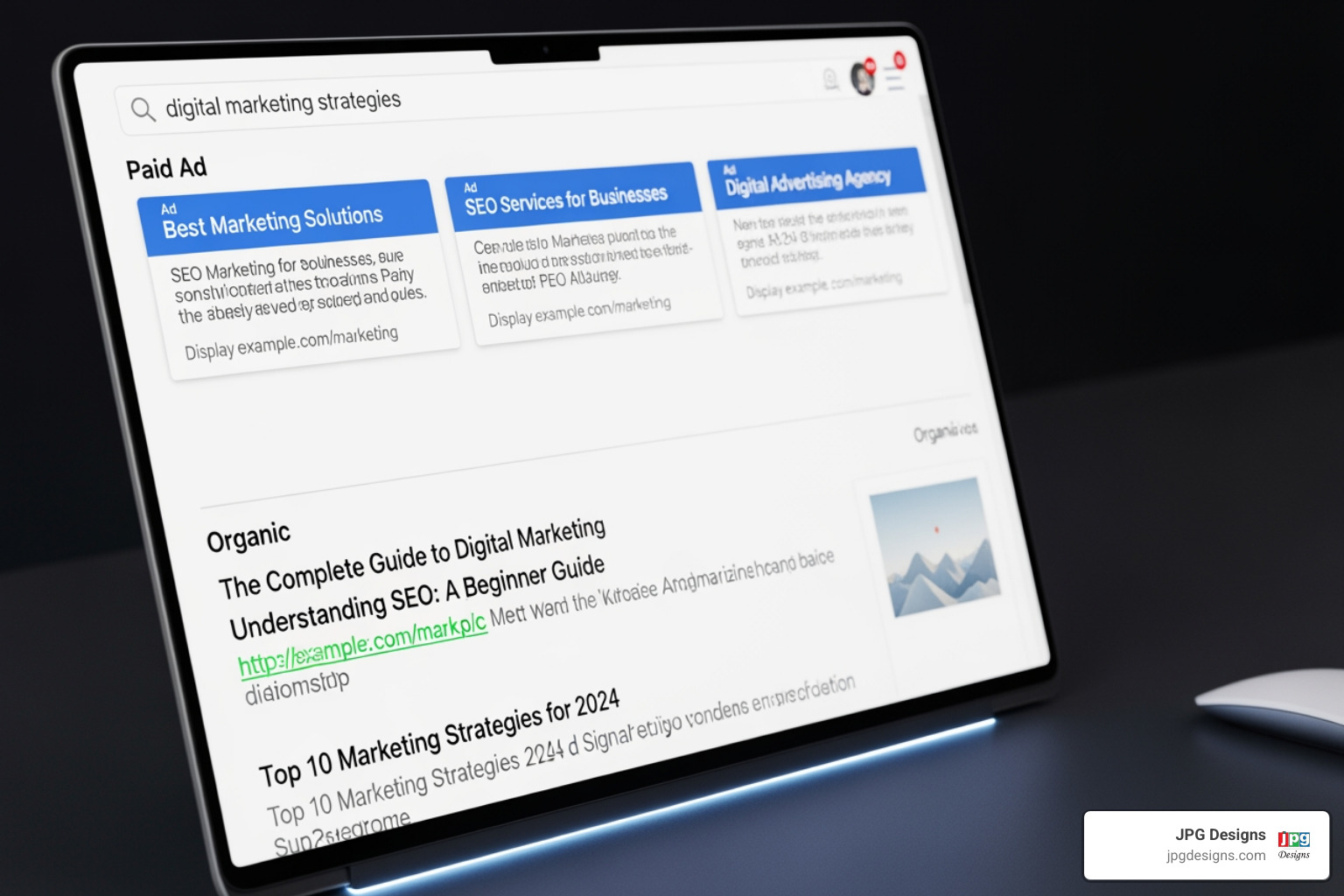
Here’s what matters: users trust organic results more, viewing them as more credible than ads. The long-term value is also superior. Paid ads offer immediate traffic that stops when your budget runs out. Organic traffic, once established, is sustainable and builds over time.
However, a smart strategy often uses both. Paid ads can provide immediate visibility while you build a long-term organic presence. We explore this balanced approach in Maximize Your ROI with SEO & Google Ads. Understanding these fundamentals is key to investing your marketing dollars for maximum impact.
How Search Engines Like Google Actually Work
Ever wonder what happens in the split seconds between hitting “search” and seeing results? Search engines like Google act as incredibly efficient librarians for billions of webpages. Understanding this system makes what does SEO stand for much clearer. It’s not about tricking Google; it’s about speaking its language so customers can find you.
Google’s mission is to deliver the most relevant, trustworthy results as quickly as possible. For a business in Providence or Warwick, appearing on page one versus page two can mean the difference between thriving and struggling. We dive deeper into this in our article on 10 Google Secrets You’ll Want to Know.
The Three Core Stages: Crawling, Indexing, and Ranking
Search engines operate in three main stages:
1. Crawling: Digital robots (crawlers or spiders) travel across the internet, following links to find content on your website. If your site has technical issues like broken links or slow speeds, crawlers may struggle to explore it and move on.
2. Indexing: After crawling, Google analyzes your content and files it in its massive database, the index. This index stores information about your pages’ topics and keywords. If your page isn’t indexed, it doesn’t exist in search results. This is a common issue we address for businesses, as detailed in our guide on How to Ensure Your Small Business Website is Search Engine Friendly.
3. Ranking: When someone searches, Google’s algorithm scans the index and ranks the most relevant pages. It uses hundreds of factors—like content relevance, site authority, page speed, and mobile-friendliness—to decide which pages deserve the top spots. Your goal with SEO is to prove your website is the best answer.

Understanding Google’s Ever-Evolving Algorithm
Google’s algorithm isn’t static; it changes hundreds of times a year to improve user experience. Every update aims to make search results more helpful and trustworthy.
A key concept driving the algorithm is E-E-A-T: Experience, Expertise, Authoritativeness, and Trustworthiness. Google wants to reward content from sources that demonstrate real-world knowledge, as outlined in its Search Quality Evaluator Guidelines. The message is clear: create helpful, honest content that shows real expertise.
Another critical factor is mobile-first indexing. Google now primarily uses the mobile version of your website for ranking. Since most people search on their phones, a site that is slow or looks bad on mobile will be ranked lower. This is such a crucial issue that we wrote a guide explaining What is Mobile-First Indexing? and why it’s vital for your business.
Understanding how search engines work is the foundation for smart SEO. When you know what Google is looking for, you can deliver it—resulting in more visibility, traffic, and customers.
The Main Components of a Winning SEO Strategy
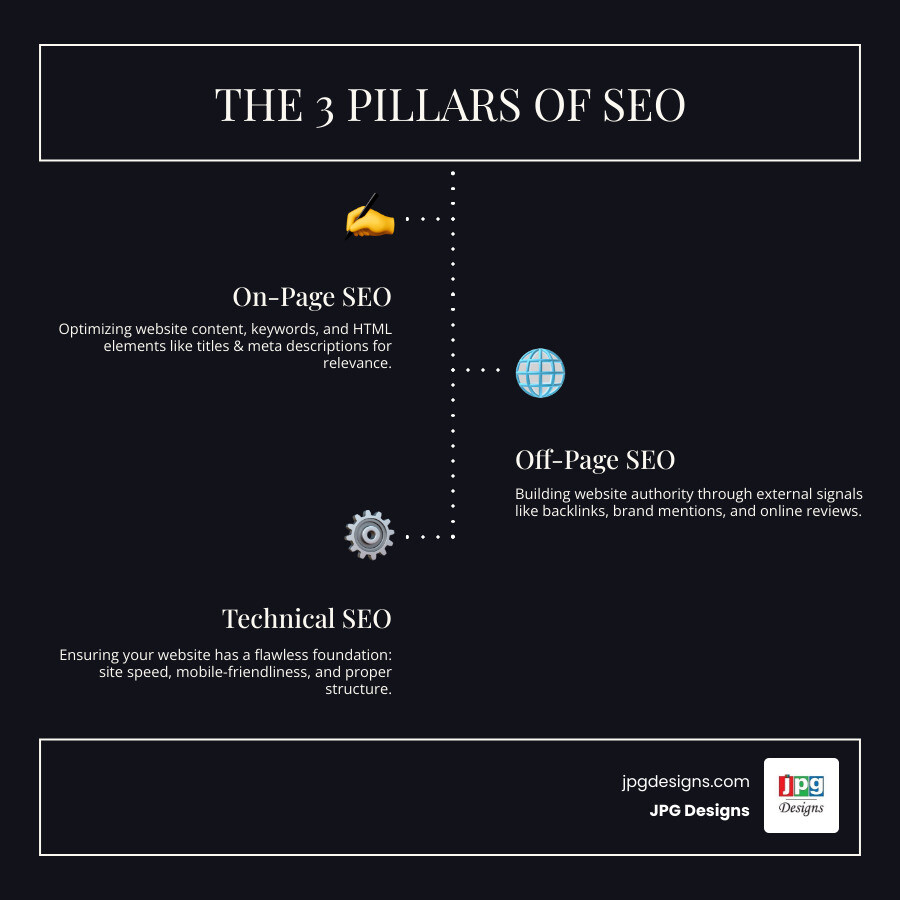
Now that we know what does SEO stand for and how search engines work, let’s build a winning strategy. Effective SEO is like a three-legged stool, relying on On-Page SEO, Off-Page SEO, and Technical SEO. If one leg is weak, the entire strategy falters. It’s why we recommend businesses regularly Re-evaluate Your SEO Strategy to ensure all three components work together.
The three main types of SEO you need to master are On-Page SEO, Off-Page SEO, and Technical SEO. Let’s break down each one.
On-Page SEO: Optimizing Your Content and HTML
On-Page SEO involves everything you do directly on your website to make it clear to search engines and valuable to visitors. Key elements include:
- Keyword Research: Identifying the terms your potential customers in areas like Cranston or Newport use to find your services.
- Content Quality: Creating helpful, unique, and engaging content that provides real value. As we explain in Content is King, this is non-negotiable.
- Title Tags & Meta Descriptions: These are your ad copy in search results. They must be compelling and keyword-rich to earn clicks.
- Header Tags (H1, H2): These structure your content for readability and signal topic importance to search engines.
- Internal Linking: Connecting related pages on your site to guide visitors and spread authority.
For actionable advice, check out our 7 Tips to Get the Best On-Page SEO Results.
Off-Page SEO: Building Your Website’s Authority
Off-Page SEO refers to actions taken outside your website to build its reputation and authority. The main components are:
- Backlinks: Links from other reputable websites are like votes of confidence that tell Google your site is trustworthy.
- Brand Mentions: When your business is discussed online (even without a link), it signals relevance to search engines.
- Social Media Signals: While not a direct ranking factor, a strong social presence drives traffic and increases visibility. Learn more in How Social Media Improves Your SEO.
- Online Reviews: For local businesses, positive reviews on platforms like Google Business Profile are critical for building trust and influencing local rankings. We can help you Boost Your Business With Our Online Review Service.
Technical SEO: Ensuring a Flawless Foundation
Technical SEO is the behind-the-scenes framework that allows your content and backlinks to shine. It’s essential for performance. Key aspects include:
- Website Speed: Fast-loading sites provide a better user experience, which search engines reward. Slow sites lead to high bounce rates.
- Mobile-Friendliness: With mobile-first indexing, your site must perform flawlessly on smartphones. Our expertise in Responsive Web Design ensures this.
- Site Architecture: A logical site structure helps search engines and users steer your site easily.
- XML Sitemaps & Robots.txt: These files act as a roadmap and traffic controller for search engine crawlers, ensuring they can find and index your content properly.
- SSL Certificate: The padlock icon in the address bar (HTTPS) encrypts data, acting as a trust signal and a ranking factor. If your site isn’t secure, read Why Your Website Needs an SSL Certificate.
When On-Page, Off-Page, and Technical SEO work in harmony, your website becomes a powerful tool for attracting customers and growing your business.
The Future of SEO: AI, Local Search, and Measuring Success
SEO never sits still. Today, Artificial Intelligence and the explosive growth of local search are reshaping how businesses in Rhode Island get found online. Understanding these trends isn’t just interesting—it’s essential for survival and provides an opportunity to capture more qualified leads and see a real return on your investment.
How Artificial Intelligence (AI) is Reshaping SEO
AI is actively changing how search engines work and how people find information. AI tools like ChatGPT can accelerate keyword analysis and content brainstorming, but they don’t replace human craftsmanship. Google’s guidance on AI-generated content is clear: they reward helpful, reliable, people-first content, regardless of how it’s created.
Think of AI as a power tool that helps a skilled professional work more efficiently. We use it to analyze trends, but our content is always infused with human insight and genuine expertise. With Google integrating AI into search results (e.g., AI Overviews), your content must be well-structured, factual, and clear to be referenced. The fundamentals remain: create genuinely helpful content for real people.
The Power of Local SEO for Brick-and-Mortar Businesses
“Near me” searches have exploded, representing customers who are ready to act now. If a homeowner in Cumberland needs an emergency plumber, they’re searching on their phone. This is where local SEO becomes your secret weapon, optimizing your presence to capture customers in your immediate area. For any brick-and-mortar business in Rhode Island, Local SEO is no longer optional.
Your Google Business Profile (GBP) is the cornerstone of this strategy. It’s your free listing in Google Maps and the “local pack”—the prime real estate for local search. Our guide on How to Setup and Optimize Your GMB can help you claim this spot.
Beyond GBP, local citations (consistent name, address, and phone number listings) and positive customer reviews build trust and boost local rankings. Local SEO focuses on customers in your service area who are ready to buy, making it one of the highest-ROI marketing investments you can make. Learn more in our comprehensive guide to Local SEO.
Tracking Your Success: Key SEO Metrics
In SEO, measurable results are what count. Tracking the right metrics is critical to understanding your return on investment. You need to monitor key indicators to know if your strategy is working.
- Organic Traffic: How many people find your site via unpaid search. A steady increase shows growing visibility.
- Keyword Rankings: Where you appear for terms your customers are searching. Top three positions drive the most traffic.
- Click-Through Rate (CTR): The percentage of people who click your link in search results. A low CTR may mean your title and description need improvement.
- Bounce Rate: The percentage of visitors who leave after viewing only one page. A high rate can indicate a mismatch between content and user intent.
- Conversion Rate: The most important metric. It measures the percentage of visitors who take a desired action (call, fill out a form, make a purchase). Traffic is meaningless if it doesn’t convert to customers. Are you tracking this? Do You Know the ROI of Your Website?
We use tools like Google Analytics to track these metrics. Our guide on Everything You Need to Know About Google Analytics can help you understand the basics.
Frequently Asked Questions about SEO
I talk with business owners every day who have questions about SEO. Here are the answers to the most common ones I encounter from businesses in Rhode Island and beyond.
What does SEO stand for?
As a quick recap, what does SEO stand for? It’s Search Engine Optimization—the strategic process of improving your website’s visibility in search engines like Google. The goal is to attract organic, unpaid traffic from people actively searching for what you offer by making your site the most helpful and relevant answer to their query.
How long does it take to see results from SEO?
This is the most common question. The honest answer is that SEO is a long-term strategy, not an overnight fix. While minor improvements may appear in a few weeks, significant, sustainable results typically take 4 to 12 months.
This timeline is influenced by your industry’s competitiveness, your website’s current condition and history, and the resources you invest. The key is patience and consistency. SEO builds momentum over time, and the strong rankings you achieve are far more stable and sustainable than paid advertising.
Can I do SEO myself or should I hire a professional?
Yes, you can do some basic SEO yourself if you have the time to learn. Resources are available to help you with fundamentals like keyword research and content creation.
However, effective SEO is complex and constantly evolving. Google’s algorithm changes, new best practices emerge, and technical issues can be difficult to fix. For most business owners, staying on top of this while running their company is overwhelming.
Hiring a professional SEO agency provides deep expertise, access to advanced tools, and the experience to execute a comprehensive strategy that gets results faster. For businesses in competitive markets or those seeking significant growth, professional help is a smart investment that frees you to focus on what you do best. This is similar to the value we discuss in Why Hiring Professional Web Design is Always Better Than Going DIY.
Conclusion: Your Next Step Towards Search Engine Dominance
We’ve covered what does SEO stand for, but more importantly, we’ve seen why it’s the bridge connecting your business to customers actively searching for your services. Whether you’re in Providence, Warwick, or Cranston, your potential clients are using Google to find solutions. The question is: will they find you or your competition?
Remember: SEO is a continuous process, not a one-time task. To maintain and improve your rankings, your website needs ongoing attention as algorithms and markets evolve. Think of it as tending a garden; consistent nurturing is required for it to flourish.
The reward for this effort is sustainable online growth. Unlike paid ads, a well-optimized website becomes a lasting asset, generating leads and customers month after month.
At JPG Designs, we’ve spent well over a decade helping Rhode Island businesses transform their online presence and thrive. We know how to leverage mobile-first indexing, optimize for local “near me” searches, and build the authority Google rewards with top rankings.
You’ve taken the first step by learning what SEO is. Now, it’s time to act. Your competitors aren’t waiting. Every day your website isn’t optimized is a day of missed opportunities.
Ready to take control of your online presence and attract the customers you deserve? We’re here to help you build a digital future that drives real results.
Explore our Digital Marketing Services and let’s start your journey toward search engine dominance today.