
Why SEO Tips for Small Businesses Are Your Best Investment
SEO tips for small businesses can transform how customers find you online, leveling the playing field against big brands. Here are the most impactful actions you can take right now:
- Claim and optimize your Google Business Profile for local visibility
- Target long-tail keywords that match what your customers actually search for
- Create high-quality content that answers real questions
- Fix technical issues like slow page speed and mobile responsiveness
- Build local backlinks through community partnerships
- Track your progress with free tools like Google Search Console
Organic search accounts for 53% of all online traffic, and small businesses that invest in SEO consistently outperform those relying solely on paid ads. Instead of pouring money into ads, you can capture customers actively searching for your services at a fraction of the cost.
SEO can feel overwhelming with its jargon and algorithm updates, causing many to give up. But you don’t need to master everything at once. Focus on the fundamentals that drive real business growth, and you’ll start seeing qualified leads within months.
I’m Jeff Pratt, owner of JPG Designs. For more than a decade, I’ve helped Rhode Island businesses grow with strategic SEO. I’ve seen how focusing on mobile-first design, local visibility, and conversion optimization turns a website into a consistent lead generation engine.

Understanding the SEO Landscape: Why It’s Your Secret Weapon
SEO isn’t a dark art; it’s the practice of making your website easy for customers to find online. For small businesses, it’s a secret weapon against competitors with bigger budgets.
Imagine a customer in East Greenwich searching for a local service. How does Google decide who to show first? That’s where seo tips for small businesses give you a competitive advantage.
Search engines like Google work through three essential stages. First comes crawling—automated bots explore the web. Next is indexing, where Google analyzes and stores what it finds. Finally, there’s ranking—when someone searches, Google delivers the most relevant, trustworthy results first.
You can dive deeper into this process through Google’s own guide on how Search works, but understanding this process helps you speak Google’s language.
The payoff for small businesses is substantial. Ranking higher brings more visitors, boosts brand awareness, and generates traffic without the ongoing cost of paid ads.
But what really matters is the quality of that traffic. People using search are actively looking for solutions, not just casually scrolling past an ad. This high intent leads to powerful results: 76% of people who search for something nearby on their smartphone visit a business within a day, and 28% of those searches result in a purchase. A search today can mean a customer in your Warwick or Providence business tomorrow.
Organic search accounts for 53% of all online traffic—the single largest channel for bringing visitors to your website. While competitors pour money into ads that disappear when they stop paying, your SEO efforts work around the clock. We’ve seen this change countless times, which is why we created our guide on How Google Ranking Can Help Your Business.
The bottom line: SEO levels the playing field. Your small business can outrank corporate giants by being smarter, more relevant, and more connected to your local community.
The Core Pillars: Actionable SEO Tips for Small Businesses
Now that we understand the “why,” let’s dive into the “how.” These foundational seo tips for small businesses will transform how customers find you online – and they’re more approachable than you might think.
Master Keyword Research to Understand Your Customers
Keyword research isn’t about gaming the system; it’s about understanding your customers. When someone in Cranston or Newport types a question into Google, they’re telling you exactly what they need.
Understanding search intent is crucial. A search for “web design” is different from “affordable web design for small businesses in Pawtucket RI.” The latter signals a customer ready to hire.
Long-tail keywords are your secret weapon. They have lower search volume but higher conversion rates because they capture specific intent. Instead of competing for “plumber,” target “emergency plumber Pawtucket RI Sunday evening.” You’ll face less competition and reach customers ready to call.
Start by answering customer questions. Create content that solves their problems, and you’ll attract the right audience.
You don’t need expensive tools. Google Keyword Planner is free and provides search volume data. Tools like AnswerThePublic can help you find the questions people are asking about your keywords.
A quick competitor analysis can also be useful. See what keywords successful businesses in Woonsocket or Cumberland are targeting to find market gaps you can fill.
Optimize Your Website with On-Page SEO
Once you know what your customers are searching for, it’s time to speak their language. On-page SEO is about optimizing individual web pages so search engines understand exactly what you offer.
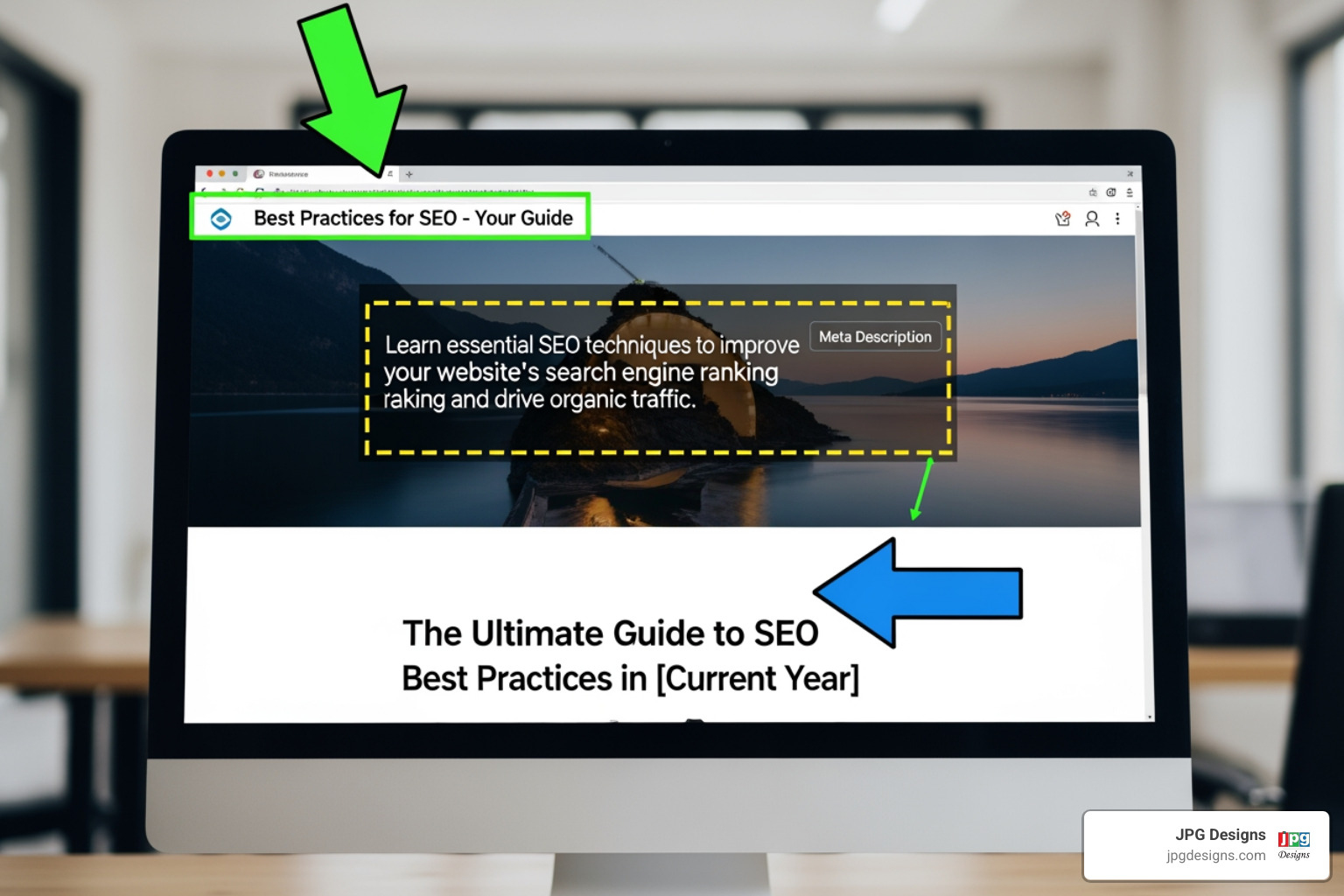
Your title tag is your first impression in search results. Keep it under 60 characters, include your primary keyword, and make it compelling.
The meta description is your 160-character sales pitch. It doesn’t directly affect rankings, but a great one can double your click-through rate. Focus on benefits to encourage clicks.
Header tags (H1, H2, H3) structure your content for readers and search engines. Use your primary keyword in the H1 and related keywords in subheadings.
Image alt text improves accessibility and tells search engines what your images are. Be descriptive and use keywords where appropriate (e.g., “Plumber fixing sink in Providence home”).
Use clean, descriptive URLs like yourwebsite.com/services/web-design-providence-ri. Keep them short, readable, and keyword-rich.
Internal linking connects your content, helping visitors and search engines steer your site. It distributes authority and keeps users engaged longer.
These elements work together to help search engines understand your content. Our guide on 7 Tips to Get the Best On-Page SEO Results offers more practical strategies.
Dominate Local Search and Attract Nearby Customers
For businesses serving a specific area, local SEO is essential. Almost half of all Google searches have local intent, and 72% of consumers who perform a local search visit a store within five miles.
Your Google Business Profile is the cornerstone of local SEO. It’s free and powerful. Fill out every section completely, use quality photos, and keep it updated to maximize visibility.
NAP consistency is crucial. Ensure your business Name, Address, and Phone number are identical across all online platforms, from your website to social media profiles.
Customer reviews build trust and are a key local ranking factor. Encourage happy customers to leave reviews and respond to all feedback to show you’re engaged.
Use local keywords naturally on your site. Target phrases like “licensed electrician Coventry RI” instead of just “electrician,” but avoid keyword stuffing.
Local SEO transforms how nearby customers find you. We’ve seen it work for our Rhode Island clients. For deeper insights, check out Why Your Business Can Benefit Greatly From Local SEO.
Build Authority with High-Quality Content and Backlinks
Creating helpful content is challenging but separates top-ranking businesses from the rest.
Google uses EEAT (Experience, Expertise, Authoritativeness, and Trustworthiness) to evaluate content quality. Your content must demonstrate real-world experience and be a trustworthy source of information.
Creating high-quality content means solving problems. Use blog posts, how-to guides, and video content to answer customer questions and demonstrate your expertise.
Write for humans first. When you genuinely help your audience, you’ll naturally use the right keywords. This authentic approach is what Google rewards. Our article Content is King: Creating High-Quality SEO Optimized Content explores this philosophy.
Backlinks are links from other sites to yours, acting as votes of confidence. Quality matters more than quantity; a link from a reputable Rhode Island news site is more valuable than dozens of low-quality ones.
Build backlinks ethically through local partnerships and community involvement. Sponsoring a local event or partnering with a complementary business can lead to valuable links. Other strategies include guest blogging on reputable sites, writing testimonials for partners, and broken link building (finding broken links on other sites and suggesting your content as a replacement).
These strategies take time, but they build sustainable authority that compounds over time.
Fine-Tuning Your Engine: Essential Technical SEO
Great content and keywords are useless if search engines can’t access your site. Technical SEO is the foundation that supports all your other efforts. The good news is that many basic technical fixes are simple and have a dramatic impact.
Prioritize Mobile-First Design and Page Speed
If your website isn’t mobile-friendly, you are losing customers daily.

Google uses mobile-first indexing, meaning it primarily ranks your site based on its mobile version. A poor mobile experience will hurt your rankings, regardless of how good your desktop site looks.
With approximately 60% of global web traffic coming from mobile devices, a slow or clunky mobile site means lost business. A customer in Providence with an emergency won’t wait for a slow page to load; they’ll call your competitor.
Responsive design is the solution. Your site must adapt to any screen size. At JPG Designs, we prioritize mobile-first design for all our Rhode Island clients because we know it’s critical for success.
Page speed is just as important. Users abandon slow-loading sites, so Google favors faster websites in its rankings. Google’s Core Web Vitals measure user experience, including loading speed, interactivity, and visual stability. A good page experience is a key ranking signal.
Test your site with Google’s PageSpeed Insights. It provides a score and recommendations, such as optimizing images, enabling caching, and cleaning up code.
For more guidance on improving your site’s technical foundation, check out our article on SEO Elements: Website Design and Optimization.
Improve Crawlability with a Solid Site Structure
A poorly structured website is like a disorganized library for search enginesfrustrating and inefficient.
Website architecture is how your pages are organized. A logical structure (homepage -> categories -> subpages) makes it easy for users and crawlers to steer.
An XML sitemap is a roadmap for search engines, listing all your important pages to ensure they get crawled and indexed. Submit your sitemap via Google Search Console.
A robots.txt file tells search engines which parts of your site to ignore (like admin pages), helping them focus on your important content.
Schema markup (or structured data) is code that helps search engines understand your content’s meaning. It can be used for business hours, reviews, or events, leading to “rich snippets” in search resultsimproved listings with star ratings or other info that stand out. For example, a restaurant’s schema can display ratings and hours directly in search results, increasing clicks. Use resources like Schema.org for the vocabulary and Google’s Structured Data Markup Helper to generate the code.
Getting your technical foundation right is essential. For a comprehensive checklist, our guide How to Ensure Your Small Business Website is Search Engine Friendly covers everything you need to know.
Measuring, Adapting, and Future-Proofing Your SEO
SEO isn’t a one-time task. The digital landscape is always changing, so monitoring your progress and adapting your strategy is essential for long-term success.
Track Your Performance with Free SEO Tools
Running a website without tracking performance is like driving blind. Understanding what works is key to turning SEO efforts into business growth.

You don’t need expensive software. Google offers powerful free tools for making data-driven decisions.
Google Analytics shows how visitors interact with your site. After you set it up, you can track website traffic sources, popular pages, and user behavior to see what content resonates.
Google Search Console shows how Google sees your site. It reveals search queries, tracks keyword rankings, and alerts you to technical issues. Use the URL Inspection Tool to diagnose page-specific problems.
Pay attention to your bounce ratethe percentage of visitors who leave after viewing only one page. A high bounce rate can indicate slow page speed or content that doesn’t match user expectations.
These tools turn guesswork into concrete data, allowing you to measure the impact of your SEO efforts.
Adapting to AI and Voice Search: One of our top seo tips for small businesses
Search is changing due to AI and voice search. For a Rhode Island business owner, adapting to these shifts is essential for staying visible.
Google’s AI-powered Search Generative Experience (SGE) provides direct answers, but users still click through to websites for in-depth, trustworthy information. Your goal is to be that trusted resource.
Voice search uses longer, conversational keywords phrased as questions (e.g., “What’s the best Italian restaurant in Providence RI?”). To adapt, structure your content to answer these questions directly. This optimizes your site for both AI and voice search.
Featured snippets (answer boxes at the top of results) are crucial for capturing voice search traffic and establishing credibility. Our guide on How to Get Your Website in Google’s Featured Snippets walks through strategies for earning these positions.
The key is creating original, expert-level content that AI and human readers will value. For more on this, our article about how to Optimize Website for Semantic Search offers practical guidance.
Is SEO Worth the Investment? A look at costs and timelines
Is SEO worth the cost? Yes, but it requires realistic expectations. SEO is a long-term investment that builds momentum, delivering returns that often exceed other marketing channels.
Costs vary. A DIY approach costs only your time but requires consistent effort. You can implement many of these tips yourself using free tools. Working with a professional agency or specialist involves a financial investment but provides expertise and efficiency. At JPG Designs, we develop customized strategies for Rhode Island businesses that fit their budgets and deliver results.
The return on investment (ROI) is where SEO truly shines. Unlike paid ads, strong rankings deliver a continuous flow of qualified traffic without a per-click cost, leading to sustainable growth.
As for the timeline, expect to see noticeable results in three to six months. For new sites, it can take longer. SEO is a marathon, not a sprint, requiring patience and consistency.
For sustainable growth, SEO is one of the smartest investments a small business can make, building long-term visibility that outlasts paid ad campaigns. If you’re wondering whether it’s time to reassess your current approach, our article It’s Time to Re-evaluate Your SEO Strategy offers valuable perspective.
Frequently Asked Questions about SEO for Small Businesses
Let’s tackle the most common concerns we hear from Rhode Island business owners.
How long does it take for SEO to work for a small business?
Be wary of anyone promising instant first-page rankings. SEO is a long-term investment, not a quick fix.
Most small businesses see meaningful results within three to six months of implementing consistent seo tips for small businesses. Quick wins, like optimizing your Google Business Profile, can show improvements in weeks, such as better local map visibility.
However, climbing the ranks for competitive keywords and building steady organic traffic takes longer, sometimes up to a year for new websites. Your top-ranking competitors invested time to get there. The good news is that once you establish authority, it’s hard to displace, and your efforts will compound over time.
The key is staying consistent. Small businesses that implement solid SEO fundamentals and stick with them will outperform those chasing quick fixes.
Can I do SEO myself for my small business?
Yes, you can! Many effective SEO tasks are manageable for motivated business owners, even with a limited budget and no marketing degree.
Free tools like Google Analytics, Search Console, and Keyword Planner provide a great starting point. You can research keywords, fix technical issues, track progress, and create helpful content based on your own business expertise.
However, SEO is complex and always changing. As your business grows, your time may be better spent serving customers than wrestling with algorithm updates and technical issues.
That’s when partnering with a digital marketing agency like JPG Designs makes sense. We can accelerate your growth, handling the complexities while you run your business. Think of it as an investment in growth, not an expense.
What are the most important seo tips for small businesses with a limited budget?
Working with a tight budget doesn’t mean you’re locked out of effective SEO. Focus your energy where it delivers the biggest impact.
- Optimize your Google Business Profile. It’s free and has a huge impact on local visibility. Keep it accurate, add photos, respond to reviews, and post updates.
- Focus on long-tail keywords. Target specific, location-based phrases like “gluten-free wedding cakes in Newport RI.” They have less competition and attract high-intent customers.
- Create helpful content. Answer common customer questions to establish your expertise and attract organic traffic. For example, a landscaper could write about preparing a Rhode Island lawn for winter.
- Ensure your site is fast and mobile-friendly. These are non-negotiable factors that have an immediate impact on user experience and rankings.
- Build local backlinks. Partner with complementary businesses, sponsor local events, or ask for testimonials to earn valuable links from trusted community sources.
- Use free analytics tools. Track your performance with Google Analytics and Search Console to focus your efforts on what works.
Consistent effort on these fundamentals can help a small business with a limited budget outperform larger competitors who rely on paid ads.
Conclusion
The key takeaway is this: Effective SEO for small businesses isn’t about outspending corporations. It’s about being visible to local customers who are actively searching for what you offer.
Your competitors may have bigger budgets, but SEO amplifies your unique strengths—local expertise and customer commitment—to connect you with customers at the perfect moment.
SEO is a marathon, not a sprint. Each optimization builds momentum, leading to tangible growth in traffic and leads over the coming months.
The strategies we’ve covered—from keyword research to technical optimization—work together to build a foundation for sustainable growth that outlasts paid ad campaigns.
For more than a decade, JPG Designs has helped Rhode Island businesses build a powerful online presence. We understand your challenges and work with experts like you who need to focus on their business, not on becoming SEO specialists.
Whether you DIY your SEO or partner with us to accelerate your results, the important thing is to start. Your customers are searching now. Make sure they can find you.
Ready to transform your online visibility and attract more qualified leads? Take the next step and explore our digital marketing services. Let’s build something great together.