
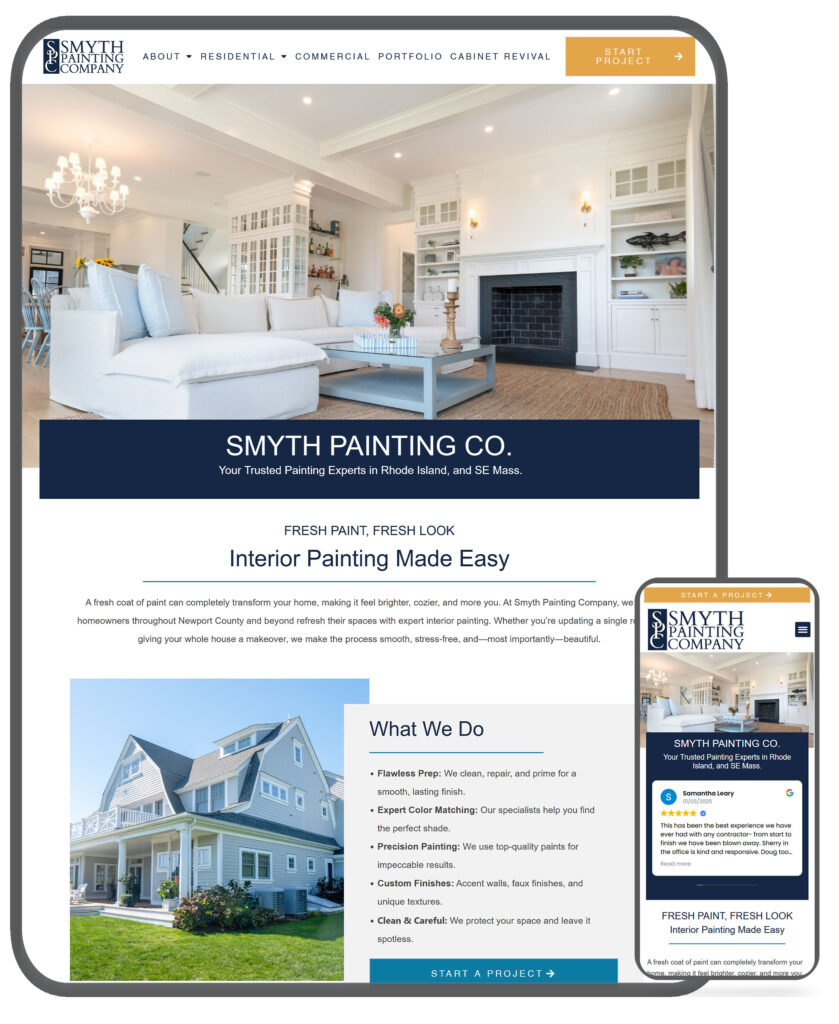
Your Digital First Impression: Why Small Business Web Page Design Matters
Small business web page design is your digital storefront, shaping customer perception in just 0.05 seconds. Here’s what makes an effective small business website:
Essential Elements of Effective Small Business Web Page Design:
- Clear Purpose – Define whether you need lead generation, e-commerce, or an information hub
- Mobile-First Design – 45% of website visits happen on mobile devices
- Fast Loading Speed – 40% of visitors abandon sites that take longer than 3 seconds to load
- Strong Call-to-Action – Guide visitors toward booking, buying, or contacting you
- Trust Signals – Display testimonials, certifications, and professional imagery
- SEO Foundation – Optimize for search engines from day one to get found online
It’s your most valuable marketing asset, working 24/7 to build credibility and generate revenue. Half of internet users form their opinion about your business based on its design.
The challenge? Many owners feel overwhelmed by the complexity, design, and maintenance. Should you DIY or hire a pro? What features are essential? How do you ensure it ranks on Google and converts visitors?
This guide provides proven strategies to plan your site, implement conversion-focused design, and maintain your digital presence for long-term growth.
I’m Jeff Pratt, owner of JPG Designs. For well over a decade, I’ve helped hundreds of businesses—from contractors to nonprofits—grow with conversion-focused small business web page design. I create websites that don’t just look good, but actively drive leads and revenue.

Terms related to small business web page design:
Why Your Website is Your Most Valuable Business Asset
Pain Point: “Is a website really worth the cost and effort?”
Many small business owners in Providence, Warwick, or Cranston, RI, wonder if a professional website is worth the cost. The answer is a resounding yes. Your website is a dynamic tool that directly impacts your bottom line.
Solution: A professional site builds trust and drives growth.
Think of your website as your most diligent employee, working 24/7 to greet customers and guide them to your services. A well-crafted site helps you stand out in a crowded market.
Here’s why your website is an indispensable asset:
- Credibility and Trust: Consumers expect a professional online presence. Half of internet users judge a business by its website design. A polished site boosts your legitimacy. Without one, you risk seeming outdated.
- 24/7 Availability: Your website is an always-open storefront. Customers can find info, browse products, or make appointments anytime, from anywhere, capturing leads outside business hours.
- Affordable Marketing: A website is a cost-effective marketing hub for all your digital efforts. Once built, it attracts organic traffic with minimal ongoing cost, providing an excellent return on investment.
- Customer Insights: Your website provides invaluable customer data. Tracking visits, time on page, and actions helps you understand their needs, allowing you to refine your marketing strategies.
- Competitive Advantage: In Rhode Island, many businesses have outdated sites. A modern, optimized website gives you a significant competitive edge, helping you attract customers searching online and leveling the playing field against larger companies.
By focusing on clear objectives and your audience, you can create a site that delivers real results. Learn more about the true value of a website for small businesses.
The Blueprint: Planning Your Website for Success
Pain Point: “I’m overwhelmed and don’t know where to begin.”
Starting a website project can feel overwhelming. It’s easy to get lost in details before establishing a foundation. Like building a house, a strong website begins with a clear plan to avoid an ineffective site that doesn’t meet business goals.
Solution: Follow this foundational plan to make smart decisions from the start.
A well-planned website is a successful one. Defining your objectives, audience, and digital presence upfront saves time, money, and future headaches.

Defining Your Goals and Audience
First, ask: Why are we building this website? and Who is it for?
- Website Purpose: What do you want your website to achieve?
- Lead Generation: For service businesses like plumbers in East Greenwich, the goal is to capture contact information.
- Online Sales (E-commerce): If you’re selling products, your site needs robust e-commerce functionality.
- Information Hub: You may need to provide information, showcase a portfolio, or establish thought leadership.
- Booking Appointments: For salons in Newport, an integrated booking system is key.
A clear purpose guides every design and content decision.
- Target Customer Profile: Who are your ideal customers?
- What are their demographics (age, location, income)?
- What are their pain points that your business solves?
- What are their goals and aspirations?
- How do they search for businesses like yours online?
Understanding your audience helps create content that speaks to them and an intuitive user journey. We map how visitors interact with your site, from first click to conversion.
Choosing Your Domain Name and Hosting
Your domain and hosting are your site’s address and foundation. Choose wisely.
- Domain Name Tips:
- Short and Memorable: Easy to recall and type.
- Keyword Relevance: If possible, include a keyword related to your business (e.g., “ProvidencePlumbing.com”).
- Avoid Hyphens and Numbers: These can be confusing.
- Branded: It should reflect your business name.
- For more guidance, check out our expert tips on how to buy a domain.
- Hosting Types:
- Shared Hosting: Most affordable, good for small sites with low traffic.
- VPS (Virtual Private Server) Hosting: Offers more resources and control, suitable for growing businesses.
- Dedicated Hosting: Provides an entire server for your website, offering maximum performance for high-traffic sites.
We help you select a hosting solution that balances budget and performance.
DIY Website Approach vs. Hiring a Professional
Pain Point: “I have a limited budget. Should I just build it myself?”
Many small business owners debate building a website themselves versus hiring a professional. The DIY route seems cheaper upfront, but understand the trade-offs.
Solution: Understand the trade-offs to make an informed decision.
Here’s a quick comparison to help you weigh your options:
| Feature | DIY Approach | Professional Services (like ours) |
|---|---|---|
| Cost | Lower initial monthly fees, but hidden costs in time and tools | Higher upfront investment, but predictable long-term value |
| Time | Significant time investment for learning, building, and troubleshooting | Saves you time, allowing you to focus on your core business |
| Customization | Limited by template options and your technical skills | Full customization to perfectly match your brand and unique needs |
| Technical Skill | Requires learning web design, SEO, and maintenance basics | No technical expertise required from you; we handle it all |
| Results | Often functional, but may lack polish, SEO, and conversion optimization | High-quality, optimized, and conversion-focused results |
| Support | Community forums, self-help guides | Dedicated project manager and ongoing expert support |
- DIY Advantages:
- Control: You have direct control over every aspect of your site.
- Lower Initial Cost: Website builders often have low monthly subscription fees.
- Professional Design Benefits:
- Expertise: We bring years of experience in small business web page design, SEO, and UX to your project, staying current with the latest trends.
- Time-Saving: We handle the entire process from planning to launch, saving you valuable time to focus on your business.
- Superior Results: A professional site is about functionality, security, and performance. We build sites optimized for search engines, mobile devices, and conversions.
- Ongoing Support: We offer ongoing website maintenance and support to keep your site secure, updated, and performing optimally.
The decision depends on your budget, technical comfort, and your website’s importance. For Rhode Island businesses seeking an impactful online presence, a professional approach usually yields the best results. For a deeper dive, read our article: Should you build your own website or hire a pro?
Core Principles of Effective Small Business Web Page Design
Pain Point: “What actually makes a website good instead of just pretty?”
A visually appealing website is great, but an effective site is more than a pretty face. It’s a machine designed for business objectives. Many sites fail by prioritizing aesthetics over functionality, confusing visitors.
Solution: Focus on these core principles that balance aesthetics with functionality to drive results.
Our approach to small business web page design ensures every element serves a purpose. We combine beautiful design with strategic functionality to create sites that look great and work hard for your business.

Essential Elements Every Page Needs
Certain elements are non-negotiable for an effective website. They guide visitors and build trust:
- Clear Navigation Menu: This is your user’s roadmap. It should be intuitive and consistent. Visitors form an impression in 0.05 seconds and will leave if they can’t find what they need quickly. Easy navigation is critical.
- Compelling Call-to-Action (CTA): Your CTAs (“Request a Quote,” “Shop Now”) should be prominent, clear, and persuasive, guiding users to the next step.
- Easy-to-Find Contact Information: Make your contact info (phone, email, address for your Pawtucket business) readily available. A dedicated contact page is a must.
- Customer Testimonials and Reviews: Social proof is powerful. Showcasing testimonials builds trust. 92% of consumers read them before making a purchase.
- High-Quality Images and Videos: High-quality images and videos engage visitors and convey professionalism. Invest in professional photos or quality stock images that reflect your brand.
- Consistent Branding: Your site’s visuals (logo, colors, fonts) should align with your brand identity for a cohesive, professional experience.
For a comprehensive list, see our articles on 10 things every small business website needs and what every website should have.
Designing for Mobile-First and User Experience
Mobile internet access is now the standard. In North America, mobile devices account for 45% of website visits.
- Mobile-First Design Explained: We use a mobile-first approach, designing for smartphones first and then scaling up. This ensures your site functions perfectly on any device by prioritizing content and usability for mobile users.
- User-Friendly Navigation: Mobile navigation must be simple, with features like hamburger menus and tap-friendly buttons.
- Page Load Speed: Page speed is crucial for UX and SEO. 40% of visitors will abandon a website if it takes longer than three seconds to load. We optimize images, code, and hosting for lightning-fast speeds.
- Website Accessibility (ADA): Accessibility (ADA compliance) ensures your site can be used by everyone, including those with disabilities. This involves alt-text, keyboard navigation, and proper color contrast. It’s socially responsible and expands your audience. Learn more about why your website should be ADA compliant and explore our insights on responsive web design.
How to design a small business web page that captures leads
For many businesses, a website’s primary goal is turning visitors into customers. This requires conversion-focused design.
- Conversion-Focused Layout: Every page needs a clear purpose to guide visitors. We use visual hierarchy, strong headlines, and intuitive paths to direct attention.
- Prominent CTAs: Your CTAs must stand out. Use contrasting colors, action-oriented language, and make them easy to understand.
- Simple Contact Forms: To get leads, make contact easy. Use short, mobile-friendly forms that ask only for essential information.
- Lead Magnets: Offer a lead magnet (free guide, checklist) for contact information. This builds your email list and positions you as an expert.
- Trust Signals: Include trust signals like awards, certifications, and security badges. A contractor in Lincoln, RI, could display licensing logos.
By implementing these strategies, your small business web page design will become a powerful lead-generating machine. Explore our tips to improve your online lead conversions.
Growing Your Business: SEO, Maintenance, and Security
Pain Point: “My website is live, but no one is visiting it. How do I get traffic and keep it safe?”
Launching your site is just the beginning. Without ongoing optimization, maintenance, and security, it may struggle to attract visitors and become vulnerable to threats. It’s like opening a store but not telling anyone or locking the doors.
Solution: Implement these strategies to attract visitors, drive sales, and protect your investment.
We offer comprehensive digital marketing and website care plans to ensure your site works for you, safely and effectively.
Optimizing your small business web page design for search engines (SEO)
Search Engine Optimization (SEO) makes your website more visible in search engines like Google when people search for your products or services.
- On-Page SEO: This involves optimizing elements directly on your website:
- Keyword Research: Identifying the words and phrases your target audience uses.
- Title Tags and Meta Descriptions: Crafting compelling, keyword-rich titles and descriptions for search results.
- Header Tags (H1, H2, H3): Structuring content with clear headings helps users and search engines.
- Image Alt Text: Describing images with relevant keywords improves accessibility and helps search engines.
- Quality Content: Providing valuable, informative, and engaging content is crucial for ranking.
- Local SEO: For Rhode Island businesses, local SEO is paramount to attract customers in your specific area.
- Google Business Profile: Optimizing your Google Business Profile is a highly effective local SEO strategy, helping you appear in local search and on Google Maps.
We build websites with SEO in mind from the ground up, ensuring a strong foundation to rank well. Find more about how to ensure your website is search engine friendly.
Website Maintenance and Security
Like a physical storefront, your website needs continuous attention to stay fresh, secure, and functional.
- Importance of Regular Updates:
- Content Freshness: Regularly updating your blog or services keeps your site relevant.
- Software and Plugin Updates: Website platforms, themes, and plugins release frequent updates with security patches and performance improvements. Neglecting them leaves your site vulnerable.
- Website Backups: Regular backups are your safety net, allowing you to restore your site after a hack or technical error.
- Security Risks: Small businesses are prime targets for cyberattacks, with phishing scams and hacking attempts occurring at an alarming rate.
- SSL Certificate: An SSL certificate encrypts data between your site and visitors (the padlock icon). It’s essential for protecting user data and for SEO.
- Malware Scans and Firewalls: Proactive security measures can detect and block malicious activity.
We offer professional website maintenance services to keep your site secure, updated, and running smoothly, so you can focus on your business.
Measuring Your Website’s Success and ROI
How do you know if your site is working? Tracking key metrics and analyzing performance helps refine your strategies for better results.
- Key Metrics:
- Website Traffic: How many visitors are coming to your site? Where are they from?
- Conversion Rate: What percentage of visitors complete a desired action (e.g., fill out a form)?
- Bounce Rate: What percentage of visitors leave after viewing only one page?
- User Behavior: Tools can help us understand how users interact with your site.
- Page Views and Click Paths: Which pages are most popular? What journey do users take?
- A/B Testing: We can test different versions of a page element to see which performs better.
- Using Data for Improvements: Reviewing these metrics helps identify areas for improvement, like optimizing content or enhancing SEO. Tools like Google Analytics are essential for this.
Understanding your site’s performance is key to maximizing its value. We help clients interpret these insights to measure their website’s ROI and continuously improve.
Frequently Asked Questions about Small Business Web Design
How much does a small business website cost?
This is a common question, and the answer is “it depends.” Like buying a car, website cost varies based on size, complexity, features, and customization.
- DIY Approaches: DIY builders have monthly fees (not recommended for professional results) but don’t account for your time investment, hidden costs, or lack of optimization.
- Professional Design: Hiring a professional is an investment in quality and results. Costs range from a few thousand dollars for a foundational site to much more for complex e-commerce or custom solutions. Factors influencing cost include:
- Number of pages
- Custom design vs. template customization
- Advanced features (e-commerce, booking systems)
- Content creation
- Ongoing SEO and marketing services
While the upfront investment is higher, the long-term ROI from a professional site (more leads, sales, and credibility) is significant. See details on our website pricing.
How long does it take to build a website?
The timeline for a small business web page design depends on the project’s scope and your content readiness.
- Simple Sites: A basic site with a few pages can take a few weeks if all content is ready.
- Complex Projects: Websites with extensive e-commerce, custom integrations, or large content libraries can take several months.
- Key Factors:
- Planning Phase: Thorough planning, including goal definition and site mapping, is crucial.
- Content Readiness: The biggest bottleneck is content readiness. Having text and images ready significantly speeds up the process.
- Feedback and Revisions: The client review process also factors into the timeline.
We work with our Rhode Island clients to set realistic timelines. Learn more about the website build timeline.
What are some examples of successful small business websites?
We can highlight the characteristics of a successful small business web page design and point you to our portfolio of work for Rhode Island businesses.
Successful small business websites often feature:
- Clear Value Proposition: They immediately communicate what the business does.
- Intuitive User Experience: Easy navigation, fast loading times, and mobile-friendliness.
- Strong Visuals: High-quality photography and consistent branding.
- Compelling Calls-to-Action: They guide visitors towards desired actions.
- Trust Signals: Testimonials, reviews, and clear contact information build credibility.
- SEO Optimization: They are built to be found by potential customers.
For example, a service business site should feature testimonials and a “Request a Quote” button. A restaurant’s site in Newport needs great food photos and an online menu. An e-commerce site requires excellent product images and a seamless checkout.
We invite you to view our portfolio of successful designs for businesses we’ve helped succeed online.
Conclusion: Turn Your Website Into a Growth Engine
Your website is much more than just an online address; it’s a powerful and essential tool for your small business’s growth and success. From making a strong first impression in milliseconds to serving as a 24/7 sales and marketing engine, a well-designed website can be the difference between merely surviving and truly thriving in today’s competitive landscape.
We’ve explored the critical elements of effective small business web page design, emphasizing the importance of strategic planning, a user-centric approach, and mobile-first responsiveness. We’ve also highlighted the necessity of ongoing SEO, robust security, and diligent maintenance to ensure your digital asset continuously performs at its peak.
Your website should be a dynamic tool that adapts and evolves with your business. By continuously optimizing, analyzing performance, and staying secure, you’ll ensure your online presence remains a powerful driver of leads, sales, and customer loyalty.
For businesses in Rhode Island ready to invest in a professional, high-performance website that ranks high and converts visitors into customers, our team at JPG Designs specializes in crafting bespoke digital solutions. We’re passionate about helping local businesses succeed online. Contact us today to start your project and turn your website into a true growth engine.