Why Brand Management Social Media Matters More Than Ever
Brand management social media is the strategic process of building, maintaining, and optimizing how your business is perceived across social platforms. It’s no longer optional for businesses that want to grow; it’s the foundation of modern brand building.
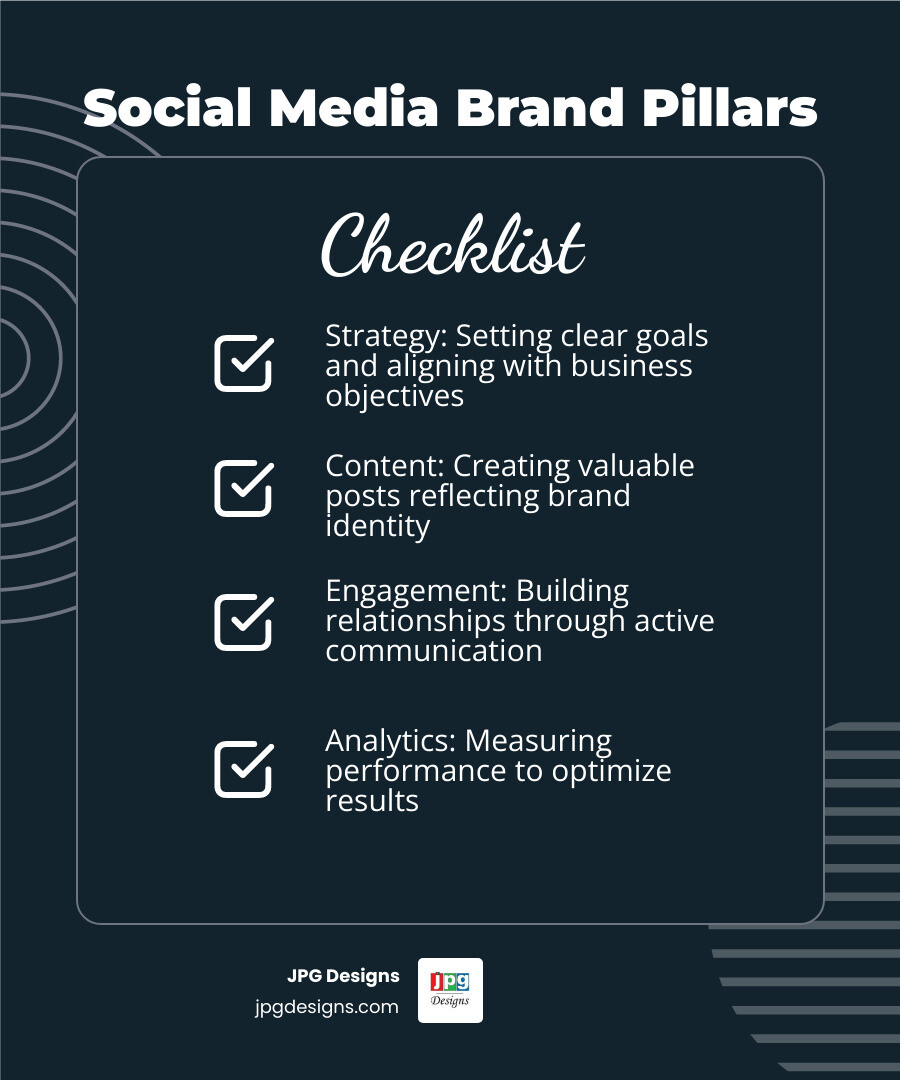
Here’s what effective brand management on social media includes:
- Consistent Brand Identity – Using the same voice, colors, and messaging across all platforms
- Strategic Content Creation – Posting content that aligns with your brand values and audience needs
- Active Community Engagement – Responding to comments, messages, and mentions to build trust
- Data-Driven Optimization – Tracking metrics like engagement, reach, and conversions to refine your approach
- Crisis Management – Addressing negative feedback quickly and professionally
The stakes are high. Research shows that 86 percent of customers consider authenticity to be a critical deciding factor in brand choice, and companies with strong, consistent brand management are 4 times more likely to improve visibility. Yet many business owners struggle to maintain a cohesive presence as platforms and expectations evolve.
Your brand is the perception people have when they see your name or logo. On social media, you build this perception through relationships, not just broadcasts. Every post and reply shapes how people see you. The challenge is managing multiple platforms, staying consistent with trends, and measuring what works—all while competing for attention in a crowded digital space where a single misstep can go viral.
But here’s the good news: a well-defined social media brand management strategy transforms confusion into clarity. It gives you a roadmap for what to post, when to post it, and how to measure success. It helps you build trust, foster loyalty, and turn followers into customers.
I’m Jeff Pratt, and I’ve spent over 15 years helping businesses build revenue-producing digital systems, including comprehensive brand management social media strategies that drive measurable growth. My team at JPG Designs has worked with service-based companies, B2B organizations, and nonprofits to create consistent, high-performing social media presences that support long-term business goals.
The Impact of Social Media on Brand Perception and Growth
Social media has reshaped how brands are built. It’s no longer about traditional advertising; it’s a pivotal part of brand management where businesses connect directly with consumers. In fact, over 91 percent of U.S. marketers use social media to start brand conversations, expand their reach, and improve customer experiences.
Social media’s impact on brand perception stems from social proof. When consumers see others engaging with a brand, they are more likely to trust and interact with it themselves, building credibility.
The opportunities social media offers for brand growth are immense. It helps support brand growth and development by:
- Enhancing Brand Visibility and Awareness: Access customers globally, expanding brand awareness and online visibility.
- Building Customer Relationships and Engagement: Foster direct, two-way communication to build deeper audience relationships and cultivate a loyal customer base.
- Content Marketing and Storytelling: Share your brand’s story and values through compelling content to stand out in a crowded market.
- Data-Driven Decision-Making: Use analytics to gain insights into customer behavior and refine strategies for better impact.
Social media engagement has a direct impact on brand visibility and reputation. It’s how we transform casual followers into passionate advocates. For more insights on how engagement drives success, explore our article on Brand Engagement With Social Media Management.
Key Social Media Platforms for Branding
A common challenge is choosing which platforms to prioritize. It’s more effective to excel on a few key platforms than to have a mediocre presence on many. The key is strategic selectivity.
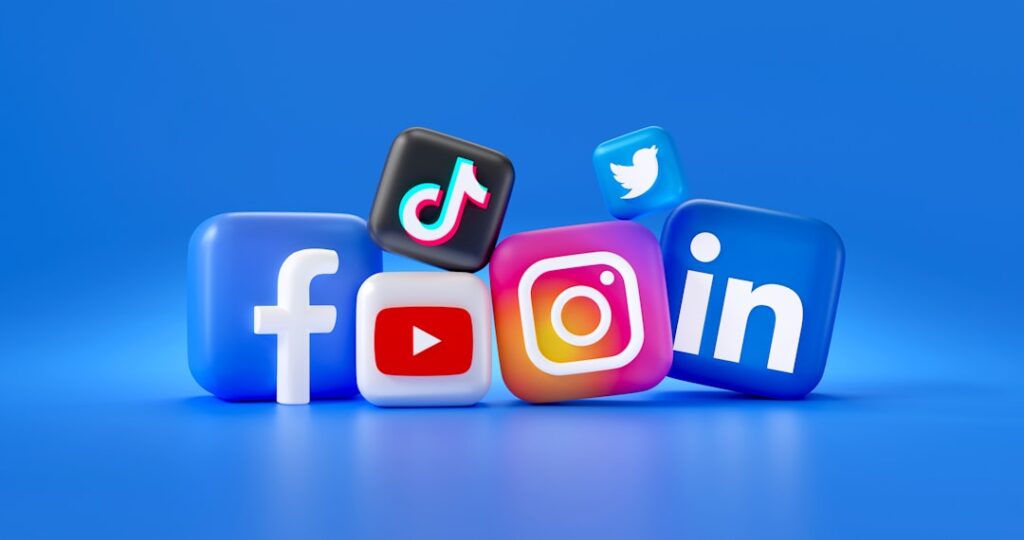
To effectively manage your brand, you need to identify the key social media platforms your target audience uses. According to the American Marketing Association, valuable platforms include legacy options like Facebook, Instagram, YouTube, and LinkedIn, alongside newer platforms like TikTok.
Here’s a quick guide to some top platforms and their primary audiences:
- Instagram: Ideal for visual content, lifestyle brands, and engaging a younger demographic (visuals/lifestyle).
- LinkedIn: Essential for B2B, professional networking, and thought leadership (B2B/professional).
- TikTok: Dominant for short-form video content, reaching Gen Z and younger millennials with creative, engaging clips (short-form video/Gen Z).
- Facebook: Continues to hold a broad demographic reach, versatile for community building, groups, and diverse content types (broad demographics).
- X (formerly Twitter): Great for real-time news, customer service, and quick updates.
- Pinterest: Excellent for visual findy, e-commerce, and inspiration, particularly strong with women.
Our approach at JPG Designs is always to let audience needs drive social media decisions, not FOMO (fear of missing out). We help you determine where your target audiences are most active and how they prefer to engage. It’s about choosing platforms where your brand’s culture and content style truly fit, and where we can consistently produce the type of content the platform favors.
The Shift from Traditional to Digital Branding
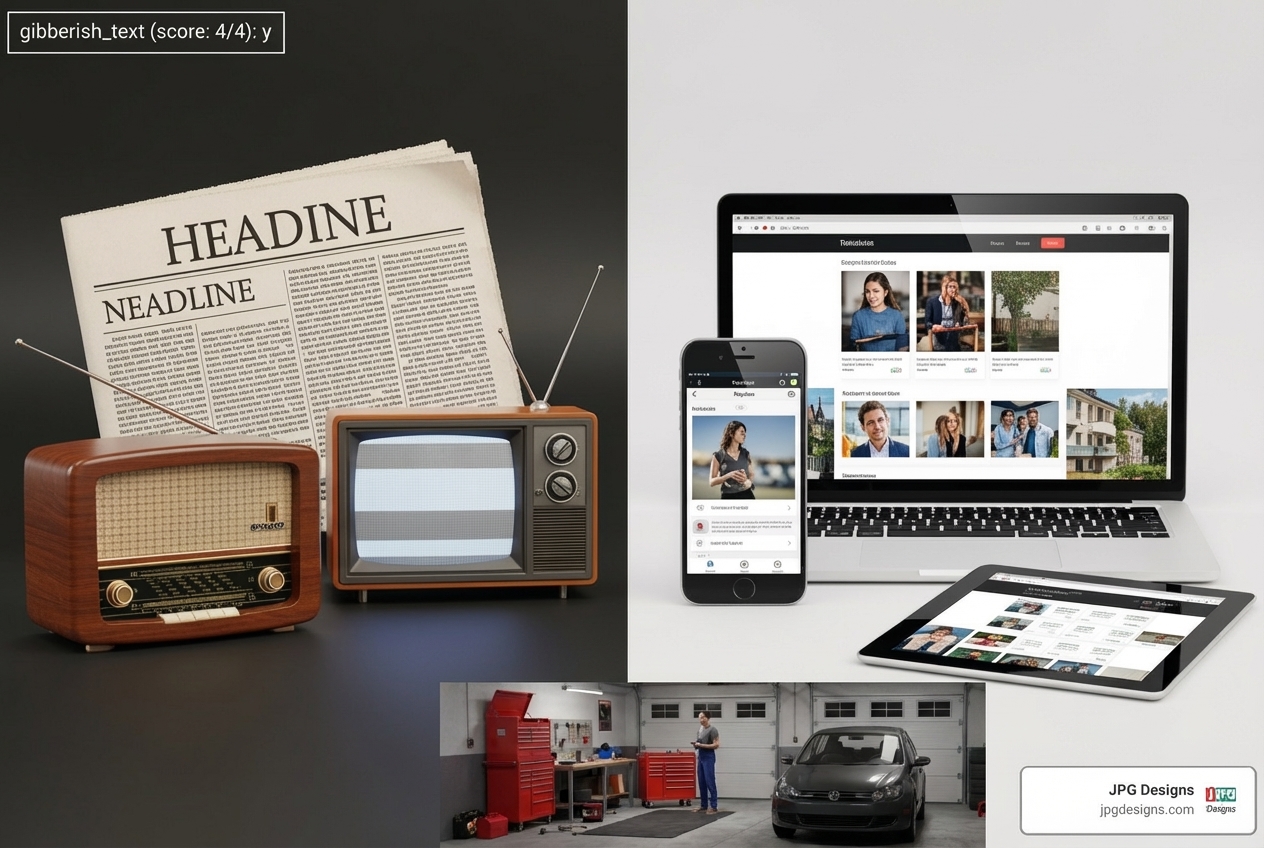
Branding has shifted dramatically from traditional, one-way methods (like print and TV ads) to a dynamic digital approach. While traditional branding was often costly and limited to large corporations, digital branding, especially on social media, has democratized the process.
It empowers businesses of all sizes by facilitating two-way communication, real-time feedback, and direct audience engagement. This interaction builds stronger relationships and a sense of community. Unlike traditional media, digital branding is data-driven. We can track engagement, analyze performance, and understand audience preferences with precision, allowing for continuous strategy optimization to build a more resonant brand. For a deeper dive into how online marketing stacks up against traditional methods, check out our insights on Online Marketing vs Print Advertising.
Developing a Winning Brand Management Social Media Strategy
A robust brand management social media strategy is a fundamental roadmap for success, directing your efforts and clarifying your goals to achieve a positive ROI. It’s often confused with a social media calendar. A social media strategy is your high-level plan—the ‘why’ and ‘what’—outlining goals, audience, and brand voice. In contrast, a social media calendar is the operational tool that executes the strategy—the ‘when’ and ‘where’—by scheduling specific posts. The strategy is the roadmap; the calendar is the journey.
At JPG Designs, we align social media efforts with your business objectives by setting SMART (Specific, Measurable, Achievable, Relevant, Time-bound) goals. For example, a SMART goal is ‘increase Instagram engagement by 15% next quarter,’ not just ‘increase brand awareness.’ A critical part of modern strategy is a mobile-first user experience, as most social media is consumed on smartphones. This aligns with our expertise in mobile-first indexing to improve online visibility. For more insights, explore our article on Strategies for Effective Social Media Marketing.
Identifying and Understanding Your Target Audience
Knowing who you’re talking to is the first step. Without social media listening, you’re missing actionable insights from people discussing your industry online. Our process involves thorough audience research beyond basic demographics to understand:
- Demographics: Age, gender, location (especially for our clients in Rhode Island and Massachusetts).
- Psychographics: Interests, values, and lifestyle.
- Pain Points: The problems they need to solve.
- Platform & Content Preference: Where they are active and what they engage with.
We use this data to create audience personas—semi-fictional representations of your ideal customers. Personas help us craft content that resonates and converts fans into customers. We gather data via social listening, analyzing comments, surveys, and social media analytics. For instance, one company used analytics to find 90% of referring users were 18-34, leading to targeted ads and a 40% lower cost per referral. Understanding your audience allows us to tailor a strategy that speaks directly to them.

Establishing a Clear Brand Voice and Identity
Consistency is the bedrock of strong brand management social media. A clear brand voice and identity make you recognizable and prevent audience confusion. Establishing this is paramount and involves:
- Defining Your Brand Voice: This is your brand’s personality—formal, witty, or empathetic? Your voice should resonate with your audience and align with your brand. For more best practices for a clear brand voice, external resources can provide a great starting point.
- Communicating Brand Values: What does your brand stand for? Your mission and values should be reflected in your content.
- Visual Identity Elements: Your logo, color palette, and typography are visual cues that instantly identify your brand.
Consistent implementation across all external-facing materials is crucial. By strategically building a consistent brand, you communicate your mission clearly and differentiate yourself in a competitive market. To learn more about honing your brand’s presence, read our guide on How to Boost Your Brand Identity.
The Role of Content Marketing and Storytelling
Effective brand management social media relies on strategic content marketing and storytelling. It’s about creating valuable, relevant content that reflects your brand identity. Our strategy includes:
- Content Pillars: We define 3-5 core themes aligned with your brand and audience to ensure a consistent content mix. We often apply the 80/20 rule: 80% value-driven content and 20% promotional.
- Storytelling: We humanize your brand by sharing the ‘why’ and ‘how’ behind your products, connecting with your audience on an emotional level.
- User-Generated Content (UGC): Leveraging customer posts provides authentic social proof. We encourage participation and always engage with submissions after obtaining proper rights.
- Repurposing Content: For efficiency, we transform long-form content like blog posts into smaller social media assets (videos, infographics, quotes) to extend its reach.
A robust content calendar ensures consistent branding and timely delivery across all channels. For more tips on leveraging video content, read 5 Easy Ways to Promote Your Small Business with Video and Social Media.
Executing, Measuring, and Overcoming Challenges
A great strategy requires meticulous execution. Consistency is paramount; your branding must be applied to all content for a unified brand experience. A major challenge is nurturing brand loyalty and avoiding a social media “ghost town.” We focus on engagement tactics that spark conversations and build community, such as being responsive, personable, and authentic. In fact, 70% of brand managers prioritize community development over sales for long-term success. By delivering value and engaging authentically, we transform followers into loyal advocates. If you’re wondering how to breathe life into your social media, check out our insights on Is Your Social Media a Ghost Town?.
Handling Negative Feedback and Crisis Management
Negative feedback and crisis management are significant social media challenges. A single post can spark outrage, requiring immediate, strategic intervention. Our approach involves:
- Proactive Monitoring: Using social listening to identify potential issues before they escalate.
- Establishing Response Protocols: Having a clear plan for who responds and how.
- Responding with Empathy and Transparency: Acknowledging concerns and being open about how they will be addressed. Deleting comments often worsens the situation.
- Turning Negatives into Positives: A well-handled complaint can improve your brand’s reputation by showcasing excellent customer service.
This proactive and empathetic approach is key to maintaining a strong brand image during challenging times.
Measuring Success and Optimizing with Analytics
If you can’t measure it, you can’t improve it. Measuring the ROI of your brand management social media efforts is crucial. We focus on actionable insights beyond “vanity metrics” like follower counts. Key Performance Indicators (KPIs) we track include:
- Reach and Impressions: Indicates brand awareness.
- Engagement Rate: Shows how resonant your content is (likes, comments, shares).
- Website Clicks/Conversions: Measures direct business impact.
- Brand Mentions and Sentiment: Gauges brand reputation.
- ROI (Return on Investment): Proves the financial value of your efforts.
Using analytics tools, we regularly analyze this data to identify what resonates, drives conversions, and where to adjust our strategy. This data-driven approach ensures your social media contributes to business goals. Social media also plays a role in your overall online visibility; learn more about How Social Media Improves Your SEO.
Balancing Paid and Organic Reach
An effective brand management social media strategy balances paid and organic reach. While organic reach builds authentic connections, it has become more challenging. Paid reach amplifies your message to targeted audiences with precision. Our approach creates synergy between the two:
- Boosting High-Performing Content: We use paid promotion to extend the reach of successful organic posts.
- Running Targeted Ad Campaigns: Paid ads reach specific demographics and interests for lead generation or traffic.
- A/B Testing for Optimization: We test ad creatives and messaging to identify what yields the best results, informing both paid and organic strategies.
- Smart Budget Allocation: We allocate your budget strategically to ensure paid efforts complement organic content.
Integrating both strategies maximizes visibility, engagement, and conversions for a more impactful social media presence. Explore the advantages in our article on The Benefits of Organic and Paid Social Media Advertising.
The Future of Social Media Branding
The social media landscape evolves constantly. For effective brand management social media, adapting to algorithm updates is a necessity, not a best practice. We must understand how platforms tweak their ranking factors, which influence content visibility, and adapt our strategies accordingly. For instance, the recent shift towards short-form video reflects a major algorithmic preference. Staying ahead of these changes is key to maintaining visibility and relevance. For more insights into staying current, explore our discussion on Online Marketing Trends & Tips.
Leveraging Influencer Marketing in Your Brand Management Social Media
Influencer marketing is a cornerstone of modern brand management social media, connecting brands with niche audiences through trusted voices. We help businesses:
- Differentiate Micro vs. Macro-Influencers: While macro-influencers offer broad reach, micro-influencers often provide higher trust and engagement within specific communities.
- Focus on Authenticity: We prioritize partnerships with influencers whose values and audience align with your brand.
- Build Effective Partnerships: We identify influencers whose tone complements your brand and grant creative freedom to ensure content feels genuine.
- Track Campaign Performance: We use unique discount codes or affiliate links to track conversions and ROI.
Strategic influencer marketing amplifies your message, builds trust, and drives targeted engagement.
Emerging Trends and Ethical Considerations
The future of brand management social media is shaped by new technology and consumer expectations. Staying ahead of trends is crucial. Key trends include:
- Short-Form Video Dominance: Platforms like TikTok and Reels have made short, dynamic videos the most engaging format.
- The Role of AI in Content Creation: AI can assist with content generation, but human creativity remains indispensable.
- Augmented Reality (AR) Experiences: AR filters offer immersive ways for consumers to interact with brands.
- Social Commerce Growth: The integration of shopping directly within social platforms is expanding.
Alongside these trends, ethical considerations are paramount. This includes:
- Data Protection: Complying with privacy regulations like GDPR and being transparent about data use.
- Ethical Content Standards: Ensuring content is fair, accurate, and respectful, including getting permission before using customer images.
- Authenticity: Maintaining transparency about content origins, especially with the rise of AI.
Navigating these areas requires vigilance and a commitment to responsible practices to build trust.
Frequently Asked Questions about Social Media Brand Management
What is the difference between a social media strategy and a social media calendar?
A social media strategy is your high-level plan outlining your goals, target audience, brand voice, and the overall approach to achieving your objectives on social media. It defines the “why” and “what” of your social media efforts. A social media calendar, on the other hand, is the operational tool that schedules specific posts—detailing the “what,” “when,” and “where” for each piece of content. Think of the strategy as your roadmap, and the calendar as the detailed itinerary for your journey.
How can a small business manage its brand on social media with a limited budget?
For businesses in Rhode Island and Massachusetts with limited budgets, effective brand management social media is entirely achievable. We recommend focusing on 1-2 key platforms where your target audience is most active, rather than trying to be everywhere. Prioritize high-quality organic content that provides value and resonates with your audience. Leverage user-generated content (UGC) by encouraging customers to share their experiences, which provides authentic social proof at no cost. Most importantly, engage directly and authentically with your community to build loyalty and foster relationships. Consistency and genuine interaction often outweigh large ad spends.
What are the most important metrics to track for brand management?
Beyond “vanity metrics” like raw follower counts, the most important metrics for brand management social media focus on engagement and impact. We track:
- Engagement Rate: How many people are actively interacting with your content (comments, shares, saves, likes) relative to your reach. This indicates how well your content resonates.
- Brand Mentions and Sentiment: How often your brand is mentioned across social media and the overall tone (positive, neutral, negative) of those mentions. This gauges brand reputation.
- Reach and Impressions: To understand how many unique users saw your content and the total number of times it was displayed, giving insight into brand awareness.
- Website Clicks or Conversions: To measure the direct impact of social media on your business goals, such as traffic to your website or actual sales/leads generated. These metrics help us calculate your true ROI.
Propel Your Brand with Expert Social Media Management
In today’s interconnected world, effective brand management social media is no longer a luxury—it’s a necessity for growth and sustained success. We’ve explored how social media shapes perception, the importance of a clear strategy, the power of audience understanding, and the critical role of consistent content and engagement.
The key takeaways are clear: consistency is key, a well-defined strategy drives success, and data-driven insights inform continuous optimization. Navigating the complex, changing social media landscape can be daunting, but you don’t have to do it alone.
At JPG Designs, we specialize in crafting and executing comprehensive digital marketing strategies for businesses in Rhode Island and Massachusetts. Our expertise in mobile-first web design and SEO, combined with our deep understanding of social media dynamics, ensures your brand not only looks exceptional but also performs powerfully online. We help you cut through the noise, connect authentically with your audience, and achieve measurable results.
Ready to lift your brand’s presence and turn your social media into a powerful engine for growth? Partner with us to elevate your brand with our digital marketing services and let’s build a social media strategy that truly works for you.