Why Your HVAC Website is Your Most Powerful Sales Tool
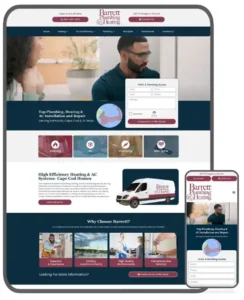
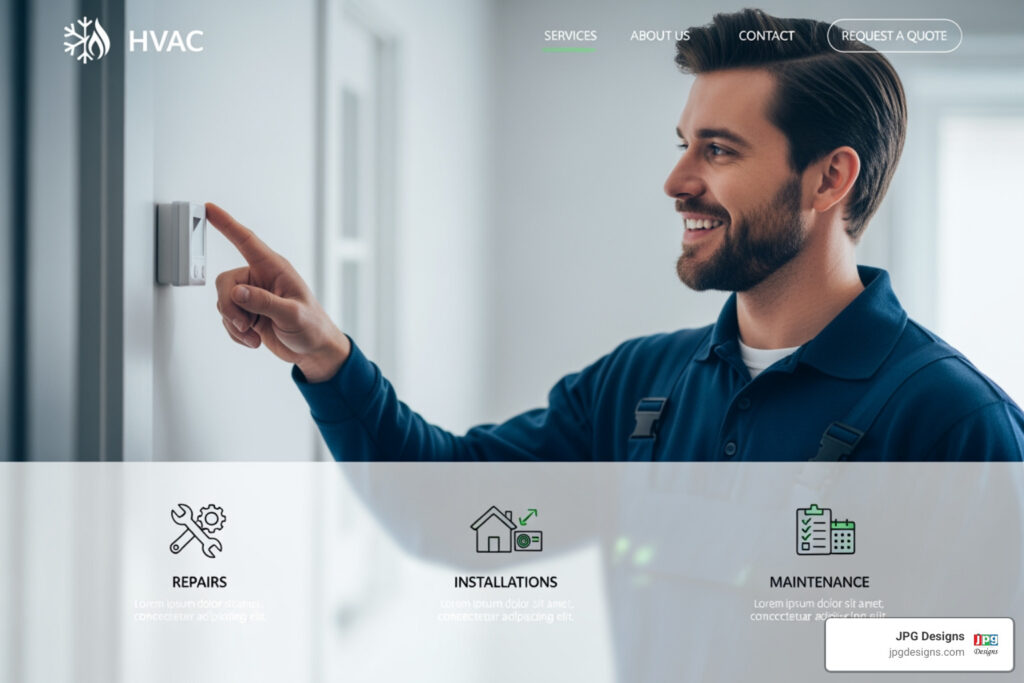
Web design HVAC is the process of creating a high-performance website that works as a virtual sales rep, turning visitors into paying customers 24/7. Unlike a generic online brochure, an effective HVAC site is built to convert.
Key features include:
- Mobile-first approach: Over 64% of HVAC searches happen on mobile devices.
- Local SEO optimization: Ranks in your service area for searches like “HVAC near me.”
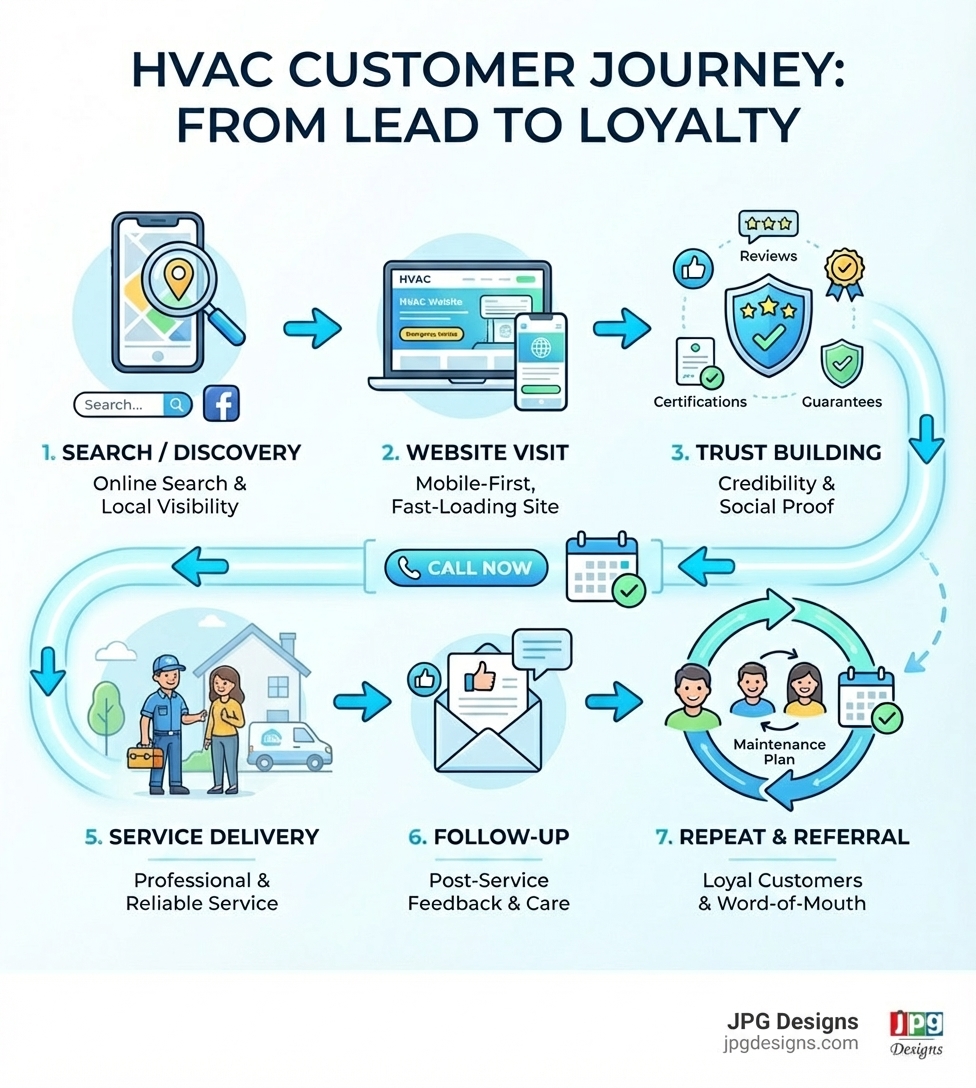
- Trust signals: Prominently displays reviews, certifications, and guarantees.
- Clear conversion paths: Features click-to-call buttons, booking forms, and emergency service callouts.
- Fast loading speed: Loads in under 3 seconds to prevent visitor drop-off.
- Service-specific pages: Includes dedicated pages for installation, repair, and maintenance.
When a homeowner’s AC fails on a 95-degree day, they search on their phone. If your site is slow, confusing, or invisible in search results, they’re calling your competitor. The difference between a site that generates leads and one that doesn’t comes down to strategic design choices. While average local service sites convert at just 3.1%, top-performing HVAC sites can hit 15-30% conversion rates, representing thousands in potential revenue.
A well-designed HVAC website builds immediate trust, makes contact effortless, and ranks high in local search results. It’s not about looking pretty; it’s about creating a lead-generation machine that fills your calendar.
I’m Jeff Pratt, owner of JPG Designs. For well over a decade, I’ve helped HVAC companies and other contractors build websites that drive measurable growth through advanced web design HVAC strategies and local SEO. We create digital systems that do more than exist—they deliver results.
Why a Generic Website Holds Your HVAC Business Back
Your current website may feel like a static digital brochure, not a tool that fills your schedule. This section explores the common pain points of a poorly designed site and why a specialized approach is crucial for survival and growth in the competitive HVAC market.
Imagine your website as a storefront. If it’s messy and hard to steer, customers will walk away. For HVAC businesses, where urgency and trust are paramount, a generic website is a significant barrier to growth.
The High Cost of a Bad First Impression
A visitor judges your website in less than 50 milliseconds. With 94% of first impressions stemming from design, there’s no room for error. A poor site leads to critical issues:
- Low Conversion Rates: Average local service websites convert at a measly 3.1%, while top competitors achieve 15-30%. A one-second load delay alone can cut conversions by 7%.
- High Bounce Rate: If a site is slow or confusing, 40% of visitors leave within three seconds. This “bounce” tells search engines your site isn’t relevant, hurting your rankings. As we know, a poor user experience can increase your bounce rate, and we’ve compiled 5 ways to decrease your bounce rate to help.
- Visitor Frustration: A confusing mobile experience or slow loading times frustrate users, especially during an emergency. They won’t hesitate to find a more user-friendly alternative.
- Lack of Trust: An outdated website makes your business seem unreliable. In an industry where you enter customers’ homes, trust is non-negotiable.
- Lost Revenue: Each visitor who bounces and every lead not captured is a lost job and a drain on your potential earnings.
Missing Out on Local Customers
Nearly all online experiences begin with a search engine, and for HVAC, those searches are local. When a furnace dies, customers search for “HVAC repair near me” in Rhode Island communities like Providence, Warwick, or Cranston.
A generic website fails you here:
- Poor Google Rankings: Generic templates often lack the structure and local content needed to rank well in your service areas, making you invisible to most potential customers.
- No Local Focus: 97% of customers search online for local home services. If your site doesn’t clearly state your service areas and feature local testimonials, you’re handing business to competitors. We can show you why your website is not attracting traffic and how to fix it.
- Fewer Calls from Potential Customers: When someone searches for “furnace repair Providence RI,” they expect local results. If your site doesn’t appear or convey your local presence, they’ll keep scrolling. 88% of consumers using local search contact a business within 24 hours.
- Missed Emergency Service Requests: If your website isn’t easily found and doesn’t highlight emergency services for your specific Rhode Island location, you’re missing out on high-value, urgent calls.
The Blueprint for a High-Converting HVAC Website
A successful HVAC website isn’t about flashy graphics; it’s a strategic blend of design, trust signals, and user-focused features that guide visitors to take action. This is how you turn clicks into booked jobs.
Our approach to web design HVAC focuses on creating a digital experience that addresses your customers’ urgent needs and builds immediate confidence.
Essential Elements for Lead Generation
To transform your website into a lead-generation machine, these elements are non-negotiable:
- Prominent Phone Number: Your number should be highly visible in the header of every page and clickable on mobile devices.
- “Book Now” Buttons and Simple Contact Forms: Strategically placed buttons should lead to simple forms, making it easy for customers to take action. Increase leads with a modern website by making these pathways clear.
- Emergency Service Callouts: A prominent “Emergency Service” button or banner immediately tells distressed homeowners you can help them now.
- Service Area Maps and City-Specific Pages: Clearly defining your service area (e.g., Providence, Cranston, Warwick) helps customers and significantly boosts your local SEO.
- Clear Service Buttons on the Homepage: Links to primary services like AC Repair or Furnace Installation guide users quickly to the right information.
- Accessible Chat Box: A chat feature allows visitors to ask quick questions, converting hesitant prospects into booked jobs.
These are among the Top 7 must-have features on a contractor’s website we integrate to maximize lead generation.
Building Unshakeable Trust and Credibility
Homeowners are inviting your team into their personal space. Your website must establish confidence before you even speak to them.
Here’s how we build that trust:
- Customer Reviews and Testimonials: We prominently display Google reviews and testimonials, as 80% of customers check reviews before making contact. Our online review service can help you leverage these endorsements.
- “About Us” Page with Authentic Team Photos: An authentic “About Us” page with your story and real team photos builds a personal connection and showcases your local ties.
- Certifications and Badges: Displaying industry certifications (NATE), accreditations (BBB), and licenses communicates professionalism and expertise.
- Before-and-After Project Galleries: A portfolio of your work provides visual proof of your capabilities and the quality of your craftsmanship.
- Financing Options: Clearly presenting financing options removes a major barrier for customers, making your services more accessible and improving sales by over 17%.
Optimizing User Experience (UX) for Conversions
A beautiful website is only effective if it’s easy to use. UX optimization is about making your site intuitive, fast, and enjoyable to turn visitors into leads.
Our focus on UX for your web design HVAC means:
- Intuitive Navigation: A clean, organized menu helps visitors quickly find what they need without frustration.
- Fast Page Load Speed: With 40% of visitors leaving a site that takes longer than three seconds to load, speed is non-negotiable. We optimize every element to ensure your site is lightning-fast. Don’t let site speed killers: common mistakes that hurt online sales sabotage your efforts.
- Readability: We use short paragraphs, bullet points, and clean typography to make content easy to scan, especially for a stressed customer.
- Simple Color Schemes and Clean Layouts: A professional, uncluttered look with ample white space improves readability and reduces visitor fatigue.
- Clear Service Pages: Each service gets its own dedicated page with a clear description and call to action, which improves both user experience and SEO.
By adhering to these 7 principles of website design that drives sales, we ensure your website is a powerful conversion tool.
The Critical Role of SEO and Mobile-First in Web Design for HVAC
Over 90% of online experiences begin with a search engine, and more than half of those searches happen on a phone. If your website isn’t built for Google and mobile users, you’re practically invisible to local customers in Rhode Island searching for “HVAC repair near me.”
Mastering Local SEO for HVAC Web Design
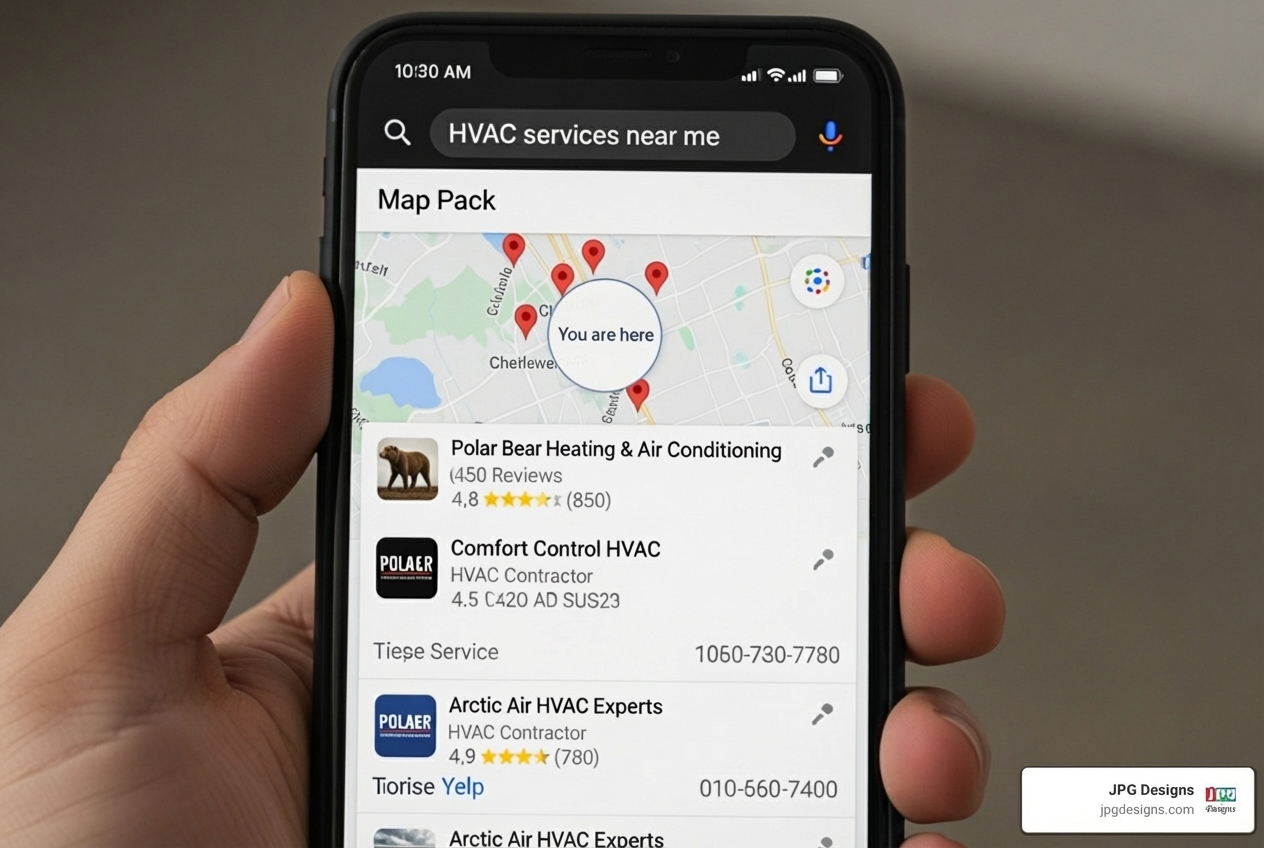
For HVAC contractors, local SEO is the backbone of digital marketing. Your website must be designed to capture leads within your geographic footprint.
Here’s how we master local SEO for your web design HVAC:
- Google Business Profile Optimization: We optimize your profile with accurate info, service areas (Providence, Cranston, Warwick), photos, and reviews to boost your visibility in the Google Map Pack.
- Local Keyword Targeting: We research and integrate local keywords (e.g., “AC repair Newport RI”) into your site’s content, meta descriptions, and headings to attract relevant searchers.
- City-Specific Service Pages: We create dedicated pages for each major service area (e.g., “HVAC Services in Woonsocket”) to signal your relevance to Google for those locations. This is a key strategy in our comprehensive guide to local SEO for small business owners.
- Schema Markup for HVAC Services: This technical SEO element helps search engines understand your content, leading to richer search results (like star ratings) and improved visibility.
Why Mobile-First Design is Non-Negotiable
More than 64% of all HVAC website queries happen on a mobile device. Google recognizes this and prioritizes the mobile version of your site for ranking (mobile-first indexing). If your site isn’t optimized for mobile, your rankings will suffer.
Here’s why mobile-first design is crucial for your web design HVAC:
- User Experience (UX): A poor mobile experience drives customers to your competitors. We design for speed and seamless navigation on small screens so customers can contact you quickly.
- Google Rankings: Google explicitly recommends responsive design, which automatically adjusts to fit any screen size. Compliance with Google’s standards is vital for search visibility.
- Immediate Action: Mobile searches are often urgent. Our designs feature prominent click-to-call buttons and simple forms, making it effortless for customers to contact you.
- Security: Google favors secure websites. All our sites are built with robust security to protect user information and build trust.
Our expertise in responsive web design: unparalleled mobile experiences ensures your HVAC website performs flawlessly on every device, capturing leads no matter how customers find you.
Making the Right Choice: Custom Solutions and Finding Your Partner
Investing in your website is a major decision. You wouldn’t trust your HVAC system to a general handyman, so why trust your online presence to a generic web designer? This section compares custom web design with templates and helps you choose the right partner.
The Value of Custom Web Design for HVAC
While templates seem like a quick fix, they fall short of delivering the results a specialized HVAC business needs. Custom web design HVAC offers superior value:
- Scalability and Flexibility: A custom website grows with your business, whether you’re adding services or expanding into new towns like North Providence. Templates can be rigid and hinder growth.
- Unique Branding: A custom design ensures your website reflects your unique brand identity, helping you stand out from competitors and build customer loyalty.
- SEO Advantages: Custom sites are built with clean, structured code that Google can easily crawl and rank. Generic templates often have bloated code that hinders SEO performance. As we outline in why hiring professional web design is always better than going DIY, this is a key advantage.
- Long-Term ROI: While the initial investment may be higher, a custom site’s ability to generate high-quality leads and achieve conversion rates of 15-30% delivers a far better return on investment.
- Limitations of Generic Sites: Template-based sites lack the specific features, local SEO focus, and conversion-optimized layouts an HVAC business needs to thrive, often leading to high bounce rates.
How to Choose the Right Web Design Agency
Selecting the right partner is as critical as choosing the right equipment. You need an agency that understands your industry, customers, and goals.
When evaluating agencies, look for:
- Industry-Specific Experience: Does the agency have a proven track record with HVAC contractors? An agency that understands your customers’ needs will build a more effective site.
- A Strong Portfolio: Ask to see examples of their work for similar service businesses to verify their design capabilities and ability to deliver results.
- Transparent Pricing and Process: A reputable agency will provide a clear breakdown of costs and their development process, from findy to launch and support.
- Focus on Results and ROI: The agency should be focused on measurable results like leads and conversions, not just aesthetics. They should be able to explain how they track performance.
- Avoiding Common Pitfalls: Be wary of slow delivery, cookie-cutter templates, and agencies that can’t measure the impact of their work.
To help, we’ve created a list of questions to ask a local web designer before hiring them. Our expertise in web design HVAC and local Rhode Island market knowledge makes us the ideal partner to help your business grow.
Frequently Asked Questions about HVAC Web Design
What are the typical costs for professional HVAC web design?
The cost for professional web design HVAC varies based on complexity and customization. A custom build typically costs in the mid-thousands initially. This investment covers professional design, content, and local SEO setup. Many agencies also offer monthly support packages for updates, security, and ongoing optimization. When considering costs, focus on the return on investment (ROI) a high-converting website can generate through new leads and booked jobs. For more details, see our website pricing page.
How is a website for an HVAC contractor different from a generic business site?
An HVAC website is a specialized tool, not a general-purpose brochure. The key differences are:
- Focus on Lead Generation: Every element is designed to guide visitors toward scheduling service.
- Urgency and Trust: It must convey urgency (“Emergency Service”) and build trust with reviews and certifications.
- Local SEO Focus: The site is hyper-focused on local search terms and service areas like Providence, RI.
- Mobile-First for Emergency Calls: It must be flawless on mobile, with easy-to-tap phone numbers for urgent calls.
- Service-Specific Content: It requires dedicated pages for each service, like AC repair or furnace installation.
- Authentic Visuals: Real photos of your team and work build more credibility than stock images.
A specialized site is crafted for the unique demands of the home services industry. Learn more about web design for contractors and home services.
How long does it take to build a new HVAC website?
For a professional, custom-designed HVAC website, the process typically takes 4 to 12 weeks. The timeline depends on the project’s complexity and the collaboration between the client and agency.
The typical phases include:
- Findy and Planning (1-2 weeks): We define goals, conduct research, and create a blueprint for the site.
- Design and Development (3-6 weeks): Our team builds the site’s structure, functionality, and visual design.
- Content Creation (2-4 weeks): We write compelling, SEO-optimized copy for all pages.
- Revisions and Launch (1-2 weeks): We review the site with you, make final adjustments, and take it live.
This strategic process ensures we build a powerful asset for your business. For more insight, see our guide on how long does it take to build a website?.
Turn Your Website Into Your #1 Employee
An effective website works tirelessly to build trust, attract local customers, and fill your schedule. It’s not an expense but a powerful investment in your company’s growth. By focusing on a mobile-first, SEO-driven design custom to the HVAC industry, you can move from chasing leads to building a loyal customer base. The expert team at JPG Designs specializes in creating these high-performance websites for contractors. Ready to see the difference a professional HVAC and plumbing website design can make?